Ginger scallion noodles are tossed noodles, not a bowl of wonton soup. Cook the strands separately, gently sizzle the aromatics in oil, and toss immediately with a little seasoning liquid. The aim is springy noodles with a light coating, not a greasy pool at the bottom.
Ingredients for two bowls
- 150 g dried wheat or egg noodles, or the package’s two-serving quantity of fresh noodles.
- 25 g peeled ginger, very finely minced; 4 scallions, thinly sliced with whites and greens separate.
- 2 tablespoons neutral oil.
- Sauce: 2 teaspoons light soy sauce, 1/4 teaspoon sugar, and 2 tablespoons hot water.
- Optional finish: 1/2 teaspoon toasted sesame oil and a pinch of white pepper.
Use a noodle pot, colander, wide skillet, and tongs. Allow about 10 minutes to prepare and 10 minutes to cook, depending on the noodles. This is a gently pan-sizzled adaptation; it avoids pouring a large quantity of very hot oil into a bowl of damp aromatics.
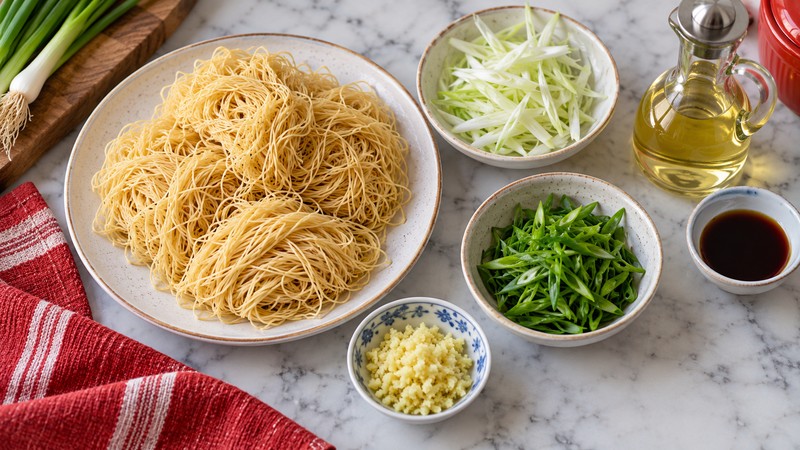
Choose strands and prepare before boiling
Fresh egg noodles and dried wheat noodles have different cooking instructions; follow the product rather than using one universal timer. Spaghetti is a workable substitution with a different texture. Made With Lau’s ginger-scallion spaghetti account describes that accessibility choice rather than claiming it is identical to fresh Cantonese noodles.
Mince ginger finely enough that a bite does not contain a large fibrous chunk. Wash and dry scallions before slicing. Mix the soy sauce, sugar, and hot water in a cup so no measuring is needed once the noodles are cooked.
Sizzle the aromatics with controlled heat
Warm oil in the skillet over medium-low heat. Add ginger and scallion whites and stir for 1 to 2 minutes, until fragrant but not browned. Add scallion greens for the last 20 to 30 seconds, then turn off the heat while the noodles finish. If the ginger catches, lower the heat immediately; blackened aromatics should be replaced rather than hidden with more sauce.
Daddy Lau’s ginger scallion sauce provides first-hand context for oil carrying the aromatic flavor. The amounts and pan method above are tailored to a two-bowl noodle meal, not copied from a full batch of table sauce.
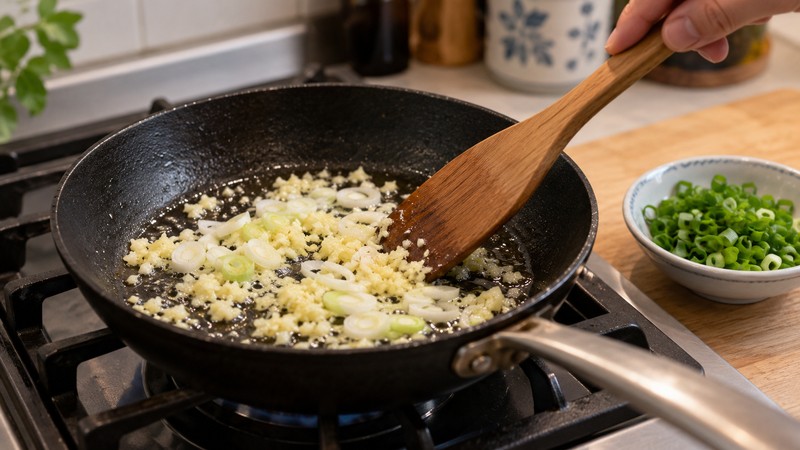
Drain, toss, and correct one strand at a time
- Boil the noodles according to the package. Taste near the stated time and stop when cooked with some spring. Drain thoroughly; rinse only if the product’s instructions call for it.
- Return the aromatic skillet to low heat. Add noodles and half the seasoning liquid. Toss with tongs to distribute the ginger and scallions.
- Taste a strand and add the remaining liquid only as needed. Finish with optional sesame oil and white pepper, then serve straight away.
If dry or tangled, add hot water a tablespoon at a time before adding more oil. If salty, a splash of water can loosen the coating, but correcting the salt level may require extra unseasoned noodles. If watery, drain better next time and use less seasoning liquid; prolonged frying will not restore overcooked strands.
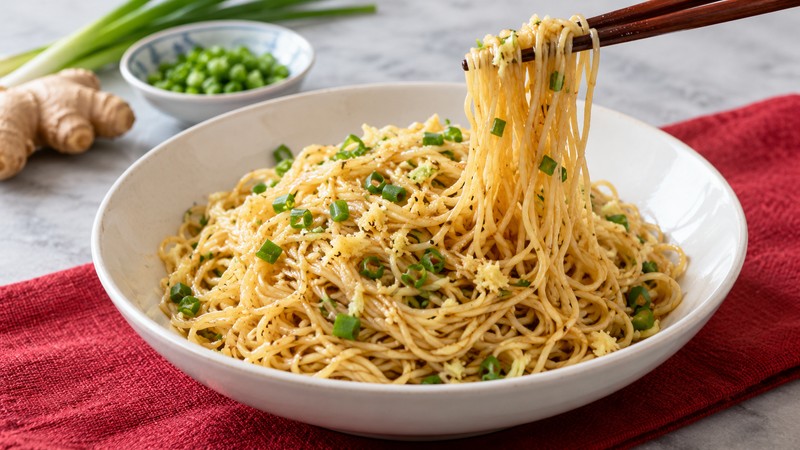
Serve and store without a heavy coating
Divide into two warm bowls, leaving any excess oil in the pan. Pair with cooked vegetables or a separate protein dish rather than loading in broth. Wheat, egg in egg noodles, soy sauce, and optional sesame are the main label checks. Use compatible noodles and condiments if an allergen needs avoiding.
Refrigerate cooked leftovers promptly within 2 hours, or 1 hour above 90 F (32 C); use within 3 to 4 days. Reheat with a little water to 165 F (74 C), following USDA leftover guidance. Make aromatic oil fresh for this meal rather than treating homemade ginger-scallion oil as a shelf-stable pantry product.
For a soup bowl instead see beef brisket noodles; for adjusting soy sauce use the Cantonese sauces guide.
Frequently Asked Questions
Do I need a wok or a restaurant burner?
No. A wide skillet over controlled heat can sizzle the aromatics and toss the noodles. This dish does not require an aggressively smoking pan.
Can I prepare all the noodles hours ahead?
Freshly cooked noodles toss most easily. For advance preparation, chill them promptly rather than leaving them on the counter, and reheat thoroughly with a little water; texture will differ.
Illustration note: any AI-generated food images accompanying this article are illustrative, not photographs of a tested batch.