Asian steamed sea bass is a Cantonese-style whole fish dish built around freshness, brief steaming, ginger, scallion, and a light soy sauce finish. The useful question for home cooks is not only what to add, but when to stop: the fish should be just opaque, tender near the backbone, and served before the sauce becomes diluted.
Quick Answer
Steam a cleaned fish over active steam, check the thickest flesh at the backbone and finish with ginger, scallion and soy. For safety, use 145 F (63 C), not a fixed eight-minute promise.
Basic Facts
Best fish
Whole sea bass, barramundi, snapper, or grouper with clear eyes and firm flesh.
Steam time
Depends on thickness, starting temperature and steamer; begin checking around 10 minutes and continue until the center reaches 145 F (63 C).
Main aromatics
Ginger and scallion warmed in a small skillet with neutral oil.
Common mistake
Oversteaming the fish or leaving watery liquid on the plate before adding sauce.
Texture and Flavor Checks
Barramundi is one fish sold as Asian sea bass, while sea bass labels can refer to other species. Ask the seller what you are buying and match the plate and method to its size.
Whole fish is a familiar celebratory presentation. The fish/surplus wordplay is commonly discussed in Chinese New Year settings, but ‘yu’ is Mandarin, not a Cantonese pronunciation.
Serving customs vary. At home, the useful cooking skill is checking the thick flesh without overcooking the thin belly.
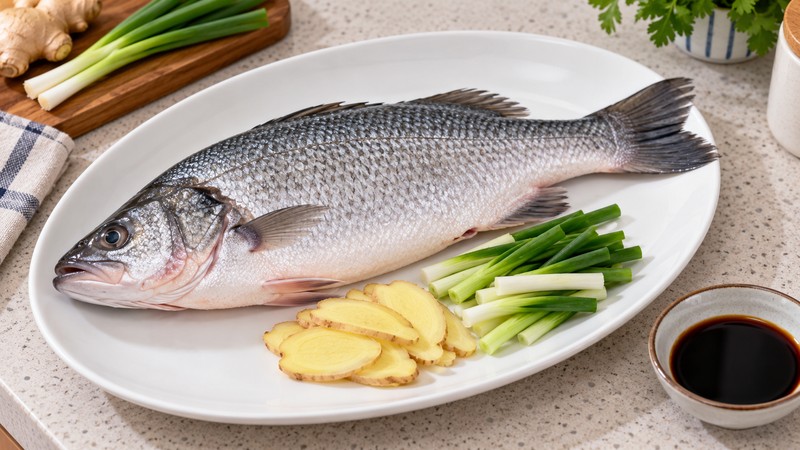
Home Example: Ginger-Scallion Whole Fish
This is a home adaptation of Cantonese steaming, not a kitchen-tested claim. Steaming produces moist flesh and soft skin, not a crisp surface.
Ingredients for Two to Three
- 1 cleaned whole sea bass, approximately 680 g (1.5 lb), scaled and gutted
- 15 g fresh ginger, half sliced and half cut into thin matchsticks
- 3 scallions, cut into short pieces and thin strips
- 2 tablespoons light soy sauce, 2 tablespoons water and 1/4 teaspoon sugar
- 1 tablespoon neutral oil; 1 teaspoon Shaoxing wine, optional
- Rice and a cooked green vegetable, to serve
Steam and Finish
- Keep the fish refrigerated while preparing everything else. Pat it dry, check the cleaned cavity and place it on a heatproof plate that fits under the steamer lid. Make shallow slits in thick flesh if needed; do not cut an arbitrary inch deep.
- Put sliced ginger and short scallion pieces inside and under the fish. Add the optional wine. Set a rack above the water in a covered pot; bring the water to a boil before adding the plate. Leave enough water for the cook without letting it touch the plate.
- Cover and maintain active steam. Start checking around 10 minutes for this size, but allow longer when needed. Thickness, starting temperature and equipment change the time. Use a food thermometer near the backbone without touching bone: the fish must reach 145 F (63 C). Opaque flesh that separates easily is an additional texture check, not a timing guarantee.
- Lift the lid away from your face. Use mitts and a plate lifter to remove the hot plate; drain excess liquid carefully and remove the spent aromatics.
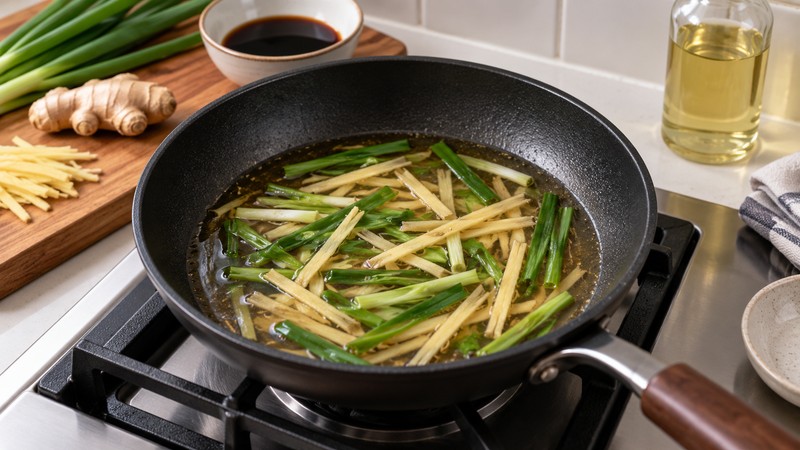
- Warm the oil in a small skillet over moderate heat, gently cook the ginger matchsticks and scallion strips until fragrant, then add the soy, water and sugar. Heat through and spoon over the fish. This home finish avoids pouring smoking oil onto a wet plate.
- Serve immediately with rice and greens. Help diners remove bones; whole-fish presentation does not make small bones safe to swallow.
Useful Variations and Substitutions
Oyster sauce, chenpi or a little cilantro are optional variations, not requirements for a particular city. Add them sparingly so they do not overwhelm the fish.
Commercial steamers and home pots heat differently. No equipment guarantees a perfect fish.
A stovetop steamer needs enough water and a tightly fitting lid. Check the fish rather than automatically adding one or two minutes.
Serving the Fish the Cantonese Way
Choose a platter large enough for the fish and ask your guests about household serving customs.
Serve promptly while the fish and sauce are hot.
White rice and cooked greens are useful accompaniments rather than compulsory pairings.
Keep the plate secure, drain excess liquid carefully and avoid too much soy sauce.
Remove bones carefully for guests; turning a fish is a household custom, not a universal ban.
Frequently Asked Questions
Can I substitute fillets?
Yes. Use boneless fillets on a heatproof plate and check sooner. Thickness and starting temperature matter more than fish weight alone.
Should steamed sea bass have crisp skin?
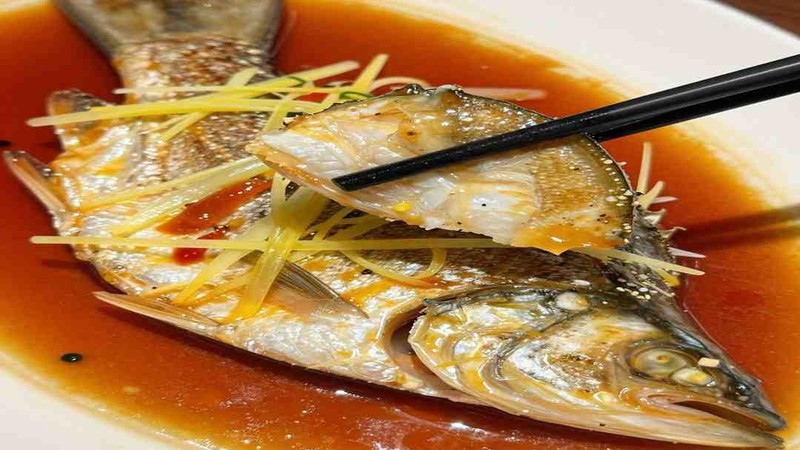
No. Steaming gives moist flesh and soft skin. Crisp skin belongs to a different pan-fried or roasted method.
Why drain the plate?
Draining excess liquid keeps the finishing sauce from becoming diluted. Secure the hot plate with mitts and a plate lifter; do not handle it bare-handed.
Keeping Leftovers
Refrigerate perishable cooked food promptly in shallow containers, within two hours of cooking (one hour above 90 F / 32 C). Keep it cold at 40 F / 4 C or below. USDA generally allows three to four days for refrigerated leftovers; discard food left out too long. Reheat leftovers to 165 F (74 C), checking the center rather than relying on a few seconds or minutes.
Sources and Related Reading
Primary fish technique and context source. The home adaptation above is not presented as an exact copy of that author’s recipe or as a recipe tested by YueCuisine. Food-safety temperature and handling guidance; USDA leftover guidance.
Asian Steamed Fish Recipe: The Complete Guide to Authentic C · How to Make Asian Steamed Egg Recipe: The Authentic Cantones
Any newly generated food visuals accompanying this article are AI illustrations, not photographs documenting a kitchen test. Retained existing images are captioned only for their visible contents and context.