Asian BBQ pork sauce costs between $3.50-$5 per serving in Cantonese restaurants, but you can make it at home for under $1.20. Each restaurant serving pairs 4 ounces of glazed char siu with a side of steamed rice and a small drizzle of sauce, taking 10 minutes to plate and costing roughly $4 in a mid-tier Chinatown eatery.

Homemade yields 1 cup of sauce—enough for 8 servings—with total prep and cook time under 25 minutes, using ingredients most home cooks already have in their pantry or can pick up at a local Asian grocery for less than $1. The sauce is the beating heart of Cantonese char siu, the iconic fork-roasted pork that’s a staple at dim sum, family feasts, and Lunar New Year celebrations, far more than a condiment but a cultural marker of Cantonese culinary identity.

What Is Asian BBQ Pork Sauce?

Asian BBQ pork sauce—most commonly referred to as char siu sauce in Cantonese cuisine—is a glossy, balanced blend of sweet, savory, and aromatic flavors designed to glaze and flavor roasted pork. Its roots stretch back over 1,300 years to the Tang Dynasty (618–907 CE), when imperial Chinese kitchens developed techniques to glaze pork with a mix of soy, honey, and spices to preserve meat during long journeys and enhance its rich, fatty flavor.

As Cantonese merchants traded along the Silk Road, they refined the recipe, adapting it to local ingredients while retaining core elements that would become its signature: deep umami from fermented sauces, subtle warmth from five-spice, and a bright red hue that symbolizes good fortune in Cantonese culture. In modern Cantonese cuisine, char siu sauce is not an afterthought; it is the defining component of char siu, a dish so beloved that it’s ranked among the top ten most popular Chinese dishes globally, with Cantonese versions considered the gold standard.

For Cantonese home cooks and chefs alike, the sauce is a labor of tradition, passed down through generations with slight tweaks to suit family tastes. Unlike Western BBQ sauces, which often rely on tomato or vinegar for tang, char siu sauce leans into fermented sauces like hoisin and oyster, which add depth without sharpness, and uses honey or maltose for a caramelized sweetness that sets when brushed onto hot pork.

This balance is what makes it versatile enough to pair with everything from steamed rice to stir-fried vegetables, but most iconic when used to coat pork skewered on bamboo forks and roasted over wood fires for a smoky, glossy finish. Asian Bbq Pork Sauce It is also a central element in dim sum, where it fills char siu bao (steamed buns) and glazes roasted pork for platter dishes served at celebrations.

asian bbq pork sauce concepts

Authentic Asian BBQ Pork Sauce Recipe

This authentic Cantonese recipe prioritizes low-heat cooking to prevent sugar from burning, a key technique that ensures the sauce stays smooth and glossy. Asian Bbq Pork Sauce The ingredients are tailored to match restaurant-quality char siu glaze, with no shortcuts that compromise flavor.

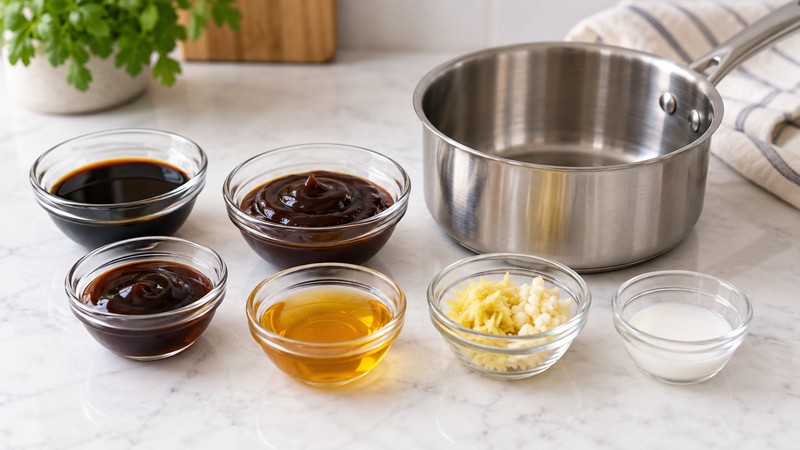
Ingredients (14 total, yields 1 cup)

  • Light soy sauce (2 tbsp)
  • Dark soy sauce (1 tbsp, for color only—do not substitute for light soy)
  • Hoisin sauce (3 tbsp, Cantonese brand preferred, e.g., Lee Kum Kee)
  • Oyster sauce (2 tbsp, low-sodium to control salt)
  • Raw honey (2 tbsp, or maltose for traditional restaurant-style gloss)
  • Shaoxing wine (1 tbsp, dry, not cooking wine with added salt)
  • Cantonese five-spice powder (1/4 tsp, contains star anise, cinnamon, clove, fennel, Sichuan pepper)
  • White pepper (1/8 tsp, no black pepper—too harsh)
  • Fine sea salt (pinch, optional, adjust to taste)
  • Garlic (3 cloves, finely minced, not pre-minced)
  • Fresh ginger (1 tsp, grated on a microplane)
  • Red food coloring (1/8 tsp, optional, for traditional vibrant red hue)
  • Cornstarch (1 tbsp)
  • Cold water (2 tbsp, for slurry)

Step-by-Step Instructions

  • Prepare the cornstarch slurry first: In a small bowl, mix 1 tbsp cornstarch with 2 tbsp cold water, stirring until no lumps remain. Asian Bbq Pork Sauce Set aside—this is critical for thickening the sauce without clumps.
  • Mince 3 garlic cloves finely and grate 1 tsp fresh ginger on a microplane; avoid pre-minced garlic, as it lacks the sharp, fresh aroma that elevates the sauce.
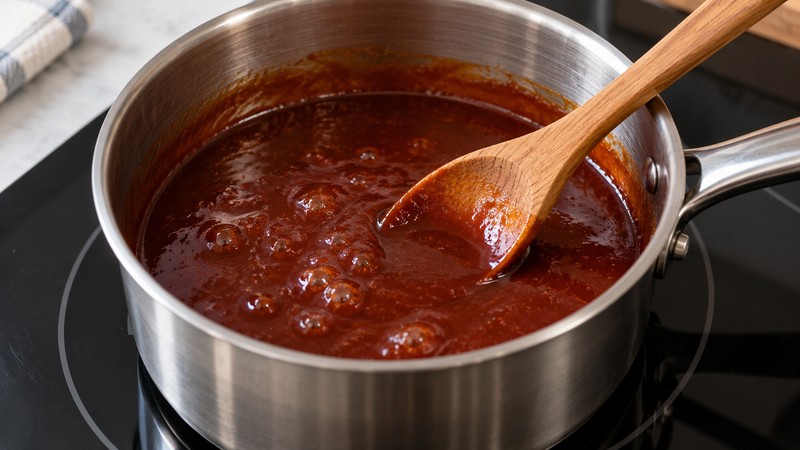
  • Place a small, heavy-bottomed saucepan over low heat (never medium-high, as this will scorch the honey and soy). Asian Bbq Pork Sauce Add the light soy sauce, dark soy sauce, hoisin sauce, and oyster sauce, stirring gently to combine.
  • Add the honey, Shaoxing wine, five-spice powder, white pepper, and optional red food coloring. Asian Bbq Pork Sauce Stir continuously for 1 minute until the honey dissolves fully, being careful not to let the mixture bubble.
  • Toss in the minced garlic and grated ginger, stirring for another 30 seconds until fragrant—do not let the garlic brown, as this will make the sauce bitter.
  • Slowly pour the cornstarch slurry into the saucepan while stirring the sauce in a circular motion; this prevents lumps from forming.
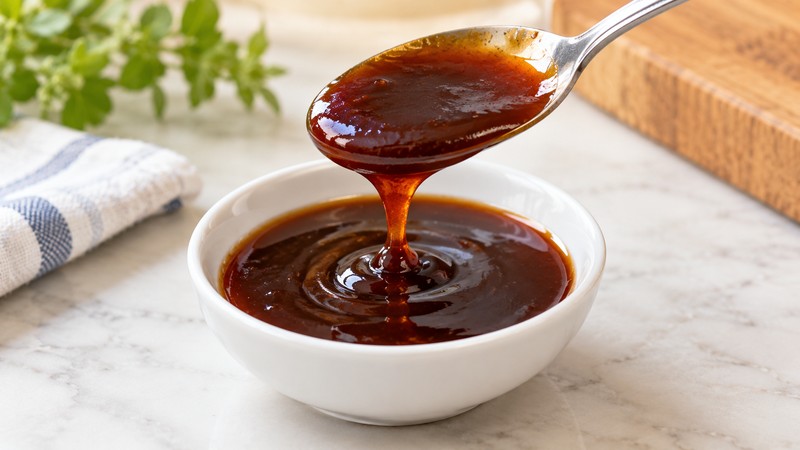
  • Continue cooking over low heat for 2–3 minutes, stirring constantly, until the sauce thickens enough to coat the back of a spoon. Asian Bbq Pork Sauce If it’s too thin, add a tiny bit more slurry; if too thick, stir in 1 tsp of water.
  • Remove the saucepan from heat and let the sauce cool for 5 minutes before using. Asian Bbq Pork Sauce For char siu, brush the sauce generously over pork during the last 15 minutes of roasting, repeating every 5 minutes to build up a glossy layer.

Asian BBQ Pork Sauce Variations

Asian BBQ pork sauce varies significantly across Cantonese-speaking regions, reflecting local tastes and ingredient availability. Hong Kong-style char siu sauce is notably sweeter than its mainland counterpart, often adding a splash of rose water or maltose to enhance floral notes and a deeper gloss.

Hong Kong chefs also tend to use less dark soy sauce, resulting in a lighter, amber-hued sauce that complements the tender, juicy pork common in Hong Kong char siu. This regional split dates back to the 19th century, when Hong Kong’s status as a trading hub introduced imported ingredients like rose water, while Guangzhou remained rooted in traditional Cantonese pantry staples.

In contrast, Guangzhou-style (mainland Cantonese) sauce is more savory, with a higher ratio of oyster sauce and less honey, making it ideal for those who prefer a less sweet profile.

Beyond regional divides, there are key differences between homemade and restaurant versions of the sauce. Restaurant char siu sauce often simmers for 1–2 hours, allowing flavors to meld deeply, and may include fermented bean curd (nam yue) for extra umami—an ingredient most home cooks skip for simplicity.

Home versions, meanwhile, typically skip long simmering and use readily available ingredients to cut down on time, though some home chefs add a pinch of chili flakes for a spicy twist, popular in southern Chinese communities in Southeast Asia. Asian Bbq Pork Sauce Another common variation is adjusting the five-spice blend: some home cooks add extra star anise for a stronger licorice note, while others skip it entirely for a simpler sweet-savory profile.

Serving Asian BBQ Pork Sauce the Cantonese Way

Cantonese tradition dictates that char siu sauce is not served as a dipping sauce on the side, but as a glaze integrated into the pork and a drizzle over the final dish. The most classic serving is char siu sliced thin and placed over a bed of steamed white rice, with a generous drizzle of the warm sauce pooled around the pork.

For dim sum, char siu sauce is used to fill char siu bao (steamed buns), where it’s thick enough to hold its shape without making the bun soggy—home cooks often thin the sauce slightly with a teaspoon of water for this use. Presentation-wise, Cantonese chefs often garnish char siu with toasted sesame seeds or a sprig of cilantro to contrast the rich red of the sauce, though simplicity is key—over-garnishing is considered disrespectful to the dish’s core flavors.

Common mistakes to avoid include using too much dark soy sauce, which makes the sauce bitter, or boiling the sauce at high heat, which burns the sugar and creates a sticky, burnt texture. Asian Bbq Pork Sauce At Lunar New Year, char siu is served as part of the “good luck feast,” with the red sauce symbolizing prosperity and the sweet flavor representing a sweet year ahead.

asian bbq pork sauce effectively

FAQs

  • Q: Is making authentic Asian BBQ pork sauce difficult for a home cook?

A: Not at all! Most ingredients are available at regular grocery stores (or Asian markets for a small cost), and the recipe only takes 25 minutes total.

The only tricky part is keeping the heat low to avoid burning the sauce, which is easy to master with a heavy-bottomed pan. Asian Bbq Pork Sauce Even beginner cooks can get a glossy, flavorful sauce on their first try.

  • Q: Can I substitute red food coloring for a more natural option?

A: Yes! If you want to skip artificial red dye, you can use 1–2 teaspoons of unsweetened beet juice or a tiny amount of tomato paste (1/4 tsp) to get a similar vibrant red hue.

Asian Bbq Pork Sauce Note that natural alternatives may not be as bright as the traditional version, but they add a subtle earthy flavor that pairs well with the sauce.

  • Q: How long can I store leftover char siu sauce?

A: Homemade sauce can be stored in an airtight container in the refrigerator for up to 2 weeks. Asian Bbq Pork Sauce For longer storage, freeze it in ice cube trays (1 tbsp per cube) for up to 3 months—this makes it easy to thaw small portions when you need a quick glaze or stir-fry sauce.

  • Q: What’s the difference between char siu sauce and Western BBQ sauce?

A: The biggest difference is the flavor profile: Western BBQ sauce relies on ketchup, vinegar, and mustard for tang and sweetness, while char siu sauce uses fermented sauces (hoisin, oyster) and honey for a balanced sweet-savory taste, with no tangy kick. Asian Bbq Pork Sauce It also includes five-spice powder, a spice blend unique to Chinese cuisine, which gives it a warm, aromatic depth.

  • Q: Can I use this sauce for meats other than pork?

A: Absolutely! While it’s most iconic with pork, char siu sauce works beautifully with chicken thighs, pork ribs, or even firm tofu (marinate tofu for 30 minutes before pan-frying).

Asian Bbq Pork Sauce It’s also great as a glaze for roasted vegetables like Brussels sprouts or carrots, adding a sweet-savory kick that elevates simple dishes.

  • Q: Can I substitute Shaoxing wine if I don’t have it?

A: Yes, Shaoxing wine can be substituted with dry sherry or mirin (for a sweeter note), but avoid rice vinegar, which is too acidic and will throw off the balance of the sauce. Asian Bbq Pork Sauce If you don’t have any of these, you can skip it and add an extra 1 tsp of honey to compensate for the depth, though the sauce will be slightly less complex.

asian bbq pork sauce skills

Asian Bbq Pork Buns Yue Cuisine 2 Hong Kong Food Wikipedia

Frequently Asked Questions

What is the significance of asian bbq pork sauce in Cantonese cuisine?

Asian bbq pork sauce, known as “char siu sauce” in Cantonese, is a fundamental element in one of the most iconic dishes of Cantonese cuisine. It serves as the marinade and glaze for char siu (barbecued pork), which is a staple in Cantonese dim sum and roast meat shops. The sauce not only imparts the signature sweet and savory flavor profile but also creates the distinctive red-orange glaze that makes char siu visually appealing. This sauce represents the balance of flavors – sweet, savory, and slightly smoky – that characterizes Cantonese cooking.

How is asian bbq pork sauce traditionally prepared?

Traditionally, asian bbq pork sauce is prepared by combining all ingredients in a saucepan and bringing them to a gentle simmer over medium heat. The mixture is cooked until it slightly thickens and the flavors meld together, usually about 5-10 minutes. The sauce is then left to cool completely before being used to marinate the pork. The pork is typically marinated for at least 2-3 hours or overnight in the refrigerator, then roasted or grilled at high heat while being basted with additional sauce to create a caramelized exterior.

What ingredients are essential for asian bbq pork sauce?

The essential ingredients for traditional asian bbq pork sauce include soy sauce (for salinity and umami), hoisin sauce (for sweetness and depth), honey or maltose (for the characteristic sticky sweetness), Chinese five spice powder (for aromatic complexity), Shaoxing wine (for depth and aroma), and red food coloring (optional, for the traditional vibrant red appearance). Some recipes also include garlic, ginger, and sesame oil for additional flavor dimensions.

What are the health benefits of asian bbq pork sauce?

While asian bbq pork sauce should be consumed in moderation due to its sodium and sugar content, it does offer some potential benefits. The sauce contains antioxidants from ingredients like soy sauce and Chinese five spice. Pork itself is a good source of protein, B vitamins, and essential minerals like zinc and selenium. The garlic and ginger often included in the sauce also provide anti-inflammatory and immune-boosting properties. However, individuals with high blood pressure or diabetes should use caution due to the sodium and sugar content.

What are common mistakes when making asian bbq pork sauce?

Common mistakes when making asian bbq pork sauce include: 1) Using too much food coloring, which results in an artificially bright red color instead of a natural reddish-brown; 2) Not simmering the sauce long enough, leading to a thin consistency that doesn’t coat the pork properly; 3) Overheating the honey


Tags: asian bbq pork sauce

Powered by Shanyue Group | Contact: contact@shanyuegroup.com

About | Contact | Privacy Policy

© 2026 Shanyue Group • All Rights Reserved