Asian BBQ pork buns cost between $3.50 and $5 per serving in neighborhood Cantonese dim sum restaurants, but you can make a batch of six at home for under $2 total, with a total cooking and proofing time of roughly 90 minutes. Known in Cantonese as char siu bao, these fluffy, savory-sweet buns are more than just a dim sum staple—they’re a symbol of Cantonese culinary identity, served at weekend yum cha gatherings, family celebrations, and even Lunar New Year feasts across the globe.
Their delicate balance of soft, pillowy dough and tender, glazed pork filling makes them a beloved treat that bridges casual street food and formal restaurant dining, with techniques refined over centuries in Guangdong’s tea house culture.
What Is Asian BBQ Pork Buns?
Char siu bao traces its origins to the Pearl River Delta region of southern China, where Cantonese chefs developed dim sum as small, shareable dishes to pair with tea in the 19th century. The name “char siu” translates to “fork-roasted,” referring to the traditional method of slow-roasting pork shoulder or belly over wood fires, which creates a rich, sweet, smoky flavor.
Asian Bbq Pork Buns Buns filled with this roasted pork were a practical way to repurpose leftover char siu, chopping the meat and mixing it with savory-sweet sauces to make a portable, satisfying snack.
In Cantonese cuisine, char siu bao is deeply tied to yum cha, the beloved weekend tradition of gathering with friends and family for tea and small plates. Steamed buns are the most authentic form, as they preserve the tender crumb and delicate flavor of both the dough and filling.
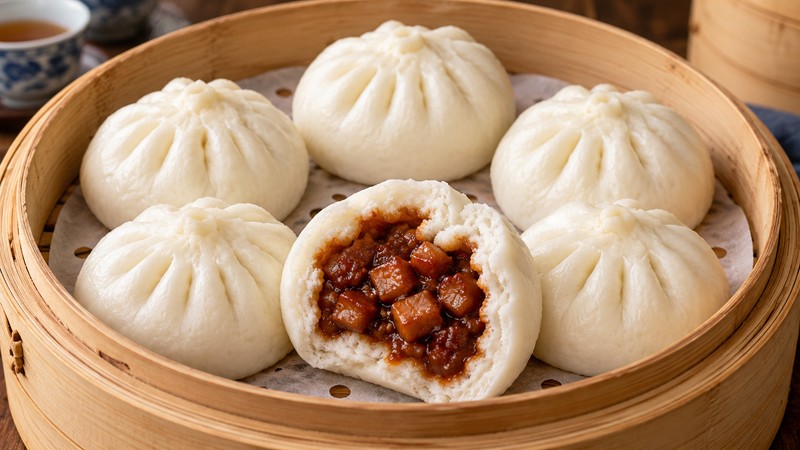
Over time, the dish evolved to become a marker of skill in Cantonese cooking: traditionalists judge a char siu bao by its pleats (12 to 15 even folds are considered perfect, indicating the dough is handled correctly) and the balance of its filling, which should be juicy but not runny. Asian Bbq Pork Buns For diasporic Cantonese communities, making char siu bao at home is often a way to connect to cultural roots, with grandmothers teaching younger generations the art of pleating and sauce mixing.

Authentic Cantonese Char Siu Bao Recipe
This recipe follows traditional Cantonese techniques, prioritizing soft, fluffy dough and a balanced pork filling. Asian Bbq Pork Buns It uses classic ingredients that are easy to source at Asian grocery stores, with no shortcuts to authentic flavor.
Ingredients
For the steamed dough (makes 6 buns):
- 2 cups all-purpose flour
- 1 tsp instant yeast
- 2 tbsp granulated sugar (divided)
- ¼ cup warm whole milk (105°F/40°C)
- 1 tbsp unsalted lard (traditional; substitute vegetable shortening if needed)
- ½ tsp fine sea salt
- 1 tsp baking powder
For the char siu filling:
- ½ lb char siu pork (homemade or high-quality store-bought)
- 2 tbsp hoisin sauce
- 1 tbsp oyster sauce
- 1 tsp light soy sauce
- ½ tsp dark soy sauce (for color)
- 1 tsp granulated sugar
- 1 tsp cornstarch
- 2 tbsp cold water
- ½ tsp toasted sesame oil
Step-by-Step Instructions
- Activate the yeast: In a small bowl, mix warm milk, 1 tsp of sugar, and instant yeast. Asian Bbq Pork Buns Stir gently, then let sit for 5–7 minutes until foamy—this confirms the yeast is active, a critical step for light dough.
- Make the dough: In a large mixing bowl, combine flour, remaining sugar, salt, and baking powder. Pour in the activated yeast mixture and lard.
- Asian Bbq Pork Buns Mix with a wooden spoon until a shaggy dough forms, then knead by hand for 8–10 minutes (or use a stand mixer with a dough hook for 5 minutes) until smooth, elastic, and only slightly sticky.
- First proof: Shape the dough into a ball, place it back in the bowl, cover with a damp tea towel, and let rise in a warm, draft-free spot for 1 hour, or until doubled in size. Asian Bbq Pork Buns This allows the yeast to create air bubbles that make the buns fluffy.
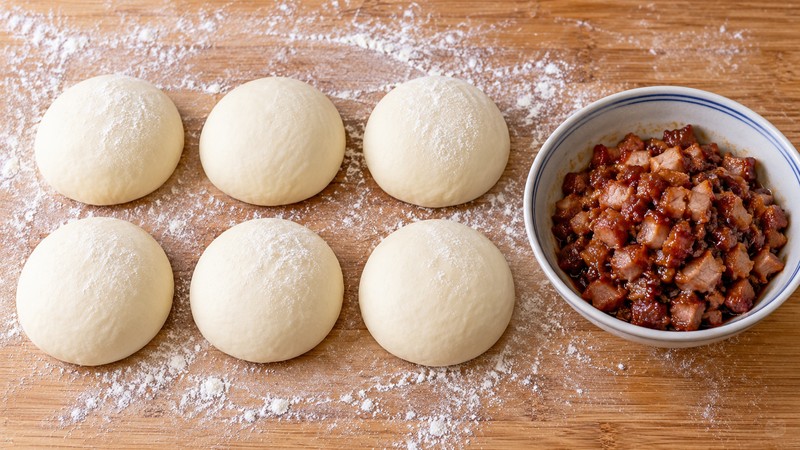
- Prepare the filling: Dice the char siu pork into ¼-inch cubes. In a small bowl, whisk together hoisin, oyster sauce, light soy, dark soy, sugar, and sesame oil.
- Asian Bbq Pork Buns In another small bowl, make a cornstarch slurry by mixing cornstarch and cold water to thicken the sauce.
- Cook the filling: Heat a small pan over medium-low heat, add the sauce mixture, bring to a gentle simmer, then stir in the cornstarch slurry. Cook for 1 minute until thickened, then remove from heat.
- Let the sauce cool completely—hot filling will make the buns soggy. Asian Bbq Pork Buns Fold in the diced char siu.
- Portion the dough: Punch down the risen dough to release air, then divide it into 6 equal pieces (about 1.5 oz each). Asian Bbq Pork Buns Roll each piece into a smooth ball, then cover with a damp towel to prevent drying.
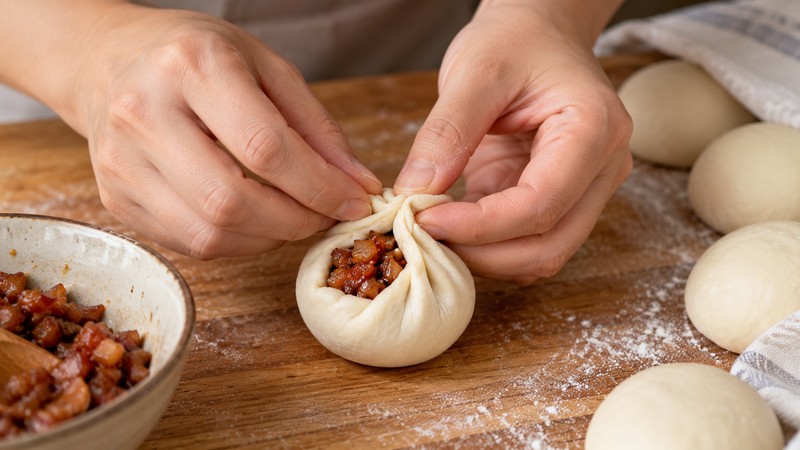
- Assemble the buns: Take one dough ball, flatten it into a 3-inch circle (about ¼-inch thick) with a thicker edge around the center to hold the filling without tearing. Asian Bbq Pork Buns Place 2 tbsp of cooled filling in the center.
- Pleat and proof: Hold the dough circle in one hand, then use your other hand to fold the edge up over the filling, pinching small sections to create pleats. Seal the top tightly, twisting gently to form a round bun.
- Asian Bbq Pork Buns Place each bun on a small square of parchment paper, then let proof for 20 minutes until puffy.
- Steam the buns: Bring water in a large pot to a rolling boil. Place the buns in a bamboo steamer (traditional for even steam circulation) over the pot, cover tightly, and steam for exactly 10 minutes.
- Asian Bbq Pork Buns Turn off the heat, let rest 1 minute before lifting the lid to avoid collapsing the dough.
Asian BBQ Pork Buns Variations
While steamed char siu bao is the authentic Cantonese standard, regional and cultural adaptations have emerged across Asia and the diaspora. The most popular variation is Hong Kong-style baked char siu bao, which gained traction in the mid-20th century as a sweeter, crispier twist on the original.
Instead of being steamed, these buns are brushed with a glaze of egg yolk and honey before baking at 375°F (190°C) for 12–15 minutes, resulting in a glossy, golden top and a denser, sweeter dough that appeals to Hong Kong’s dessert-forward palate. Asian Bbq Pork Buns Mainland Cantonese char siu bao, by contrast, are typically smaller, with a thinner wrapper and a more robust pork filling, often sold as street food snacks rather than dim sum.
Home cooks and modern chefs have also created creative variations to suit dietary preferences and tastes. Vegetarian char siu bao uses mock char siu made from tofu, seitan, or even mushrooms, marinated in traditional char siu sauces to replicate the savory-sweet flavor.
Some Southeast Asian versions, shaped by Cantonese diaspora communities, add coconut milk to the dough for a tropical, creamy crumb, while others include diced water chestnuts for extra crunch. Asian Bbq Pork Buns Even fast-food chains have adapted the dish, offering frozen char siu bao for quick home preparation, though these lack the delicate texture of homemade or restaurant-made versions.
Serving Asian BBQ Pork Buns the Cantonese Way
Traditional Cantonese serving etiquette for char siu bao is rooted in yum cha culture, where dishes are designed to be shared. Buns are served 2 to a small bamboo steamer basket, placed on the table alongside other dim sum staples like har gow (shrimp dumplings) and siu mai (pork dumplings).
Asian Bbq Pork Buns The ideal pairing is a hot, light tea—jasmine tea or oolong tea is preferred, as their floral and earthy notes cut through the richness of the pork filling and the sweetness of the dough, balancing the overall flavor.
Presentation is a subtle part of the experience: traditionalists arrange the buns with their pleated tops facing up, a sign of care in preparation, and avoid overcrowding the steamer basket to keep the buns warm and fluffy. Asian Bbq Pork Buns Common mistakes to avoid include opening the steamer lid immediately after cooking (condensation drips onto the buns, making them soggy), overfilling the buns (which causes the dough to tear during pleating or steaming), and rushing the proofing steps—under-proofed dough results in dense, chewy buns instead of the pillowy texture that defines authentic char siu bao.

FAQs
Q: Is making authentic char siu bao difficult for beginner home cooks?
A: While pleating the dough takes a bit of practice to get even folds, the rest of the process is forgiving. The key steps—activating yeast, proofing the dough, and steaming—are straightforward, and most beginners can master the technique after 1 or 2 tries.
Asian Bbq Pork Buns The most important tip is to be patient with proofing, as rushing this step will lead to dense buns.
Q: Can I substitute store-bought char siu for homemade in the filling?
A: Absolutely. Most Cantonese restaurants use pre-roasted char siu from local butchers, and high-quality store-bought versions work perfectly.
Asian Bbq Pork Buns If you can’t find char siu, you can use glazed pork shoulder or pork belly as a substitute, chopping it finely to match the texture of traditional filling.
Q: How do I store leftover char siu bao?
A: Let the buns cool completely, then store them in an airtight container in the refrigerator for up to 3 days. To reheat, place them in a steamer for 3–4 minutes (this restores the fluffy texture better than microwaving) or microwave for 10–15 seconds if you’re short on time.
Asian Bbq Pork Buns Avoid freezing, as the dough can become dry and crumbly.
Q: What’s the difference between steamed and baked char siu bao?
A: Steamed char siu bao is the original Cantonese version, with a soft, pillowy dough and tender, juicy filling. Baked char siu bao (popular in Hong Kong) has a crispy, glossy top from the egg and honey glaze, and a slightly denser, sweeter dough that’s less delicate than the steamed version.
Asian Bbq Pork Buns Both are delicious, but steamed is considered more authentic to Cantonese cuisine.
Q: Can I make gluten-free char siu bao?
A: Yes. Substitute all-purpose flour with a gluten-free all-purpose baking flour blend (add 1 tsp xanthan gum if the blend doesn’t include it to improve elasticity), and use gluten-free oyster sauce and hoisin sauce.
Asian Bbq Pork Buns The rest of the process remains the same—just be sure to adjust the liquid slightly if the dough is too dry or sticky.
Q: Why did my char siu bao turn out dense instead of fluffy?
A: The most common reasons are under-proofing the dough (it needs to double in size before shaping) or steaming for too long (over-steaming can make the dough heavy). Another mistake is punching down the dough too aggressively, which disrupts the air bubbles that create the fluffy texture.
Asian Bbq Pork Buns Take your time with proofing, and follow the steaming time exactly for best results.

Yue Cuisine 2 Hong Kong Food Guangdong Food Wikipedia
Frequently Asked Questions
What is the significance of asian bbq pork buns in Cantonese cuisine?
Asian BBQ pork buns (叉燒包 cha siu bao) are one of the most iconic dim sum items in Cantonese cuisine, often considered a staple at yum cha (tea restaurant) gatherings. They represent the fusion of Cantonese baking techniques with Chinese BBQ traditions and symbolize prosperity and abundance, making them a popular choice at celebrations and family gatherings.
How is asian bbq pork buns traditionally prepared?
Traditional preparation involves making a soft, fluffy dough using flour, yeast, sugar, and water, then allowing it to rise. The filling is made by diced char siu (BBQ pork) mixed with a savory-sweet sauce. The dough is divided into portions, filled with the BBQ pork mixture, pleated to create the characteristic褶皱 (folded) top, and then steamed until fluffy and cooked through.
What ingredients are essential for asian bbq pork buns?
Essential ingredients include: for the dough – all-purpose flour, yeast, sugar, baking powder, and water; for the filling – char siu (BBQ pork), oyster sauce, soy sauce, sesame oil, sugar, and sometimes haam jyu (ham) for added flavor. Some recipes also include shallots, garlic, and cornstarch slurry to thicken the filling.
What are the health benefits of asian bbq pork buns?
BBQ pork buns provide carbohydrates from the dough for energy, protein from the pork filling for muscle maintenance, and some vitamins from the minimal vegetables sometimes included. The steamed preparation is relatively low in fat compared to fried alternatives. However, they are calorie-dense and should be consumed in moderation as part of a balanced diet.
What are common mistakes when making asian bbq pork buns?
Common mistakes include: over-proofing or under-proofing the dough, which results in dense or collapsed buns; using too much filling, which causes the buns to burst during steaming; not sealing the edges properly, leading to leakage; over-kneading the dough, resulting in tough texture; and steaming for too long or at too high heat, causing the buns to become soggy or collapse.