This Asian BBQ pork recipe makes Cantonese char siu by marinating pork shoulder in soy sauce, hoisin, oyster sauce, Shaoxing wine, honey, and five-spice, then roasting and glazing it in layers. Use long, even strips so the center stays juicy while the edges caramelize.
Basic Facts
Cantonese name
Char siu
Best cut
Pork shoulder or collar with moderate marbling
Marinating time
4 to 24 hours, refrigerated
Doneness check
Caramelized edges and a safe, juicy center
Quick Reference
For ingredient and menu context, see the Cantonese char siu guide.
Char siu can be served sliced with rice or used in cooked-pork fillings.
What Is Asian BBQ Pork Recipe?
Char siu means fork-roasted pork and belongs to Cantonese siu mei roast-meat cooking. The recipe here uses a home oven rather than claiming a dated royal origin.
Char siu is available from Cantonese roast-meat shops; this recipe instead uses a home oven and a clean honey finish.
The glaze can be brown or red depending on the ingredients and optional coloring. Neither color proves doneness.
Serve sliced cooked char siu with rice or noodles, or dice it for a separately thickened bun filling. Soy, oyster sauce, five-spice and honey provide this version’s savory-sweet seasoning.
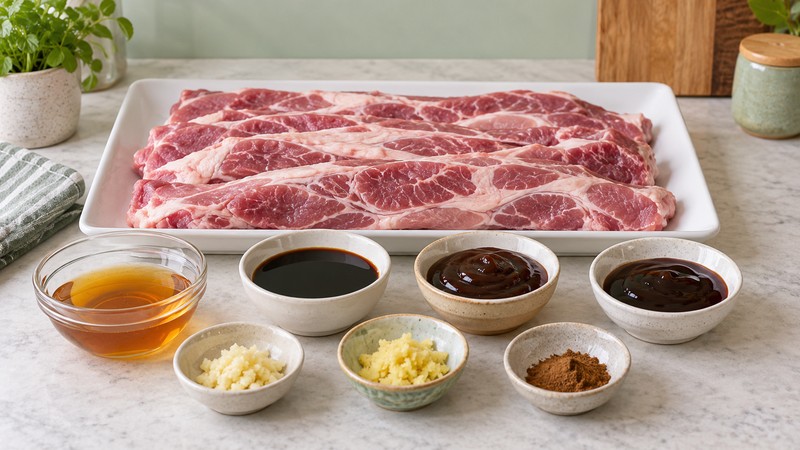
Home Char Siu Method
This shoulder-and-glaze method is a home adaptation, not a claim that the formulation has been kitchen-tested or guarantees restaurant results.
Ingredients for Four
- 900 g (2 lb) boneless pork shoulder, cut into even strips about 4 cm (1.5 inches) thick
- 2 tablespoons light soy sauce; 1 tablespoon dark soy sauce
- 3 tablespoons hoisin sauce; 2 tablespoon oyster sauce
- 1 tablespoon Shaoxing wine, optional; 1 teaspoon five-spice; 1/4 teaspoon white pepper
- 2 minced garlic cloves and 1 teaspoon grated ginger
- 3 tablespoons honey, divided: 1 for the marinade and 2 for the glaze
- 1 tablespoon water for the clean honey glaze; food coloring optional, label-directed
- Whisk soy, hoisin, oyster sauce, optional wine, spices, garlic, ginger and 1 tablespoon honey. Toss with the pork in a covered food-safe container and refrigerate for 4-24 hours. This is seasoning, not a food-safety treatment.
- Heat the oven to 375 F (190 C). Set an oven-safe rack over a lined roasting pan with a little water below it to reduce burnt drippings; the pork should not sit in water.
- Arrange the strips apart on the rack. Discard the raw-contact marinade. Roast, turn after about 20 minutes and continue, checking earlier for narrow strips. Timing depends on size and oven.
- Mix the remaining 2 tablespoons honey with 1 tablespoon water in a clean bowl. Brush it on near the end with a clean brush. Watch closely; sugar burns quickly. Broiling is optional and should be brief, never a substitute for cooking the center.
- Check the thickest portion with a thermometer: whole-cut pork must reach at least 145 F (63 C), followed by at least a 3-minute rest. Shoulder may need further cooking for the texture you prefer. Slice against the grain and serve with rice or noodles.
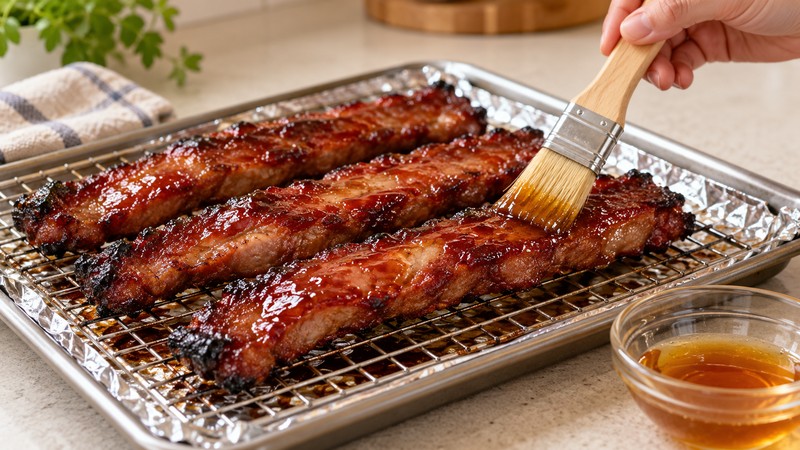
Asian BBQ Pork Recipe Variations
Sweetness, coloring and pork cuts vary among shops and households. There is no reliable rule that all Hong Kong versions use loin and all Guangzhou versions use shoulder.
Use the home oven method here. Air fryers and charcoal setups need instructions matched to their equipment.
For a shorter marinade, flavor may be milder; refrigeration and safe cooking remain necessary.
Diced cooked char siu can become bun filling with an appropriately thickened sauce. Pineapple juice is not assumed to tenderize a roast without changing its texture or sugar content.
Serving Asian BBQ Pork Recipe the Cantonese Way
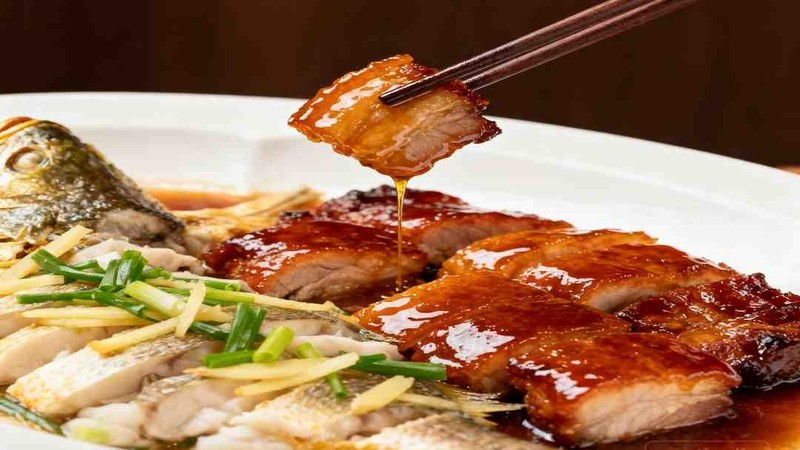
Slice the rested pork across the grain and serve with clean glaze if desired.
Rice, noodles and cooked greens are practical accompaniments. Dice cooked pork for fried rice or buns only with their separate methods.
Too much broiling or a very lean cut can dry the pork. Optional coloring is not responsible for the meat’s safety or authenticity.
Frequently Asked Questions
How much pork does this batch use?
Use 900 g (2 lb) boneless pork shoulder, cut into even strips.
Can I brush on leftover raw marinade?
Not directly. Reserve clean glaze before adding meat, or bring used marinade to a full boil for a few minutes before reuse. Clean glaze is the simpler option.
What if the glaze darkens before the center is cooked?
Lower the oven heat and shield the surface loosely with foil. Do not judge doneness by the glaze color.
Keeping Leftovers
Refrigerate perishable cooked food promptly in shallow containers, within two hours of cooking (one hour above 90 F / 32 C). Keep it cold at 40 F / 4 C or below. USDA generally allows three to four days for refrigerated leftovers; discard food left out too long. Reheat leftovers to 165 F (74 C), checking the center rather than relying on a few seconds or minutes.
Sources and Related Reading
Primary pork technique and context source. The home adaptation above is not presented as an exact copy of that author’s recipe or as a recipe tested by YueCuisine. Food-safety temperature and handling guidance; USDA leftover guidance.
Asian Bbq Pork Marinade: The Complete Guide to Authentic Can · How to Make Asian Bbq Pork Buns: The Authentic Cantonese Rec
Any newly generated food visuals accompanying this article are AI illustrations, not photographs documenting a kitchen test. Retained existing images are captioned only for their visible contents and context.