This Asian steamed fish recipe uses a whole fish with ginger, scallion and a light soy finish. A heatproof plate inside the steamer supports the fish and catches cooking liquid so it can be drained safely.
Ginger, scallion and soy complement the fish without a heavy coating. Steaming gives a soft skin and moist flesh.
What Is Asian Steamed Fish Recipe?
Cantonese-style steamed fish uses steam rather than a frying or roasting surface. The whole-fish presentation is one option; fillets can use a shorter version of the method.
Gentle steaming and timely doneness checks help preserve the fish’s moist texture. Overcooking can dry the flesh even when the sauce is well balanced.
Whole fish is a familiar celebration dish. The fish/surplus wordplay is often presented in Mandarin as ‘yu’; it should not be described as Cantonese pronunciation.
A whole fish is convenient for sharing at the table. This recipe uses ginger, scallion and a light soy finish rather than a thick coating; remove bones carefully while serving.
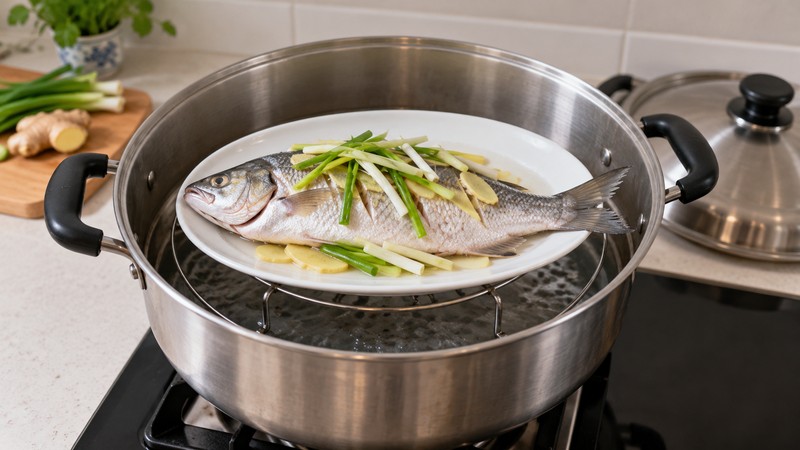
Home Example: Ginger-Scallion Whole Fish
This is a home adaptation of Cantonese steaming, not a kitchen-tested claim. Steaming produces moist flesh and soft skin, not a crisp surface.
Ingredients for Two to Three
- 1 cleaned whole sea bass, snapper or tilapia, approximately 680 g (1.5 lb), scaled and gutted
- 15 g fresh ginger, half sliced and half cut into thin matchsticks
- 3 scallions, cut into short pieces and thin strips
- 2 tablespoons light soy sauce, 2 tablespoons water and 1/4 teaspoon sugar
- 1 tablespoon neutral oil; 1 teaspoon Shaoxing wine, optional
- Rice and a cooked green vegetable, to serve
Steam and Finish
- Keep the fish refrigerated while preparing everything else. Pat it dry, check the cleaned cavity and place it on a heatproof plate that fits under the steamer lid. Make shallow slits in thick flesh if needed; do not cut an arbitrary inch deep.
- Put sliced ginger and short scallion pieces inside and under the fish. Add the optional wine. Set a rack above the water in a covered pot; bring the water to a boil before adding the plate. Leave enough water for the cook without letting it touch the plate.
- Cover and maintain active steam. Start checking around 10 minutes for this size, but allow longer when needed. Thickness, starting temperature and equipment change the time. Use a food thermometer near the backbone without touching bone: the fish must reach 145 F (63 C). Opaque flesh that separates easily is an additional texture check, not a timing guarantee.
- Lift the lid away from your face. Use mitts and a plate lifter to remove the hot plate; drain excess liquid carefully and remove the spent aromatics.
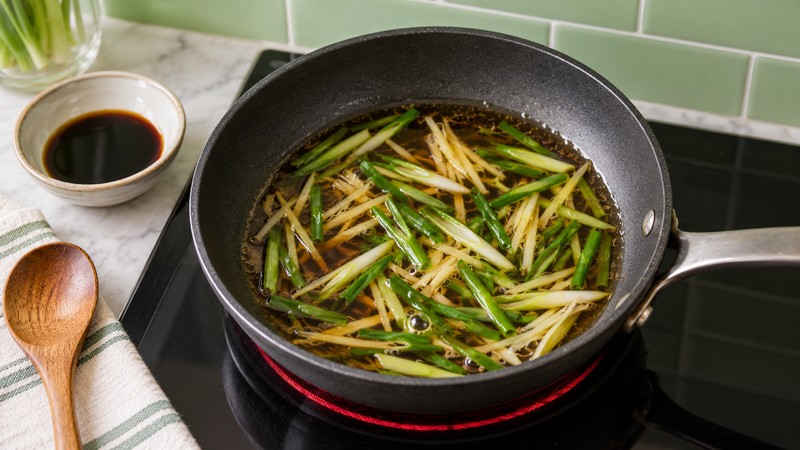
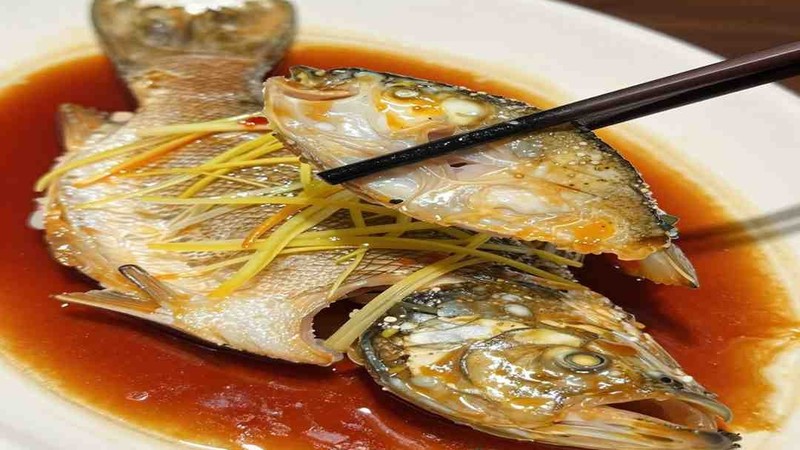
- Warm the oil in a small skillet over moderate heat, gently cook the ginger matchsticks and scallion strips until fragrant, then add the soy, water and sugar. Heat through and spoon over the fish. This home finish avoids pouring smoking oil onto a wet plate.
- Serve immediately with rice and greens. Help diners remove bones; whole-fish presentation does not make small bones safe to swallow.
Asian Steamed Fish Recipe Variations
Soy brands differ in saltiness. Start with the measured light sauce; optional oyster sauce changes the flavor rather than identifying a city’s version.
Cooked mushroom or bamboo-shoot accompaniments are optional. Prepare them separately unless following a recipe designed to steam them with the fish.
Tilapia, snapper or sea bass may work if they fit the plate; price and fish names do not guarantee the same steaming time.
Serving Asian Steamed Fish the Cantonese Way
Whole fish suits a shared platter, but serving orientation and etiquette vary by household.
Help diners remove bones. It is fine to portion the fish for ease and safety.
Serve with rice and greens if desired. Keep the finish in the skillet rather than pouring smoking oil at the table.
Avoid overcooking, excessive sauce and a watery plate; doneness still requires the center check.
Frequently Asked Questions
Why use a plate instead of placing the fish directly on the basket?
A heatproof plate supports the whole fish, catches liquid and makes it possible to drain and finish it without moving fragile flesh.
Can I skip Shaoxing wine?
Yes. Ginger, scallion and the soy finish provide flavor without wine; omission is not a promise that other ingredient labels are alcohol-free.
Keeping Leftovers
Refrigerate perishable cooked food promptly in shallow containers, within two hours of cooking (one hour above 90 F / 32 C). Keep it cold at 40 F / 4 C or below. USDA generally allows three to four days for refrigerated leftovers; discard food left out too long. Reheat leftovers to 165 F (74 C), checking the center rather than relying on a few seconds or minutes.
Sources and Related Reading
Primary fish technique and context source. The home adaptation above is not presented as an exact copy of that author’s recipe or as a recipe tested by YueCuisine. Food-safety temperature and handling guidance; USDA leftover guidance.
Asian Steamed Sea Bass: Cantonese Timing, Sauce, and Texture Checks · How to Make Asian Steamed Egg Recipe: The Authentic Cantones
Any newly generated food visuals accompanying this article are AI illustrations, not photographs documenting a kitchen test. Retained existing images are captioned only for their visible contents and context.