Ginger scallion lobster needs fragrant aromatics and a light sauce, not a thick brown gravy. Cook manageable pieces, keep the scallion greens for the finish, and check the meat rather than judging doneness by the red shell. This home version uses prepared raw lobster tails and shallow pan cooking instead of restaurant flash-frying.
Ingredients for two main-course portions
- 600 g raw shell-on lobster tails, thawed in the refrigerator if frozen; ask the fishmonger to split and cut them into 4 cm sections.
- 25 g ginger, sliced; 4 scallions, cut into 5 cm lengths with whites and greens separate.
- 2 tablespoons neutral oil; 1 tablespoon cornstarch for a thin dusting of exposed meat.
- Sauce: 100 ml unsalted stock or water, 2 teaspoons light soy sauce, 1 tablespoon Shaoxing wine or additional stock, 1/4 teaspoon sugar, and a pinch of white pepper.
- Optional finish: 1/4 teaspoon toasted sesame oil.
Use a wide wok or deep skillet with a lid, tongs, and a food thermometer. Allow about 20 minutes for preparation and 10 minutes at the stove; size, starting temperature, and burner strength affect cooking time. Do not substitute cooked lobster without changing the method.
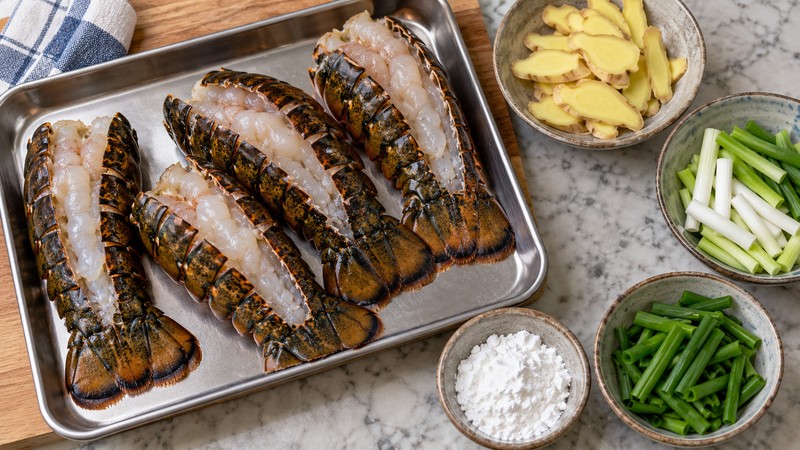
Prepare a dry surface and a ready sauce
Keep the lobster chilled until needed. Pat it dry, inspect cut edges for shell fragments, and lightly coat only exposed meat with cornstarch. Too much starch makes the sauce pasty. Wash hands and clean surfaces after handling raw seafood. Mix the sauce in a cup before turning on the burner.
Cook in batches, then steam briefly
- Heat the pan over medium-high heat and add the oil. Place lobster pieces in one layer, exposed meat against the pan where possible. Sear for about 1 minute per exposed side, then transfer to a clean plate. Work in batches if pieces overlap; this is only an initial sear, not a doneness test.
- Lower the heat slightly. Add ginger and scallion whites to the remaining oil; stir for 30 seconds without blackening them.
- Return the lobster, add the premixed sauce, and cover. Maintain a steady simmer for about 3 minutes, then check a thick piece. Continue in short intervals as needed.
The covered stage cooks through the thicker meat; the final uncovered toss adjusts the sauce. Do not leave small, already-cooked pieces simmering while a much larger piece finishes.
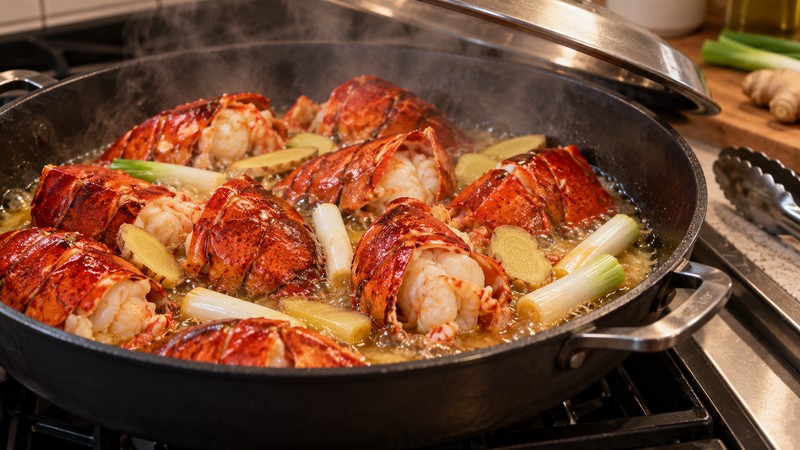
Check doneness and finish without drowning the lobster
Follow FDA seafood handling and cooking guidance: most seafood should reach 145 F (63 C); lobster flesh should be firm, pearly, and opaque. Insert the probe into thick meat without touching shell. A red shell alone does not establish that the center is cooked.
Once cooked, add scallion greens and optional sesame oil. Toss briefly. If the sauce is watery, remove the lobster and reduce the liquid before returning it for a quick coating. If too salty, dilute with a tablespoon of water at a time; do not add oyster sauce automatically. Serve immediately with rice and a shell bowl.
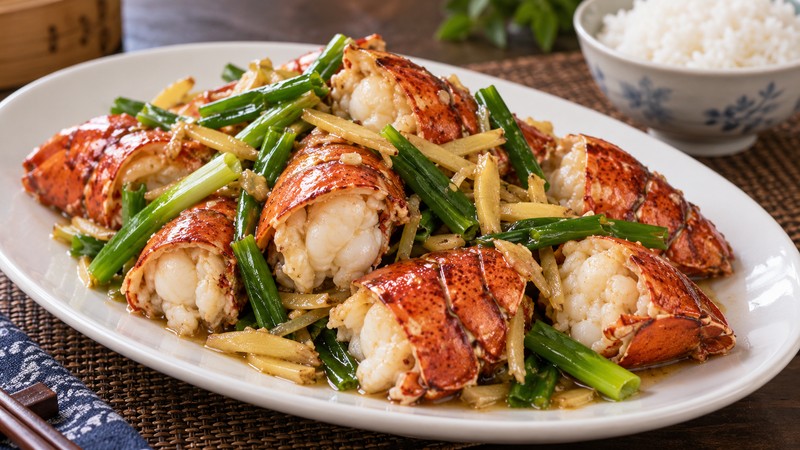
Variations and leftovers
Whole lobster includes claws and joints that cook differently from tails; have it prepared professionally and check each thick portion. The Woks of Life’s original lobster recipe documents a flash-fried approach; the shallow-pan version here is an adaptation, not a claim to reproduce that texture.
Lobster is a crustacean allergen; sauces may contain wheat, soy, and sesame. Refrigerate leftovers promptly in shallow containers, within 2 hours or 1 hour above 90 F (32 C). Reheat to 165 F (74 C), following USDA leftover guidance; the meat will be firmer than freshly cooked lobster.
For seasoning choices see the Cantonese sauces guide; for a separate noodle side see ginger scallion noodles.
Frequently Asked Questions
Can I use precooked lobster?
Yes, but do not repeat the raw-lobster sear and covered cooking sequence. Make the ginger-scallion sauce first and add cooked meat only to heat it through; refrigerated leftovers need reheating to 165 F (74 C).
Why is my sauce gummy?
Heavy starch dusting or excessive reduction can make it gummy. Dust exposed meat lightly, and loosen an overly thick sauce with unsalted stock a tablespoon at a time.
Illustration note: any AI-generated food images accompanying this article are illustrative, not photographs of a tested batch.