Cantonese steamed spare ribs are small bone-in pork pieces coated with a black-bean marinade and cooked on a shallow plate. They are not barbecue ribs or a seafood wok dish. Use evenly cut pieces, keep the plate uncrowded, and check both temperature and tenderness.
A black-bean marinade for small-cut ribs
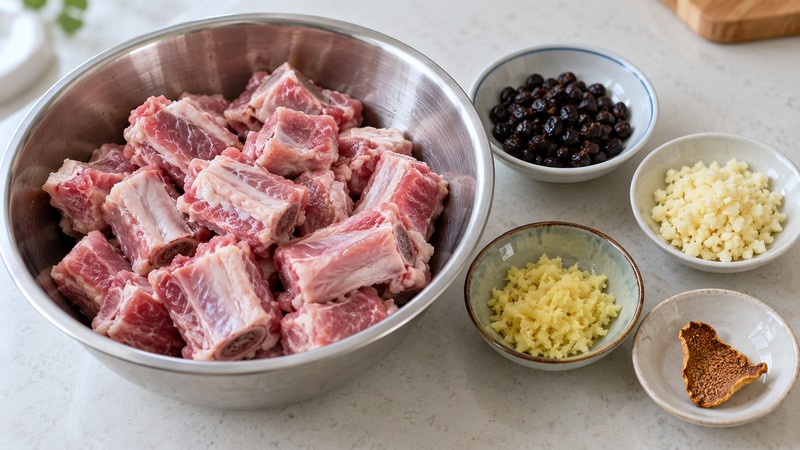
The quantities are from Made With Lau’s steamed spare ribs. For 1 lb ribs, use 1 tablespoon fermented black beans, 1 teaspoon dried mandarin peel, 1/2 teaspoon salt, 1 teaspoon sugar, 1/2 tablespoon light soy, 1 tablespoon oyster sauce, 1/2 tablespoon Shaoxing wine, 1 minced garlic clove, 1 teaspoon minced ginger, 1 teaspoon sesame oil and 2 tablespoons cornstarch. Have 1/2 teaspoon vegetable oil, scallions and optional chilli for finishing.
Ask a butcher for cross-cut ribs; do not force an ordinary kitchen knife through bones. Buy similarly sized pieces. Oyster sauce may contain shellfish, while soy and other sauces may contain wheat. Check these even though the main ingredient is pork.
Coat the ribs and arrange a single layer
- Rehydrate the mandarin peel and rinse the fermented beans; mince them.
- Pat pork dry rather than washing raw meat. Combine with seasonings and aromatics, then sesame oil and cornstarch.
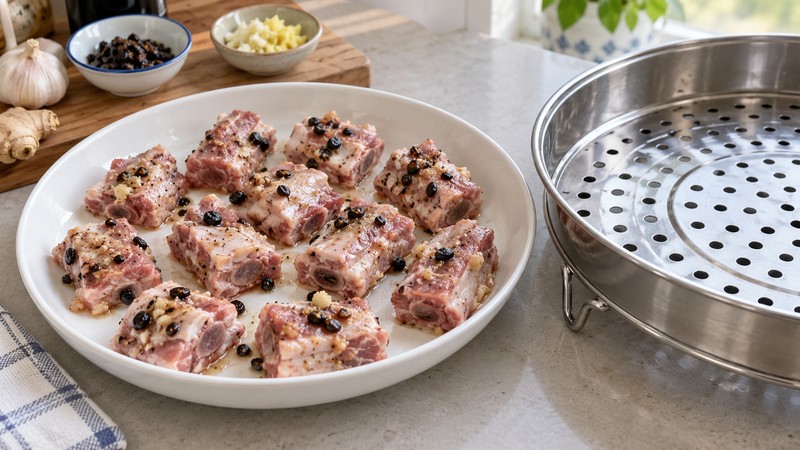
- Spread in a shallow heatproof plate without overlapping. Add optional chilli and the finishing oil.
The source uses roughly 1-1 1/2-inch pieces. Size is part of the method, not a decorative detail. If your ribs are much larger, do not expect its time to apply unchanged. Choose a plate with space for the whole batch rather than hiding another layer underneath.
Set the loaded plate aside in the refrigerator while establishing the steamer. Confirm that the rack is stable and the lid closes; keep water sufficient for steaming without letting the pot boil dry. Have a plate gripper ready before the plate becomes hot.
Steam and check beside the bone
Load over boiling water and cover. The source steams its small-cut batch for about 20 minutes. Start checking then; larger pieces or a different plate may need longer.
Use a clean thin probe in the thickest meat, not against bone. USDA specifies 145°F (63°C) plus a 3-minute rest for whole-cut pork in its safe-temperature chart. Continue cooking if any checked piece is below the minimum. The meat may need further cooking for your preferred tenderness even after it meets the safety threshold.
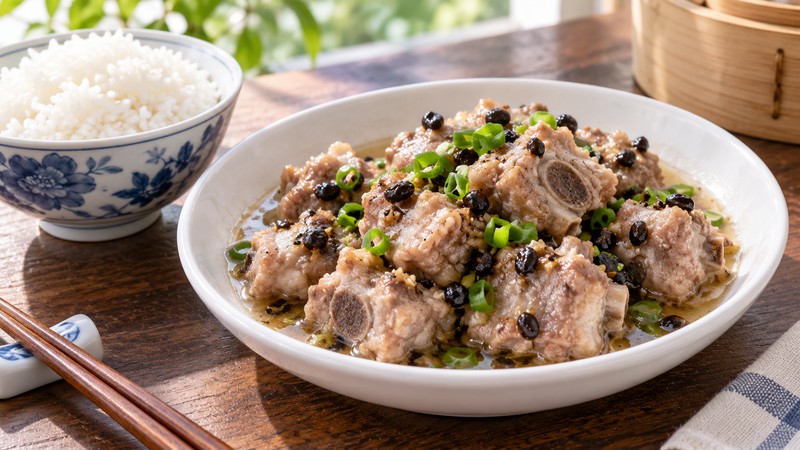
Lift the lid away from you, remove the hot dish carefully and garnish with scallions. Serve the juices with rice. Use clean serving utensils rather than returning the raw-marinade spoon to the plate.
Can bottled black-bean sauce replace fermented beans?
It is not a direct measured equivalent: bottled sauce can include extra salt, sugar, oil and thickeners. For the first batch, follow the named ingredient list rather than replacing both beans and marinade with an unmeasured sauce.
A firm batch is not a reason to skip the temperature check next time. Compare piece size and crowding first. For another pork texture, see steamed minced pork; for a wrapper-based dim sum dish, see siu mai.
Illustration disclosure: accompanying AI-generated illustrations are illustrative, not photographs of YueCuisine recipe testing.