Dim sum rice rolls, or cheung fun, are thin steamed sheets rolled around a filling. They are not made by soaking dry spring-roll rice paper. This shrimp version uses a cloth-lined tray method; the batter and tray technique belong together.
A measured batter for the cloth-lined method
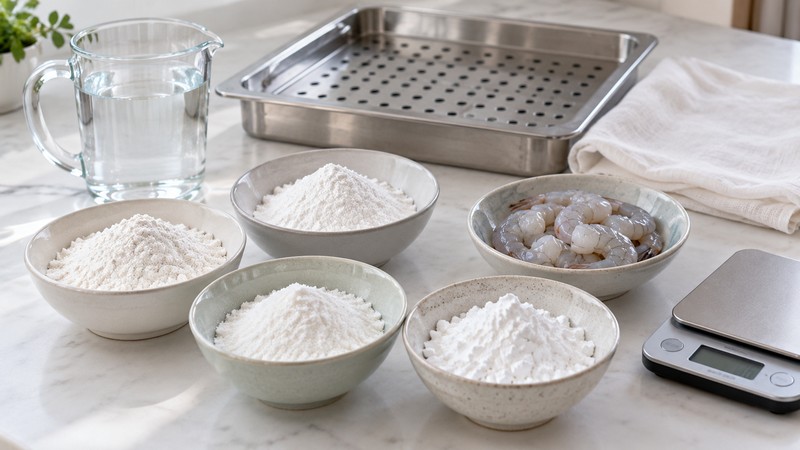
The Woks of Life’s shrimp cheung fun uses 40 g rice flour, 9 g mung bean starch, 18 g wheat starch, 18 g cornstarch, 1/4 teaspoon salt and 235 ml water. Have neutral oil, 8 oz peeled shrimp, a 9-by-13-inch flat-bottomed tray, clean thin cotton cloth, scraper and plate gripper ready. Do not substitute glutinous rice flour or wheat flour for the named ingredients.
Read the labels individually: wheat starch is not an automatic gluten-free claim, and shrimp is a shellfish allergen. Check the tray’s fit before mixing; it must sit level inside the steamer with room to lift it safely. Prepare an oiled, clean work surface beside the stove.
Steam a thin sheet and roll while warm
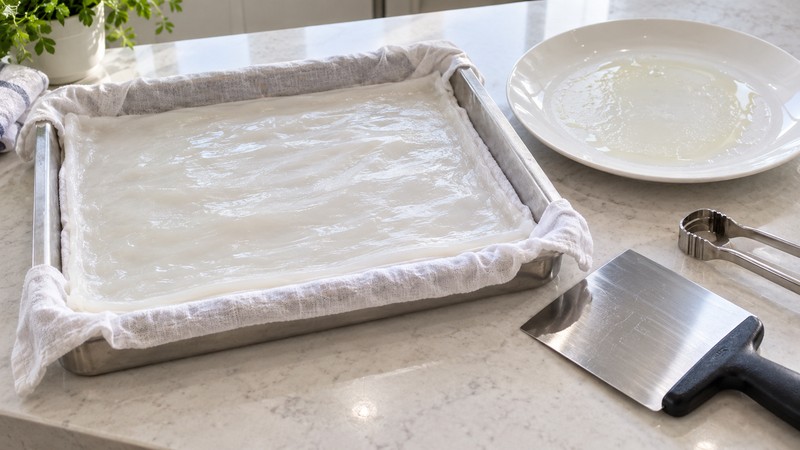
- Mix the dry ingredients with water until dispersed and let bubbles settle. Saturate the cloth and line the tray without wringing it dry.
- Cook the shrimp separately until safely done. Restir the batter before each pour; cover the cloth with a thin, even layer.
- Steam over boiling water. The source uses about 2 minutes for a sheet in this tray.
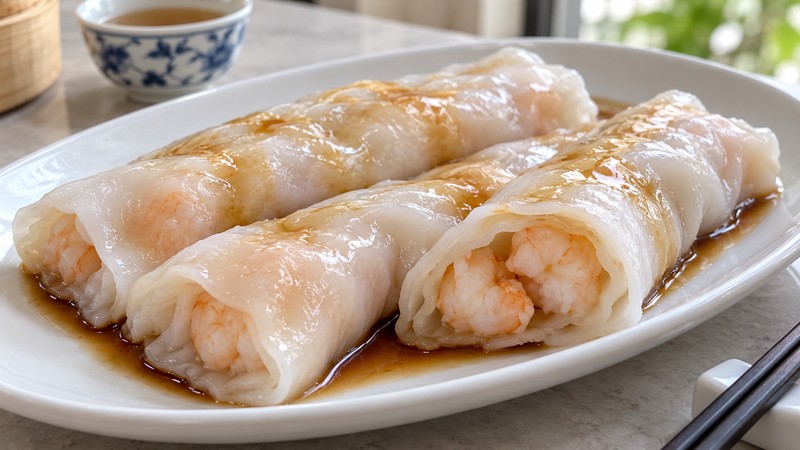
- Invert the hot cloth onto the oiled surface. Peel and scrape the sheet free, add shrimp in a line, and roll. Repeat after cleaning rice residue from the cloth.
The sheet should hold together before you move it. A tray tipped to one side cannot give an even sheet, however accurately you weighed the flour. Check the support rack before blaming the batter. Have a clear landing area ready so the hot tray is not balanced over the sink or carried through the kitchen.
Filling and sauce: keep them separate from the batter
For this version, the source’s sauce combines 2 1/2 tablespoons light soy, 2 teaspoons dark soy, 5 teaspoons sugar, 1/3 cup water, 1 teaspoon each oyster sauce and oil, ginger and scallion. Simmer together and remove the aromatics.
Drizzle at serving rather than pouring sauce into the raw batter. If the rolls are being shared, offer extra sauce separately. This makes it easier to serve diners who prefer a lighter coating and avoids soaking every roll while the remaining sheets are still being made.
Verify shrimp doneness rather than assuming a brief sheet-steaming step will cook a thick raw filling. The USDA chart gives fish and shellfish a 145°F (63°C) minimum.
What if the sheet tears?
First check for rice residue, a dry cloth or an uneven pour. Change one preparation detail at a time. Do not turn a torn sheet into a reason to add arbitrary quantities of flour.
Compare this poured batter with the kneaded dough in har gow, or serve the rolls alongside siu mai.
Illustration disclosure: accompanying AI-generated illustrations explain the stages; they are not photographs of a YueCuisine kitchen trial.