Cantonese steamed pork ribs use small bone-in pieces, a black-bean marinade, and an even shallow layer. This produces a different texture from long-braised ribs: aim for cooked, pleasantly chewy meat rather than meat falling from the bone. The method is source-based, not a YueCuisine-tested recipe.
Ribs and marinade
For 450 g spare ribs, use 1 tablespoon fermented black soybeans, 1 minced garlic clove, 1 teaspoon minced ginger, 1 teaspoon sugar, 1/2 tablespoon light soy sauce, 1 tablespoon oyster sauce, 1/2 tablespoon Shaoxing wine, 1 teaspoon sesame oil, and 2 tablespoons cornstarch. Optional additions are a small amount of rehydrated mandarin peel and sliced chili. These follow Daddy Lau’s steamed-rib marinade; start without his additional salt because bean and sauce salinity varies.
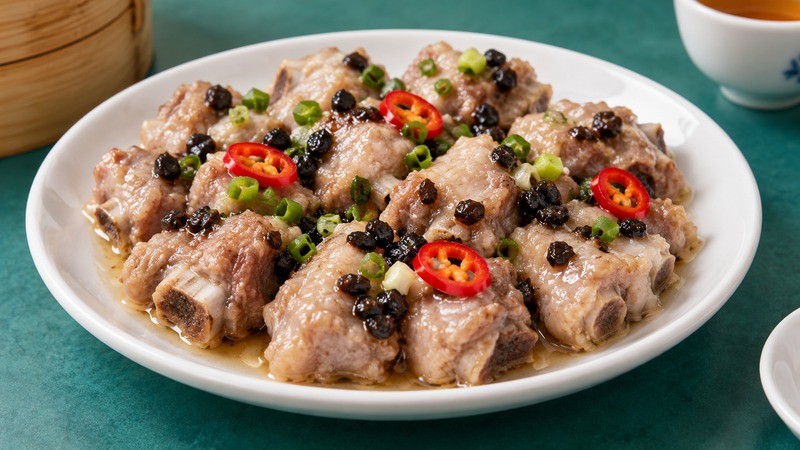
Prepare small pieces and coat evenly
Ask the butcher for short cross-cut rib strips and divide between the bones into similarly sized pieces. Remove loose bone fragments carefully and pat dry. This guide omits the source’s raw-meat rinsing and starch-washing step: USDA advises against washing raw meat because of cross-contamination.
Chop the fermented black beans and mix them with the ribs, aromatics, wine, sugar, and sauces. Add sesame oil and cornstarch last, coating each piece. Refrigerate while preparing the steamer. Fermented black soybeans are a seasoning, not canned black beans; ready-made black-bean sauce also has a different salt level.
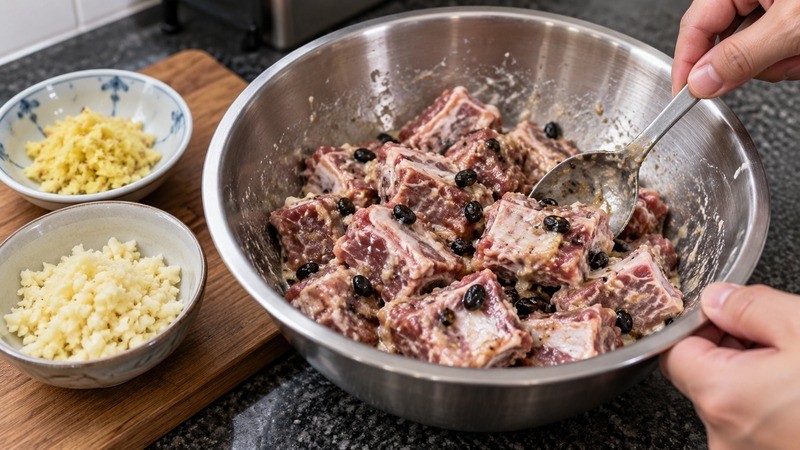
Steam in a shallow layer
Spread ribs on a rimmed heatproof plate with no overlapping pieces. Bring the steamer water to a boil, set the plate on a stable rack, and cover. Maintain strong steam and watch the water level. The source steams its small pieces for about 20 minutes; treat that as a starting point, not proof of doneness for larger ribs or a crowded dish.
Choose a plate wide enough for the batch rather than building a second layer. Prepare the garnish and serving space before lifting the hot plate. Open the lid away from your face and use dry mitts or a proper plate lifter; the sauce and ceramic can both cause burns.
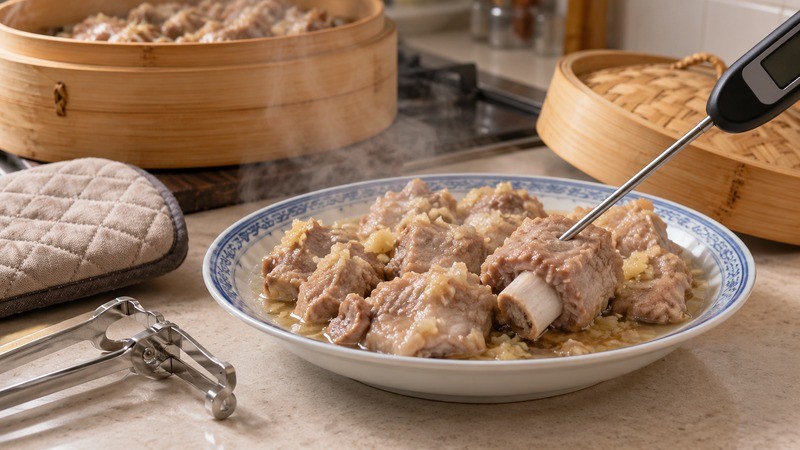
Verify doneness and serve
Probe the thickest meat in several pieces without touching bone. For whole-muscle pork, the official minimum is 145 F (63 C) with a 3-minute rest. Continue cooking if any piece is below that minimum; more cooking may also be needed for your preferred tenderness. Neither a glossy starch coating nor an opaque surface verifies the center.
FAQ
Why is the sauce watery?
Check excess surface moisture, whether the starch was distributed, and whether steamer water splashed onto the plate. Do not drain all the juices merely because the sauce is lighter than a stir-fry sauce.
Can I substitute large barbecue ribs?
Not with this timing. Ask for small cross-cut pieces or choose a separate long-cooking rib recipe.
Check soy, wheat, sesame, and shellfish labels. For a dim sum spread, add siu mai in a separate steaming batch; steamed tofu offers a softer accompanying texture.
Image disclosure: illustrations are AI-generated, not photographs proving the ribs’ cooking temperature.