The texture problem in dry beef chow fun usually begins before frying: stiff rice ribbons are pulled apart, beef is sliced unevenly, or too much liquid reaches a small pan. Prepare a manageable batch and keep the sauce measured. This is the dry style, not rice noodles under a thick gravy.
Rice ribbons and a restrained coating
For four modest shared portions, use 285 g flank steak, 340 g fresh wide rice noodles, 4 scallions cut into 7 cm lengths, 3 thin ginger slices, 115-170 g washed bean sprouts and 3 tablespoons neutral oil. Beef marinade: 1 1/2 tablespoons water, 1 teaspoon cornstarch, 2 teaspoons each oyster sauce and Shaoxing wine, 1 teaspoon light soy, and optional 1/4 teaspoon baking soda. Refrigerate for 30 minutes.
Finish with 2 tablespoons light soy, 2 teaspoons dark soy, 1/2 teaspoon sesame oil, 1/4 teaspoon sugar and 2 tablespoons Shaoxing wine. These quantities are based on The Woks of Life’s beef chow fun; the source’s printed metric steak weight conflicts with its 10 oz measure, so 285 g is used here. Check condiment labels for wheat, soy, sesame and oyster allergens.
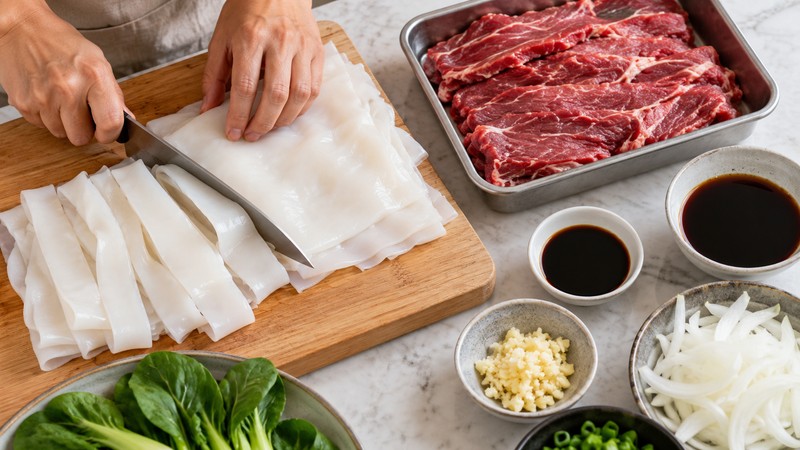
Make the ribbons flexible without soaking away their shape
Slice steak across the grain about 3 mm thick. Cut uncut rice sheets into roughly 2.5 cm ribbons. If cold noodles will not peel apart, briefly warm them by package directions; the source also offers a brief blanch, followed by draining. Neither method means leaving perishable noodles on the counter for hours. Keep waiting beef chilled.
A useful pre-pan check is to lift one ribbon: it should bend rather than snap. If it still breaks, stop pulling the whole block apart and warm a smaller portion first. This checks handling, not food safety.
Lift from underneath instead of chopping through noodles
- In a suitable hot wok, use half the oil to sear beef in a single layer, then transfer to an intermediate holding dish. Do not treat the sear alone as final doneness.
- Add remaining oil, ginger and scallions. Spread noodles, then add wine and measured finishing sauce. Lift with a broad spatula instead of repeatedly stabbing or stirring the ribbons.
- Return beef, add sprouts, and cook through. Divide the ingredients into two batches if noodles pile up.
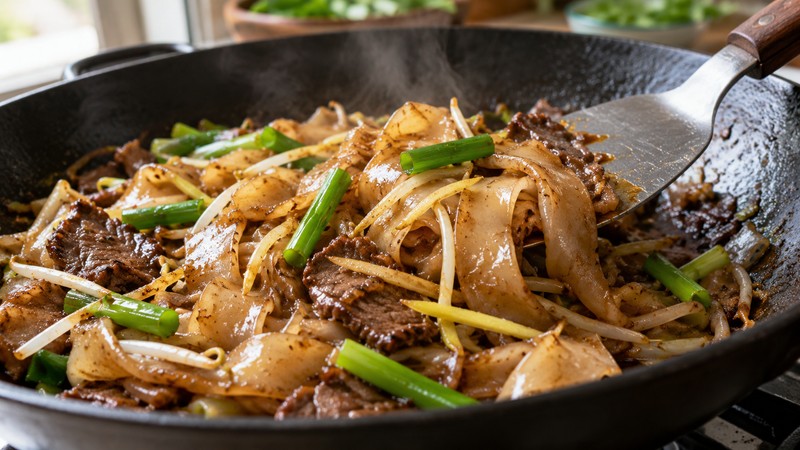
Correct salt and moisture separately
Use a probe through the side of a thick beef slice: whole-cut beef needs 145 F (63 C) and a three-minute rest under FoodSafety.gov guidance. Cook sprouts thoroughly; for vulnerable diners, precook them until steaming hot rather than retaining a raw crunch. Follow cookware heat limits instead of pursuing visible smoke.
Taste only after meat is cooked. A dark plate is not necessarily well seasoned: extra dark soy changes color and can add salt. Water loosens a coating but does not remove its total salt; a badly oversalted batch may need extra unseasoned noodles. A wet puddle calls for better draining and less crowding next time, not more starch in this dry style.
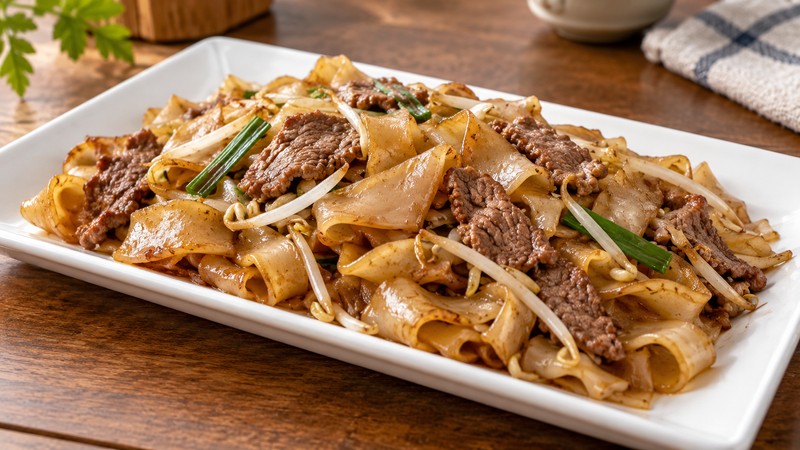
For another home-burner sequence see beef chow fun; for condiment differences see the sauces guide. Keep cooked extras refrigerated rather than standing in the wok.
Frequently Asked Questions
Is dry-fried chow fun cooked without oil?
No. Dry describes the absence of a substantial gravy, not an oil-free pan. A measured amount helps the noodles release.
Can thin egg noodles substitute without other changes?
They produce chow mein rather than chow fun. Use a pan-fried egg-noodle recipe with its own preparation and timing.
AI-generated illustrations, if used, are not photographs of a tested batch.