Cantonese roast duck needs two separate preparations: seasoning inside the cavity and a thin skin coating outside. Drying belongs in the refrigerator, not on a kitchen hook overnight. This guide explains the sequence and safety decisions for a home oven; it is not a claim that YueCuisine has tested a restaurant-equivalent result.
Choose the bird and prepare the workspace
Bill Leung’s Chinese roast duck recipe is the primary reference for the Cantonese preparation. It uses a roughly 5-6 lb Pekin duck, cavity spices, a cooked bean-sauce marinade, and a maltose-vinegar skin bath. Read its complete measured ingredient list before starting rather than combining quantities from different duck recipes.
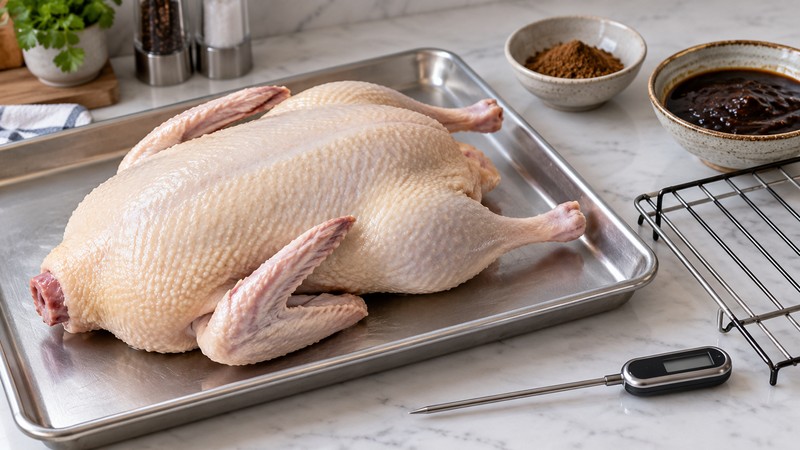
Plan a roasting rack, deep pan, thermometer, heatproof handling tools and refrigerator space. Remove packaged giblets and visible pinfeathers. Pat dry; do not wash raw poultry under running water, following USDA handling advice. Keep raw duck and its juices away from ready-to-eat food.
Season inside, coat outside, and dry cold
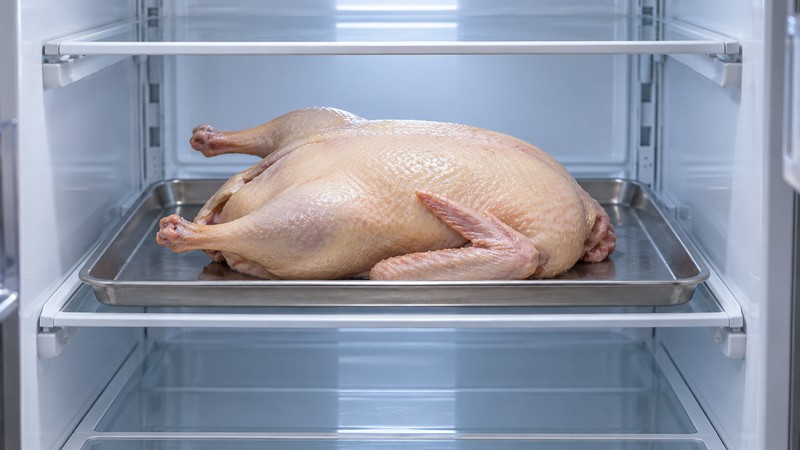
The reference seasons the cavity with salt, five-spice, sugar, sand ginger and Shaoxing wine. Its cooled cooked marinade combines bean sauces and aromatics; it belongs inside, with the cavity secured, not smeared over the skin. It then scalds and coats the skin with a maltose, red-vinegar and salt solution before uncovered overnight refrigeration.
The source also describes skin inflation. That is an advanced operation requiring appropriate clean equipment; this guide does not recommend a household workshop pump or an improvised compressor. Skipping it means accepting a different skin result, not pretending that another step has reproduced it.
Use a rimmed tray to contain drips and keep the duck below ready-to-eat items. Do not copy room-temperature tempering or fan-drying schedules as safety requirements. Keep the duck refrigerated until the oven and roasting pan are ready; a cold-start bird may need longer cooking.
Roast and verify the meat, not only the colour
The primary recipe roasts at 350°F (175°C): breast-down for 25 minutes, pan rotation and another 25; breast-up for 20 minutes, rotation and another 20. It rests the bird for 20 minutes. Treat these as source-specific checkpoints, not a guarantee for every bird or oven.
The official poultry chart requires 165°F (74°C). Check the thickest breast and innermost thigh and wing without touching bone; check any cavity filling too. Continue roasting until all required checks pass. If the skin is darkening sooner, protect it with foil rather than declaring the meat cooked.
Remove skewers before carving. Keep the board stable, and use suitable equipment for bone-in cuts; serving joints is preferable to struggling with a knife not designed to cut bone. Do not serve cavity liquid that has not reached a safe temperature.
Why did the skin brown unevenly?
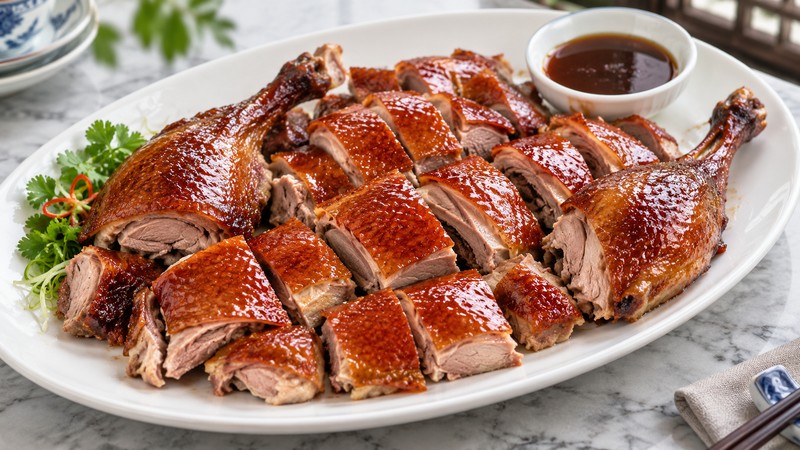
Inspect for marinade on the outside, missed coating patches and unequal oven exposure before adding a thicker sugary coating. A deep colour and crispness are separate observations from safe meat temperature.
For simpler steam-based dishes, see steamed minced pork and steamed spare ribs.
Illustration disclosure: accompanying AI-generated illustrations are not photographs of a YueCuisine roast-duck test or proof of doneness.