Steamed egg is beaten egg diluted with warm water and gently set in a heatproof dish. A smooth surface comes from careful mixing and gentle heat, not from serving a liquid center. Keep meat and seafood out of this plain formulation; they require different preparation and safety checks.
Four eggs and measured warm water
For four small side portions use 4 large eggs, 2 standard US cups warm water (about 475 ml), 1/2 teaspoon salt, optional 1/2 teaspoon chicken bouillon, 1 tablespoon neutral oil, 2 finely sliced scallions and a pinch of white pepper. Have a rimmed heatproof bowl, fitted steamer lid, stable rack and food thermometer.
This soft ratio follows Made With Lau’s steamed eggs. The same source offers 1 1/2 cups water for a firmer result; choose one amount before mixing rather than changing it after steaming starts. The recipe is source-based, not a claim of a tested YueCuisine batch.
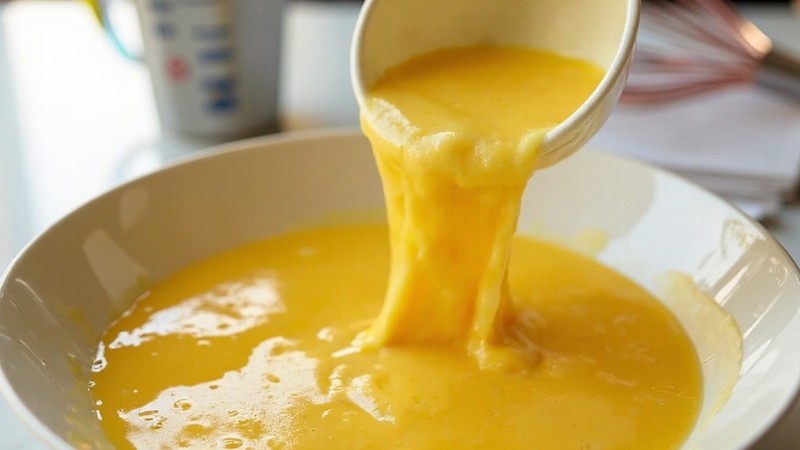
Mix without cooking the egg prematurely
Warm the measured water to roughly 35-45 C (95-113 F), not boiling. Beat eggs with salt, optional bouillon and oil, then mix in water. Skim visible foam. Pour into the heatproof dish, leaving enough headroom to move it safely. Raw egg and shell-handling utensils should not touch the finished custard.
Use a steaming setup that supports the dish securely. Keep boiling water from splashing into the mixture and allow clearance under the lid. A standard rack above water is a home adaptation of the source’s bowl setup; container material and depth will affect cooking time.
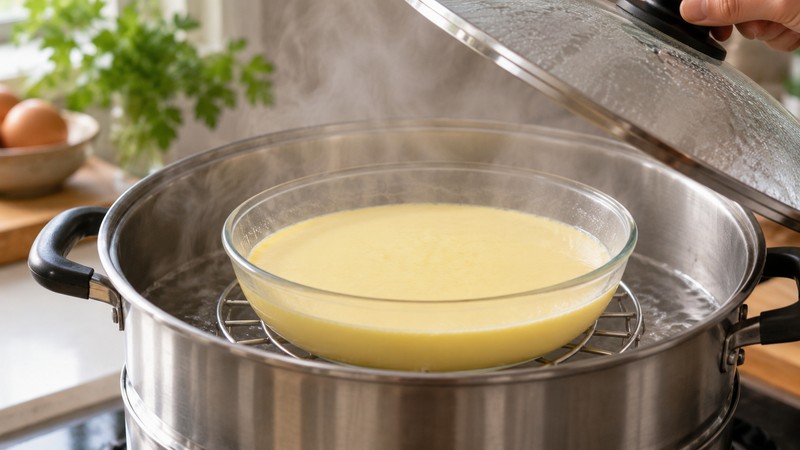
Set the center with gentle steam
Bring water to a boil before loading, cover, then maintain gentle steaming instead of a violent boil. Begin checking around 8-10 minutes after steam returns. A deep ceramic bowl can take longer. Open the lid away from your face and probe the center carefully.
FDA egg guidance gives egg dishes a minimum 160 F (71 C). A custard-like wobble can indicate texture, but it does not replace that check. Continue gentle cooking if the center is cooler or still liquid. Do not rely on off-heat residual cooking without measuring.
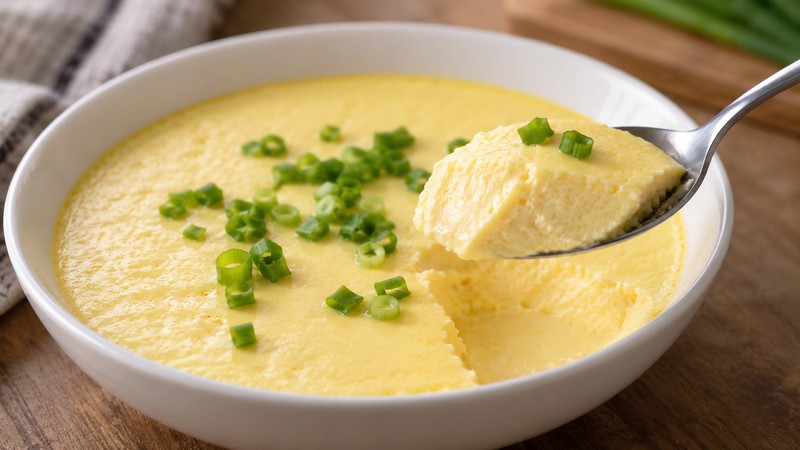
Keep the finish light
Scatter scallion and pepper. A little soy at the table is optional, not part of the water measurement. Spoon through the custard rather than stirring after it sets. If the surface has holes, try gentler steaming next time; if watery beneath, check ratio and center doneness before blaming garnishes. Change only one variable for the next batch.
Egg is the principal allergen; check bouillon and optional soy too. For a pan-cooked egg dish see tomato and eggs, or compare rice-based chicken congee. Refrigerate remaining portions promptly rather than leaving the warm bowl in the steamer.
Frequently Asked Questions
Can I mix boiling water into the eggs?
No. It can cook small egg particles during mixing. Use measured warm water for this formulation.
Does a soft center mean it should remain runny?
No. The custard can be tender while set. A liquid center needs further gentle cooking and the egg-dish temperature check.
AI-generated illustrations, if used, are not photographs of a tested batch.