Cantonese steamed fish relies on clean-tasting fish, ginger and scallions, controlled steam, and a light sauce added at the finish. Whole-fish and fillet methods share that principle, but they do not share one reliable cooking time. The practical fillet quantities below are source-based, not a YueCuisine-tested recipe.
Choose the fish and prepare aromatics
For a 280 g (10 oz) white-fish fillet, use 2 scallions, 2 tablespoons julienned ginger, optional cilantro, 1 1/2 tablespoons light soy sauce, 2 tablespoons hot water, 1/8 teaspoon each salt and sugar, and 2 tablespoons neutral oil. These are the proportions in Bill Leung’s fillet preparation. Thaw frozen fish in the refrigerator and remove accessible pin bones.
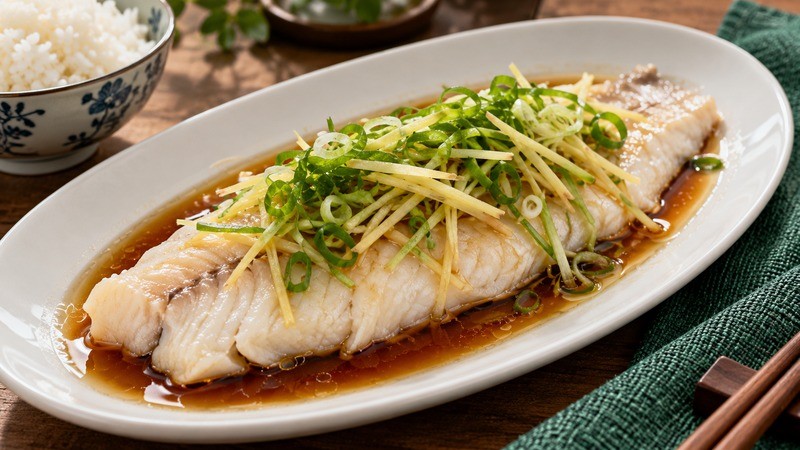
Set up the plate before starting
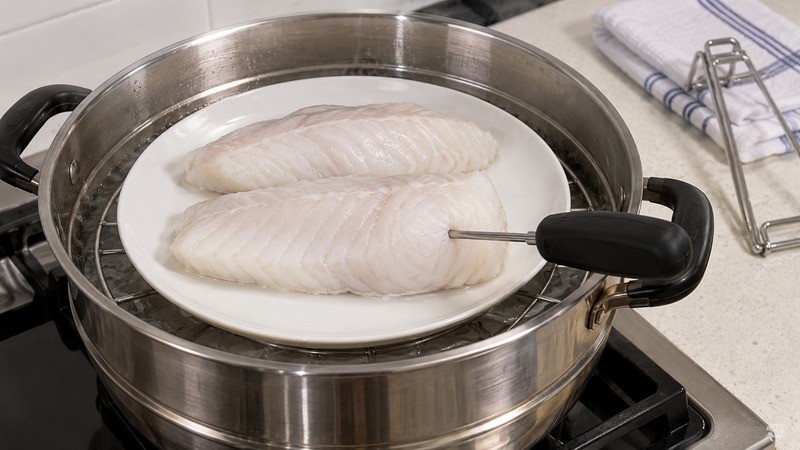
Use a rimmed heatproof plate on a stable rack inside a covered pot. Keep water below the food, with enough to maintain steam. Arrange fillets without stacking. For a whole fish, ask the fishmonger to scale, gut, and remove the gills; choose one that fits without being bent against the lid.
Daddy Lau’s whole-fish lesson explains opening the thick back to improve even cooking. That is a whole-fish preparation choice, not a reason to slash every thin fillet. His bean-sauce seasoning is another Cantonese variation, not a mandatory addition to the lighter soy finish here.
Steam by thickness, then verify
Bring the water to a boil, place the fish inside, and cover. The source suggests 4-5 minutes for very thin fillets and 7-10 minutes for thicker ones. Timing begins after steam is established; use these as checking windows, not guaranteed cooking times. Avoid repeatedly uncovering the pot.
Measure the thickest flesh without touching bone: fish should reach 145 F (63 C), following FoodSafety.gov. Opaque flesh that separates easily is a useful visual check, but a thermometer is especially helpful for thick whole fish. Do not extend cooking automatically because a different recipe used a larger fish.
Finish with sauce and fresh aromatics
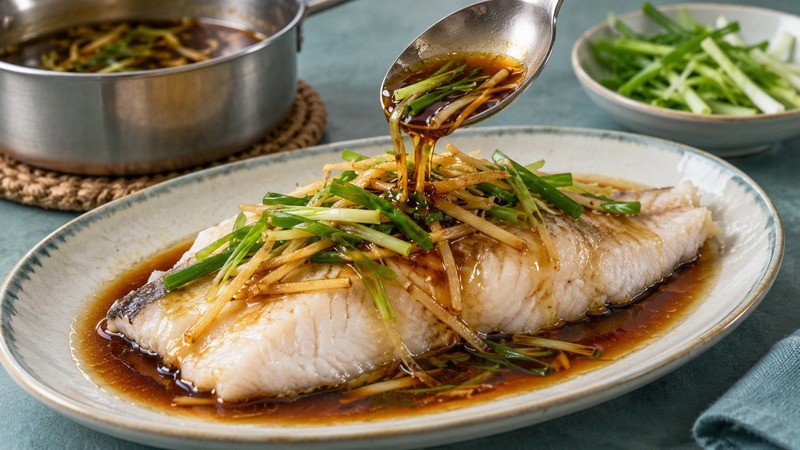
Carefully remove the plate and spoon off excess steaming liquid. Dissolve salt and sugar in soy sauce and hot water. Briefly fry most of the ginger and scallions in the oil, add the sauce, and bring it to a simmer. Spoon over the fish and finish with the reserved fresh aromatics.
A separate pour of hot oil is optional, not required. Keeping the oil in the small pan and serving a cooked aromatic sauce avoids carrying an open pan over a crowded table. Do not splash oil onto pooled water, and do not heat it until it smokes.
FAQ
Why is my fish dry?
Check whether you used whole-fish timing for a fillet or left cooked fish in the steamer while preparing sauce. Have the finish ready before the fish reaches its endpoint.
Must I use a whole fish?
No. Fillets are easier to portion and check, while a whole fish needs care around bones. Neither format guarantees better freshness.
Fish and soy are relevant allergens; many soy sauces contain wheat. For a meat-free use of the sauce, see Cantonese steamed tofu. For a separate steamed meat course, compare black-bean pork ribs, which require their own timing and temperature checks.
Image disclosure: illustrations are AI-generated and do not demonstrate measured doneness.