Cantonese beef brisket needs a connective-tissue-rich cut, fragrant aromatics, and a gentle covered braise. Tenderness is not the same as reaching a safe temperature: a brisket can be cooked through yet still resist a fork. This is a source-based home adaptation, not a YueCuisine-tested formula.
Ingredients for a brisket-and-daikon pot
Use 900 g beef brisket cut into roughly 4 cm pieces, 1 tablespoon oil, 5 ginger slices, 1 cup Shaoxing wine, 2 1/2 tablespoons light soy sauce, 3 star anise, 8 cloves, 1 teaspoon sugar, up to 5 cups water, and 1 daikon cut into similar pieces. These quantities follow the earlier brisket version retained in Judy Leung’s beef-and-daikon recipe, not its newer rough-flank recipe. Her current notes prefer well-marbled chuck to lean brisket; chuck is an alternative, not the same cut.
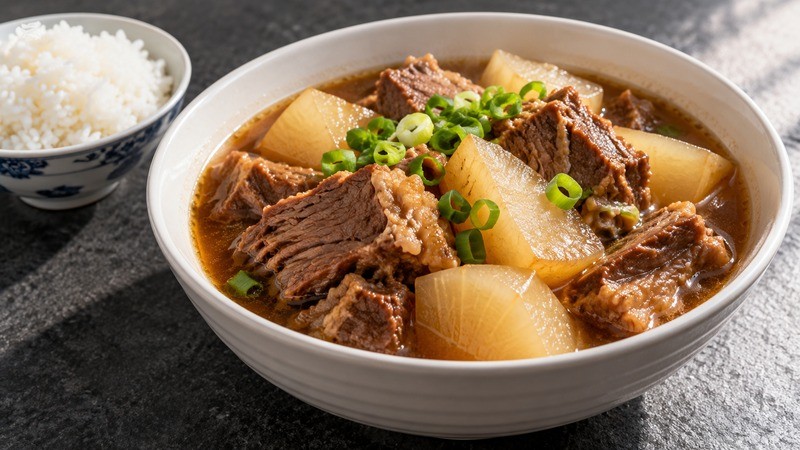
Build the braise
- Pat beef dry. Heat oil with ginger in a heavy pot and lightly brown the beef in manageable batches.
- Add wine, soy sauce, spices, sugar, and 3 cups water. Bring to a boil, cover, and lower to a slow simmer.
- Begin checking around 90 minutes. Add the remaining water as needed rather than pouring it all in automatically. Stir occasionally to prevent sticking.
- Add daikon as the beef approaches tenderness. Continue until both are tender; cut, age, and size of the beef can extend the cook substantially.
Choose a pot that fits the batch reasonably closely. The same water quantity spreads differently in a wide pan and a narrow pot. Before leaving it to simmer, check that the liquid is moving gently rather than violently boiling.
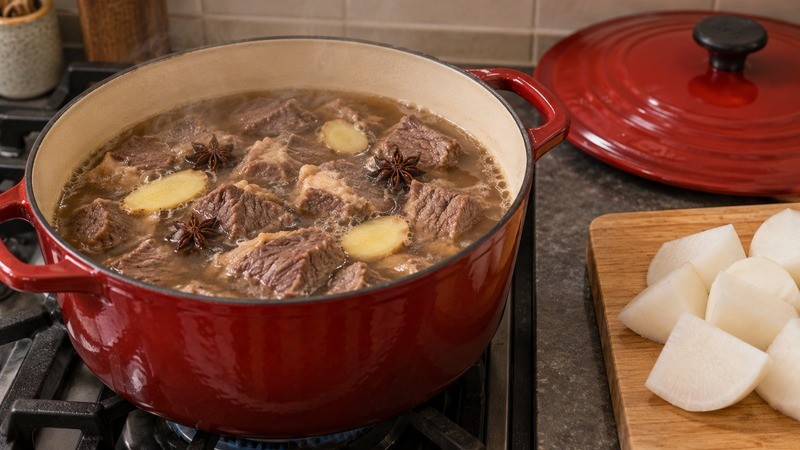
Check texture before reducing the sauce
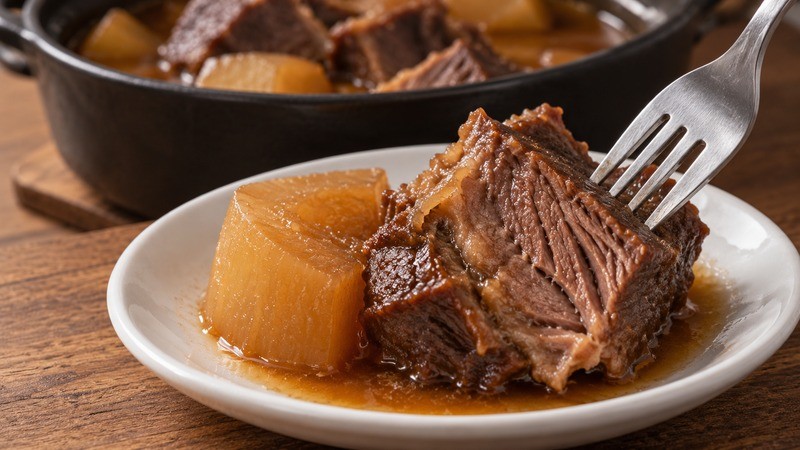
A fork should enter the beef with little resistance; daikon should be soft without collapsing. If beef is tough and the pot is dry, restore liquid and continue the covered braise rather than turning the burner higher. If the meat is tender but the liquid is thin, lift out the solids and reduce the sauce separately. Taste only the cooked sauce and remove whole spices before serving.
Cooked-through beef and tender brisket are separate checks. The official chart lists 145 F (63 C) plus a 3-minute rest for beef roasts; a brisket braise generally continues beyond that endpoint for texture. That number is not a promise of fork tenderness.
FAQ and make-ahead handling
Can I shorten the cook by slicing thinly?
That changes the dish. Thin stir-fry slices and braising chunks need different methods; cutting smaller pieces does not make connective tissue instantly tender.
Can I refrigerate the whole pot overnight?
Divide into shallow containers for prompt cooling instead of leaving a deep pot on the counter. Refrigerate within 2 hours, use refrigerated leftovers within 3-4 days, and reheat to 165 F (74 C), per USDA guidance.
Check wine and soy labels for dietary restrictions. Pair the pot with light steamed tofu or compare the shorter, gentler cooking of braised tofu; do not apply tofu timing to beef.
Image disclosure: illustrations are AI-generated, not photographs of a tested brisket batch.