Quick Answer
The best recipe for steamed clams is one that matches the clam size, keeps the seasoning light enough to preserve their briny sweetness, and uses the shells rather than a fixed timer as the final doneness signal. This Cantonese-style home method steams live Manila or littleneck clams on a heatproof platter with garlic, ginger, scallion, and rinsed fermented black beans.
Start checking as soon as the shells begin to open. Remove the platter when the clams have opened, discard any that stay shut, and serve immediately. This is a garlic-black-bean variation, not the same recipe as the site’s beer-steamed clams.
Basic Facts
- Best clam types: Live Manila or littleneck clams of similar size.
- Cooking method: A heatproof platter set on a rack above actively steaming water.
- Flavor base: Fermented black beans, garlic, ginger, scallion, and Shaoxing wine.
- Doneness cue: Shells open during cooking; discard clams that remain closed.
- Main texture risk: Continuing to steam after the clams open.
- Main seasoning risk: Adding too much soy sauce before tasting the naturally salty clam liquor.
Choose live clams before thinking about sauce
A strong sauce cannot repair poor shellfish. Buy clams from a reputable seafood counter and keep them cold on the trip home. Reject cracked shells. A live clam should be closed or should close when tapped; FoodSafety.gov recommends this “tap test” for live clams, oysters, and mussels.
Cook the clams on the day of purchase when possible. Keep them refrigerated in a breathable container according to the seller’s instructions rather than sealing live clams in standing fresh water. Before cooking, scrub the shells under cold running water. If the retailer gives species-specific purging directions, follow those directions; do not assume one saltwater soak works for every clam and harvest source.
Ingredients for two to four servings
- 2 pounds (900 g) live Manila or littleneck clams
- 1 1/2 tablespoons whole fermented black beans (douchi)
- 4 garlic cloves, finely chopped
- 1 tablespoon fine ginger matchsticks
- 2 scallions, white and green parts separated
- 1 tablespoon Shaoxing wine
- 1 teaspoon light soy sauce, plus more only after tasting
- 1/2 teaspoon sugar
- 1 tablespoon neutral cooking oil
- 1 small fresh chili, thinly sliced, optional
- 1 teaspoon sesame oil, optional for finishing
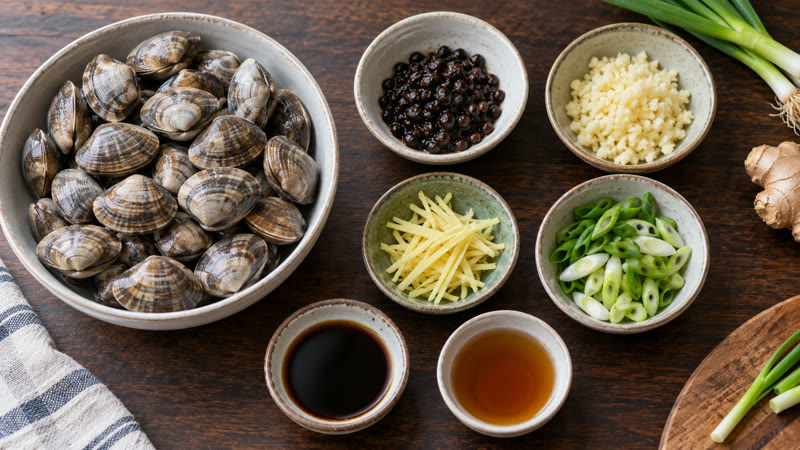
Preparing the clams and aromatics in separate containers keeps the cooking sequence clear and makes it easier to avoid over-seasoning.
Whole fermented black beans are salty and concentrated. Rinse them briefly, drain, and chop or lightly crush half so their aroma spreads while some beans remain visible. If you use jarred black-bean garlic sauce instead, start with less soy sauce and sugar because prepared sauces vary widely in salt and sweetness.
Build the topping before the clams meet the steam
Heat the neutral oil in a small pan over medium-low heat. Add the scallion whites, garlic, ginger, and optional chili. Stir for about 20 seconds, just until fragrant. Add the fermented black beans and cook for another 20 to 30 seconds. The garlic should not brown deeply.
Turn off the heat, then stir in the Shaoxing wine, light soy sauce, and sugar. This brief pre-cook wakes up the aromatics without forcing the clams to remain in the steamer while raw garlic softens. Taste a tiny drop of the topping. It should be assertive because the clams will release liquid, but it should not taste like straight salt.
Arrange the cleaned clams in a single, stable layer on a rimmed heatproof platter. Spoon the black-bean mixture over them, leaving room for the shells to open. Do not stack a deep mound of clams: the top and bottom layers would cook at different rates.
Steam over active water, then follow the shells
Set a rack inside a wide wok or pot and add enough water to steam without touching the platter. Bring the water to a strong simmer before placing the platter on the rack. Cover with a lid that leaves enough clearance for shells to open.
Steam over medium-high heat and begin checking around four minutes. Exact time depends on clam size, starting temperature, platter material, steamer space, and heat output. Open the lid carefully so condensed water and steam move away from your face and hands.
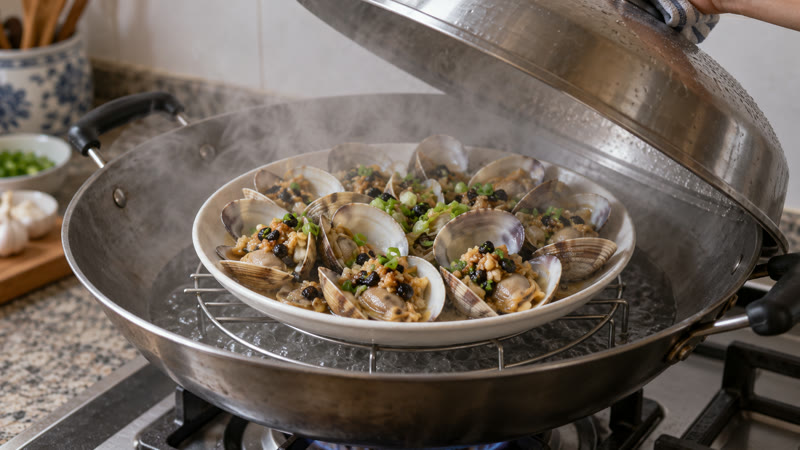
A rack keeps the serving platter above the water while the lid traps enough steam to open the clams quickly.
When most shells have opened, give the remaining clams only a short additional interval. FoodSafety.gov’s safe-temperature chart says clams, oysters, and mussels should be cooked until their shells open during cooking. Discard clams that remain closed instead of prying them open for the plate.
Lift the hot platter with stable oven mitts. The liquid around the clams is part clam liquor and part seasoning, so taste it before adding anything else. Scatter the scallion greens over the top. A few drops of sesame oil can round the aroma, but a heavy pour will cover the shellfish.
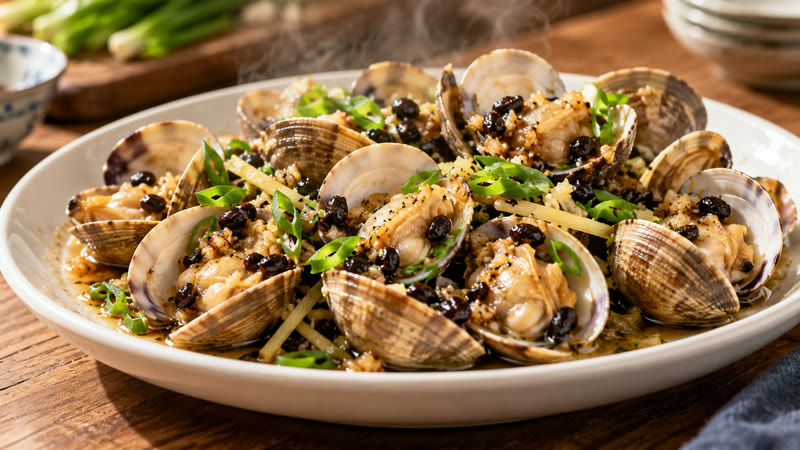
The finished clams should be open, moist, and lightly coated rather than buried under a thick or excessively salty sauce.
Why this method is different from black-bean stir-fried clams
Fermented black beans, garlic, ginger, and clams are also used in Cantonese wok dishes. In a stir-fried version, the aromatics cook in the wok and the clams open in direct contact with the sauce and hot metal. This recipe moves the shellfish to a platter and cooks them with steam, which makes the serving presentation cleaner and reduces agitation of delicate shells.
The South China Morning Post’s black-bean clam recipe is useful evidence for the established pairing of clams, fermented black beans, garlic, ginger, rice wine, and scallions. The exact technique here is intentionally framed as a home steaming adaptation rather than a claim that every Cantonese cook uses one formula.
For another way to use fermented black beans, compare the site’s black-bean spare ribs guide. For a broader route through steamed seafood and dim sum, use the Cantonese Food Recipe Guide.
Troubleshooting the texture and sauce
The clams are rubbery
They probably stayed in the steamer after opening. Similar-sized clams help, but they will not all open at the same second. Check early, work quickly, and avoid extending the cook merely to make the platter look uniform.
The sauce is too salty
Fermented black beans, soy sauce, and natural clam liquor all contribute salt. Rinse the beans briefly, use only a teaspoon of soy sauce at first, and adjust after steaming. Do not add salt to the raw clams by habit.
The platter is watery
Some liquid is expected and useful. If it tastes diluted, transfer the cooked clams to a serving dish, reduce the liquid briefly in a small pan, and spoon it back over them. Do not keep steaming the clams while waiting for the sauce to concentrate.
Several shells did not open
Discard them. Do not use a knife to force them open and treat them as cooked. Also review the initial tap test, shell condition, storage, and purchase source before the next batch.
Serve immediately and store conservatively
Steamed clams are best when hot. Serve them with plain rice and a green vegetable so the black-bean liquor has somewhere to go without needing extra sauce. Provide a bowl for empty shells and make the unopened-shell rule clear to guests.
Refrigerate leftovers within two hours, or within one hour when the surrounding temperature is above 90°F (32°C). Use a shallow covered container and follow current FoodSafety.gov storage guidance. Reheat leftovers to 165°F (74°C), but expect the clam texture to become firmer; this is a dish worth cooking in a quantity you can finish promptly.
Quick Reference
- Buy live, intact clams that close when tapped.
- Scrub them under cold running water and follow seller-specific purging guidance.
- Briefly warm garlic, ginger, scallion whites, and rinsed fermented black beans.
- Arrange clams in one layer on a heatproof platter and add the topping.
- Steam over already-active water and start checking early.
- Remove opened clams promptly and discard any that remain closed.
- Taste the clam liquor before adding more soy sauce or salt.
Frequently Asked Questions About Steamed Clams
Can I steam frozen clams with this recipe?
Use this method for live clams in the shell. Frozen clam products vary: some are raw, some are precooked, and some are sold without shells. Follow the package instructions rather than applying a live-clam opening test to a different product.
Do I need to soak clams in salt water first?
Not always. Purging advice depends on the species and how the clams were handled before sale. Follow instructions from the seafood counter or producer, then scrub the shells under cold running water. Avoid prolonged soaking in plain fresh water.
Can I replace whole fermented black beans with bottled sauce?
Yes, but start with a smaller amount and reduce the soy sauce and sugar until you know the product. Bottled sauces may already contain garlic, oil, salt, and sweeteners.
How long should clams steam?
There is no reliable universal minute count. Begin checking around four minutes for small clams in a fully steaming setup, then follow the shells. Remove the clams when they open and discard those that remain shut.
Is this the same as beer-steamed clams?
No. Beer-steamed clams use beer as part of the cooking liquid. This version uses a garlic, ginger, scallion, and fermented-black-bean topping on a platter above steaming water.
Sources
- FoodSafety.gov: Safe Selection and Handling of Fish and Shellfish
- FoodSafety.gov: Safe Minimum Internal Temperatures
- FoodSafety.gov: Food Safety and Eating Out
- SCMP Cooking: Easy Chinese Clams with Black Bean Sauce