This butter-poached shrimp recipe uses gentle heat to keep shrimp plump while ginger and scallion give the butter a clean Cantonese-inspired aroma. If you searched for a butter poached shrimp recipe, the core technique is the same: keep the fat below a hard simmer and remove each shrimp as it finishes. Butter poaching itself is not a classic Cantonese technique, so this version is best understood as a modern method with a restrained ginger-scallion finish. The important control is temperature: the butter should look calm, not fry or brown, and the shrimp should become pearly and opaque without tightening into hard curls.
Butter-poached shrimp at a glance
| Decision | Recommended choice | Reason |
|---|---|---|
| Shrimp size | Large, about 16/20 or 21/25 count | Large shrimp are easier to turn and remove before overcooking |
| Pan | 8- to 10-inch skillet or saucepan | A smaller pan lets less butter cover more of the shrimp |
| Heat | Low, with only tiny bubbles | Hard sizzling means the butter is frying rather than gently poaching |
| Flavor | Ginger, scallion, white pepper, optional garlic | The aromatics stay clear enough to complement delicate shrimp |
| Doneness | Pearly and opaque, firm but still yielding | Carryover heat continues cooking after the shrimp leave the pan |
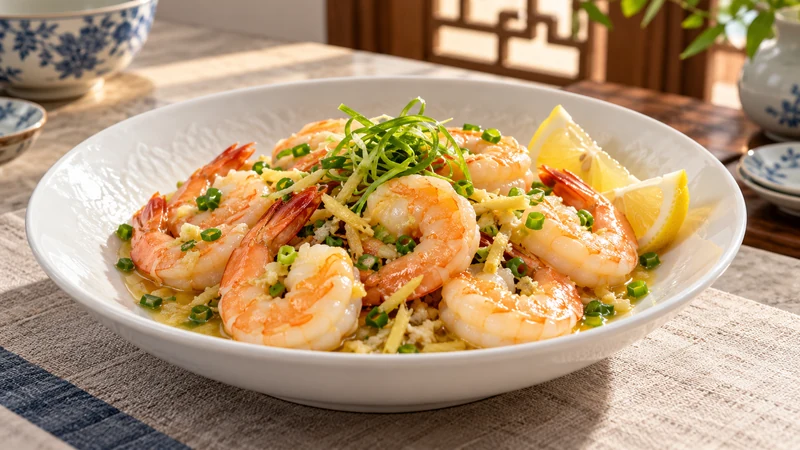
Ingredients for four servings
- 1 lb (450 g) large raw shrimp, peeled and deveined, tails optional
- 6 tablespoons (85 g) unsalted butter
- 6 thin slices fresh ginger
- 3 scallions, whites cut into 2-inch pieces and greens finely sliced
- 1 small garlic clove, lightly crushed, optional
- 1 tablespoon Shaoxing wine or dry sherry
- 1 teaspoon light soy sauce
- ⅛ teaspoon ground white pepper
- 1 to 2 teaspoons fresh lemon juice
- Salt only if needed
Butter amount: The shrimp do not need to float. A snug pan and frequent spooning let 6 tablespoons coat and gently cook one pound. Adding a tablespoon of water at the start helps the butter melt evenly before the water gradually cooks away.
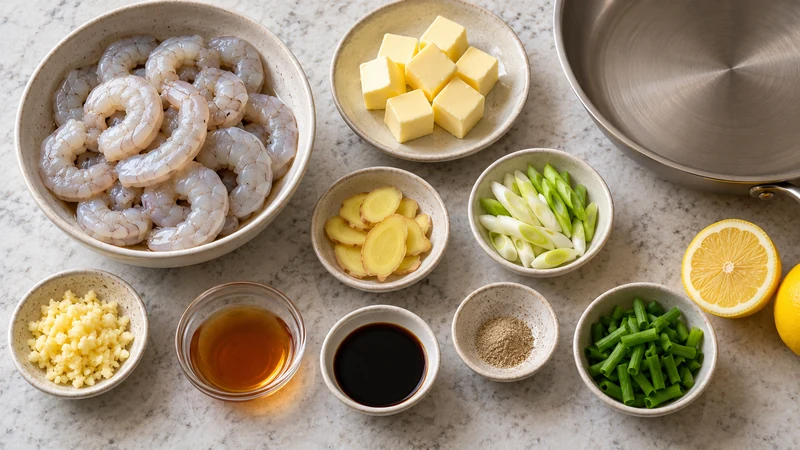
How to make butter-poached shrimp
1. Thaw and dry the shrimp
Thaw frozen shrimp overnight in the refrigerator. For a faster method, keep them in a sealed bag and submerge the bag in cold water, then cook immediately. Pat every shrimp dry. Surface water cools the butter, dilutes the seasoning, and makes timing less predictable.
2. Melt the butter without browning
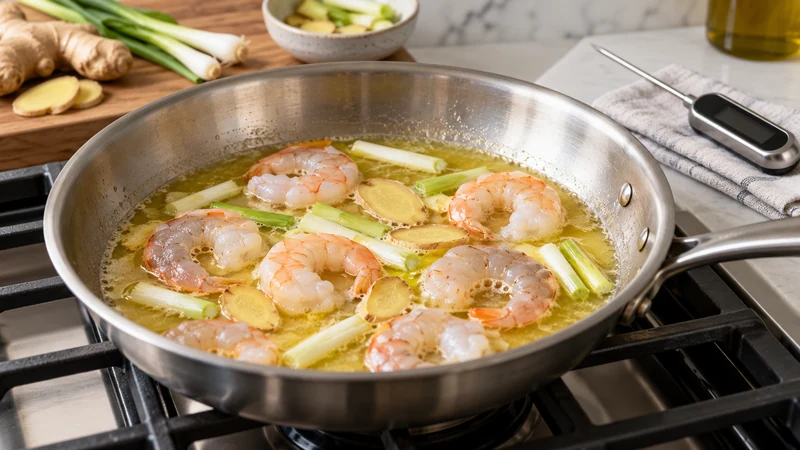
Put 1 tablespoon water and 2 tablespoons butter in a small skillet over low heat. Swirl until the butter melts into a pale emulsion. Add the remaining butter one tablespoon at a time, swirling after each addition. The mixture can steam lightly, but it should not hiss or turn brown.
3. Infuse the aromatics
Add ginger, scallion whites, and optional garlic. Hold the pan over low heat for 2 minutes. This step flavors the butter without scorching the milk solids. If the edges bubble rapidly, move the pan off the burner for 20 seconds before continuing.
4. Poach the shrimp in one layer
Add the shrimp in a single layer and spoon warm butter over their tops. Cook for 60 to 90 seconds, turn, and continue until the thickest parts are pearly and opaque. Large shrimp commonly need about 2 to 4 minutes total, but size, starting temperature, and pan shape change the timing. Remove finished pieces individually instead of waiting for every shrimp to match.
5. Season off the heat
Transfer the shrimp to a warm serving bowl. Remove the pan from the heat, discard the large aromatics if desired, and stir in Shaoxing wine, soy sauce, white pepper, and 1 teaspoon lemon juice. Taste the butter before adding salt. Spoon only enough over the shrimp to glaze them, then scatter the scallion greens on top.
Doneness and food-safety checks
The FDA advises cooking most seafood to 145°F (63°C) and describes cooked shrimp flesh as firm, pearly, and opaque. A thermometer can be awkward with thin shrimp, so insert it sideways into one of the largest pieces when practical and also check the appearance and texture. Remove the shrimp from the raw-seafood plate and use clean utensils for serving.
Buy shrimp that smell fresh and mild. Refrigerate seafood at 40°F (4°C) or below and use it within two days, or freeze it. Do not thaw shrimp on the counter. If cooked shrimp will not be served immediately, refrigerate it within two hours.
Common mistakes and how to fix them
| Problem | Cause | Better approach |
|---|---|---|
| Rubbery shrimp | The butter was too hot or all shrimp stayed in the pan until the largest one was done | Use low heat and remove pieces individually |
| Greasy coating | Too much butter was poured onto the serving plate | Glaze the shrimp with a few spoonfuls and serve extra butter separately |
| Broken, oily sauce | The butter boiled hard or cold liquid was added too quickly | Start with a spoonful of water and swirl butter in gradually over low heat |
| Flat flavor | The sauce has fat but little acid or aroma | Add lemon off the heat and use enough ginger and scallion |
| Salty finish | Salted butter and full-strength soy sauce were combined | Use unsalted butter and taste before adding salt |
Variations and serving ideas
For a more classic Cantonese direction, reduce the butter to 2 tablespoons and steam the shrimp with ginger and scallion; our steamed shrimp timing guide covers that method. For stronger aromatics, add a teaspoon of minced garlic after the ginger has infused. For gentle heat, add a few rings of fresh red chile at the end rather than frying dried chile in the butter.
Serve the shrimp with steamed rice, blanched greens, or plain noodles. The extra aromatic butter is rich, so a clean vegetable side works better than another heavy sauce. If shellfish is on the menu with clams, keep their cooking rules separate; see the steamed clams guide for shell-opening and broth checks.
Frequently asked questions
Is butter-poached shrimp a traditional Cantonese recipe?
Butter poaching is a modern technique rather than a classic Cantonese method. Ginger, scallion, Shaoxing wine, white pepper, and light soy sauce give this version a Cantonese-inspired flavor profile.
Can I use frozen shrimp?
Yes. Thaw them in the refrigerator or in a sealed bag submerged in cold water, then dry them thoroughly before cooking.
Why did my shrimp become rubbery?
The butter was probably too hot or the shrimp stayed in the pan too long. Keep the butter below a hard simmer and remove each shrimp when it turns pearly and opaque.
Can the shrimp be poached ahead?
They are best served immediately. You can prepare the aromatics and seasonings ahead, but reheating fully cooked shrimp in butter easily overcooks them.