Asian BBQ pork loin is a lean char siu-style adaptation. It keeps the sweet-savory marinade and honey finish, but the roast should stop at a safe center temperature rather than continuing until the lean meat dries out.
Lean pork loin can be served over rice or noodles with a sweet-savory glaze. It will not have the same richness as fattier shoulder.
What Is asian bbq pork loin?
Char siu is Cantonese roast pork. Loin is one home adaptation; it is not identical to shoulder and must be protected from overcooking.
Cooked char siu has many everyday uses, including rice plates, noodle toppings and bun fillings, rather than appearing at every dining occasion.
Unlike Western BBQ, which often leans into smoky, tangy flavors, Asian BBQ pork loin balances sweet, savory, and subtle aromatic notes, with a glossy, caramelized glaze that is its signature trait. This balance is what sets it apart: the marinade combines umami-rich soy sauces, sweet rock sugar, aromatic five-spice powder, and a hint of Shaoxing wine, creating a flavor profile that is both complex and approachable, beloved by locals and diaspora communities alike.
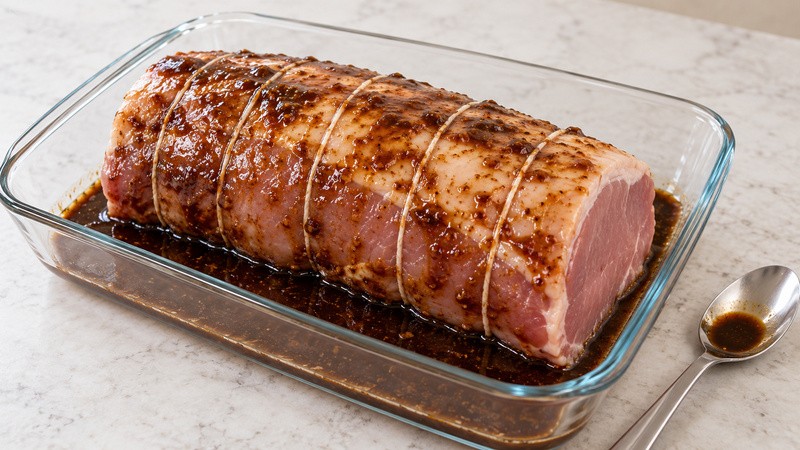
Roast a Lean Pork Loin
Use a 700 g loin shaped evenly for roasting, with a separate honey finish. It is a home adaptation rather than a tested restaurant formula; loin and shoulder need different texture expectations.
- 700 g (about 1.5 lb) boneless pork loin, with a thin fat layer, tied if needed for an even shape
- 2 tablespoons light soy; 1 tablespoon dark soy; 2 tablespoons hoisin; 1 tablespoon oyster sauce
- 2 tablespoons Shaoxing wine, optional; 2 tablespoons sugar
- 1 teaspoon five-spice; 1/4 teaspoon white pepper; 4 minced garlic cloves; 1 teaspoon grated ginger
- 1 teaspoon sesame oil
- 2 tablespoons honey and 1 tablespoon water, reserved separately for a clean glaze
- Whisk the seasonings except honey and water. Coat the loin, cover and refrigerate 2-24 hours. This time is separate from roasting time.
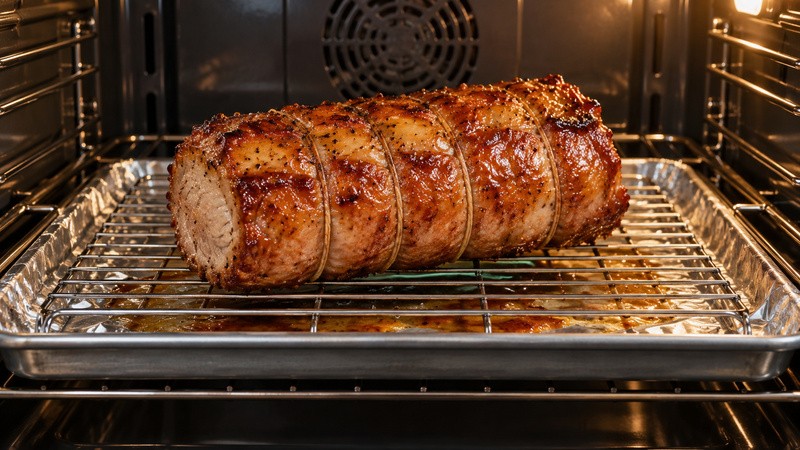
- Heat the oven to 375 F (190 C). Put an oven-safe rack over a lined tray, take the loin from the marinade and discard the used mixture.
- Roast and begin checking the thickest point around 25 minutes; diameter and oven matter, so keep cooking as needed. Turn the roast if it browns unevenly.
- Mix clean honey and water and brush onto the surface near the end. A brief watched broil can darken the glaze, but avoid extended heat that dries the loin.
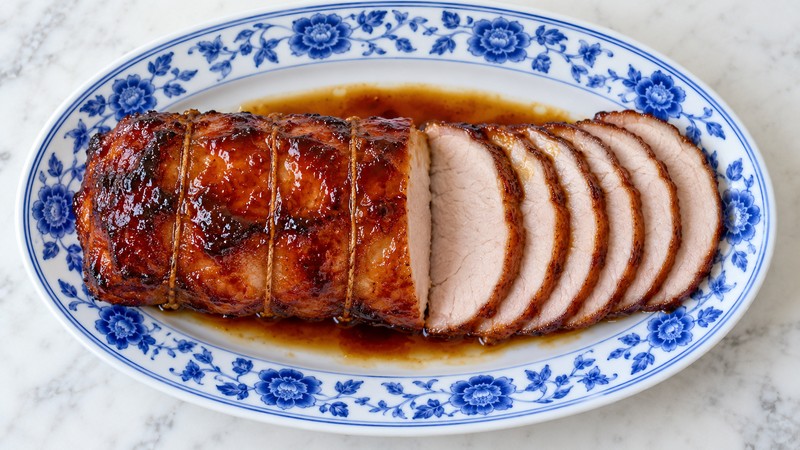
- Confirm at least 145 F (63 C) in the thickest point, then rest at least 3 minutes before removing twine and slicing. Slice thinly across the grain. Store glaze separately from any brush that touched undercooked pork.
asian bbq pork loin Variations
Shoulder and loin differ mainly in fat and texture for this home roast. City labels do not establish a universal cut preference.
Use a thermometer and a watched glaze finish. Loin is not protected from drying by a sugary coating.
If changing to shoulder, use a method intended for that cut and texture.
Serving asian bbq pork loin the Cantonese Way
Thin slices work well over rice, with sauce kept modest and clean.
Cooked pork can be diced for buns or fried rice, but those require their own recipes.
Avoid extended broiling, slicing before the rest, and using raw-contact glaze as a serving sauce.
Frequently Asked Questions
Is pork loin the same as tenderloin?
No. Loin is a larger roast and tenderloin is a smaller, narrower muscle. Their roasting times are not interchangeable.
Why is the loin dry?
Lean loin has less fat than shoulder. Use a probe in the thickest section, avoid prolonged broiling and rest before slicing.
Can I cook it as char siu strips?
Yes, but strips heat faster than a tied roast. Start checking much sooner and do not use the whole-roast timing as a guarantee.
Keeping Leftovers
Refrigerate perishable cooked food promptly in shallow containers, within two hours of cooking (one hour above 90 F / 32 C). Keep it cold at 40 F / 4 C or below. USDA generally allows three to four days for refrigerated leftovers; discard food left out too long. Reheat leftovers to 165 F (74 C), checking the center rather than relying on a few seconds or minutes.
Sources and Related Reading
Primary loin technique and context source. The home adaptation above is not presented as an exact copy of that author’s recipe or as a recipe tested by YueCuisine. Food-safety temperature and handling guidance; USDA leftover guidance.
Asian BBQ Pork Recipe: Cantonese Char Siu at Home · How to Make Asian Bbq Pork Buns: The Authentic Cantonese Rec
Any newly generated food visuals accompanying this article are AI illustrations, not photographs documenting a kitchen test. Retained existing images are captioned only for their visible contents and context.