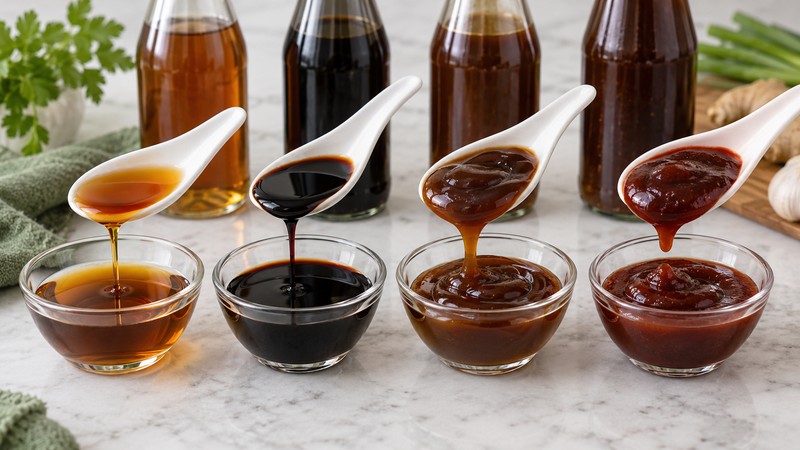
Build a small Cantonese sauce pantry around cooking roles: light soy for seasoning, dark soy mainly for color, oyster sauce for savory body, and hoisin for a sweet, spiced accent. They are not interchangeable spoon for spoon. Bottle names describe styles, not guaranteed sodium levels or allergen safety.
What each sauce contributes
- Light soy sauce
- A relatively fluid seasoning sauce. Start with small amounts in marinades, stir-fries, and dipping mixtures. “Light” does not mean low-sodium.
- Dark soy sauce
- Use sparingly when a braise or noodle dish needs deeper brown color. Formulas vary in sweetness and thickness; adding more can darken food before the seasoning is balanced.
- Oyster sauce
- A savory, often sweet, thick sauce suited to vegetables, beef, and noodle coatings. Ordinary oyster sauce contains oyster ingredients; vegetarian mushroom sauces are separate products.
- Hoisin
- A sweet, thick, spiced sauce useful in dipping mixtures and selected glazes. It can dominate a light seafood dish, so use it deliberately rather than as an all-purpose replacement.
Lee Kum Kee’s soy and oyster overview identifies seasoning, color, and umami as separate roles. This is a manufacturer’s description, not a ranking of brands.
Buy by the label, not the front of the bottle
Compare sodium for the same serving quantity; a teaspoon and a tablespoon are not equivalent. Check whether sugar, oyster extract, soy, wheat, or sesame appear in the ingredient or allergen statements. Reduced-sodium products still contribute salt. Follow the specific refrigeration instruction after opening rather than assuming all sauces store alike.
The manufacturer’s premium oyster sauce page and hoisin page illustrate why each product needs its own label check. Ingredients can differ between markets and package versions. Hoisin is not inherently a seafood sauce despite its name, and it is not automatically soy-free, wheat-free, or sesame-free.
Three small starting mixtures
These are adjustable starting ratios, not universal restaurant formulas. Taste only clean mixtures that have not contacted raw meat.
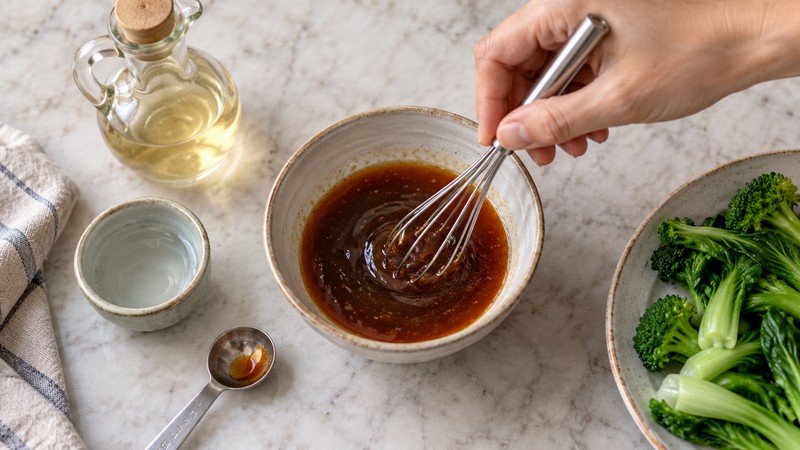
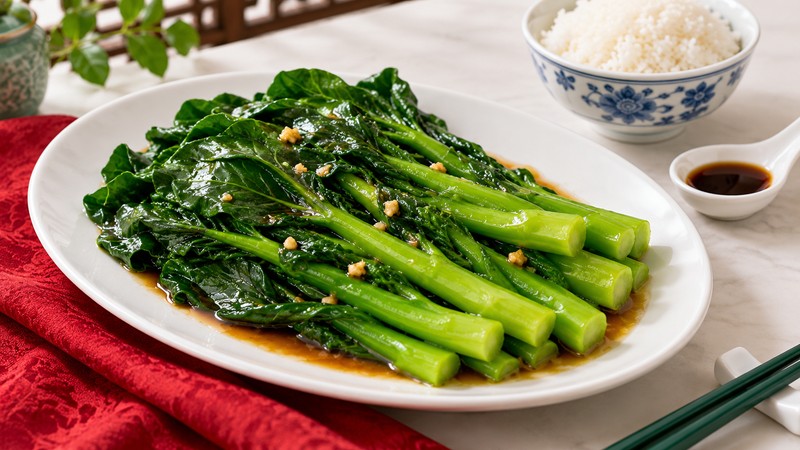
- Vegetables, about 300 g: mix 2 teaspoons oyster sauce with 2 tablespoons water. Add after the vegetables are nearly cooked and toss briefly. Taste before adding soy or salt.
- Tossed noodles, 150 g dry: start with 2 teaspoons light soy, 1 teaspoon oyster sauce, and 2 tablespoons water. Add to cooked, drained noodles in portions. Use no dark soy initially; add 1/4 teaspoon only if a darker result is wanted.
- Hoisin dipping mixture: combine 1 tablespoon hoisin, 1 teaspoon rice vinegar, and 1 teaspoon water. Stir, then adjust acidity or dilution to suit the food. Keep this separate from raw-food utensils.
Match the sauce to the heat
For a stir-fry, have a diluted sauce ready before cooking, then add it toward the finish. Pouring a thick sugary sauce onto a dry, extremely hot pan can scorch it. In a braise, liquid and cooking time allow flavors to develop, but reduction also concentrates salt. Season lightly at the beginning and reassess at the end.
For a seafood dish, ask whether the sauce should merely season or become the main flavor. A light ginger-scallion finish needs less sweetness than a hoisin glaze. For ginger scallion lobster, begin with light soy and aromatics; for bitter melon beef, oyster sauce can support a more savory coating.
Fix an imbalance before adding another sauce
If too salty, dilute the sauce or increase unsalted food; sugar does not remove sodium. If too sweet, use less hoisin next time and adjust the current mixture with a little acid, not another sweet sauce. If too dark, stop adding dark soy: the color cannot simply be reversed with extra light soy. If too thick, loosen with water before cooking it longer.
Frequently Asked Questions
Can dark soy replace light soy?
Not as a direct equal-volume replacement. Dark soy can change color and sweetness substantially. Use a small amount for color and season separately according to the actual product.
What can I use instead of oyster sauce?
A vegetarian mushroom stir-fry sauce can serve a similar cooking role, but check its allergens and seasoning strength. Soy sauce alone is thinner and is not a flavor-equivalent replacement.
Is hoisin a necessary Cantonese pantry staple?
It is useful for particular dips and glazes, but optional if you mostly cook steamed seafood and lightly seasoned vegetables. Buy it for dishes you actually plan to cook.
Illustration note: any AI-generated food images accompanying this article are illustrative, not photographs of a tested batch.