Har gow have a shrimp filling inside a delicate starch wrapper that becomes translucent after steaming. Ordinary wheat flour and wonton wrappers do not reproduce that wrapper. Work with a small amount of dough at a time and protect the rest from drying.
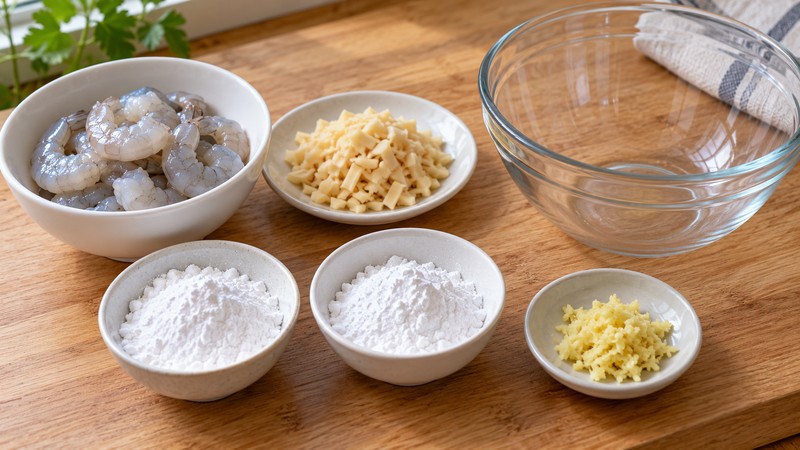
Ingredients for the shrimp filling and starch dough
The proportions are from The Woks of Life’s har gow. Filling: 1/2 lb peeled raw shrimp, 1 teaspoon oyster sauce, 1 tablespoon vegetable oil, 1/4 teaspoon white pepper, 1 teaspoon sesame oil, 1/4 teaspoon salt, 1 teaspoon sugar, 1/2 teaspoon minced ginger and 1/4 cup finely chopped bamboo shoots. Dough: 1 cup wheat starch, 1/2 cup cornstarch, 1 1/4 cups boiling water and 3 teaspoons lard or oil.
These are starch measures, not a wheat-flour bread recipe. Check labels for wheat, shellfish, soy and sesame. Keep a lined steamer, rolling pin, heatproof bowl and clean cover nearby. Boiling water and steam need heatproof handling; wait until dough can be touched safely before kneading.
Make the filling, then the hot-water dough
- Mix the shrimp and seasonings until sticky, fold in bamboo shoots, and refrigerate covered.
- Stir boiling water into the mixed starches, add the fat, and knead once safe to handle until smooth.
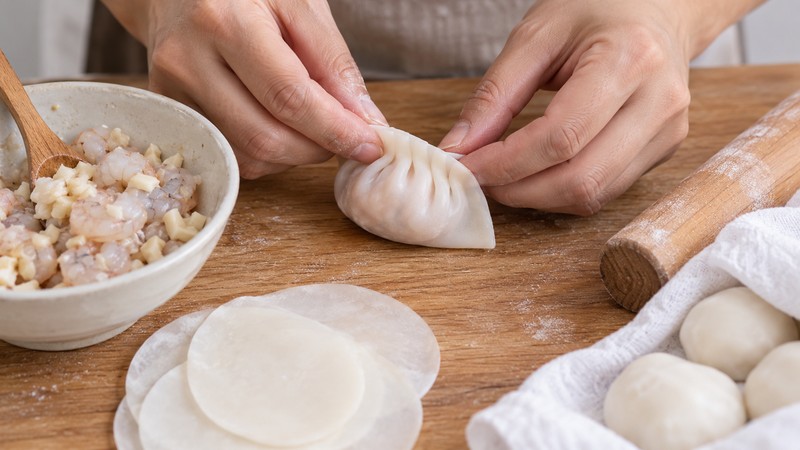
- Divide into 18 pieces and cover. Roll one piece into a roughly 3-inch circle, keeping its centre strong enough to hold filling.
- Add a modest spoonful of filling, pleat one edge and seal to the other without squeezing filling into the seam.
Place the sealed dumpling upright before picking up the next dough piece. If filling reaches the edge, remove some instead of forcing the seam shut. Cover waiting pieces while working; a large uncovered row makes the last pieces a different handling task from the first. Keep the raw filling cold between batches rather than leaving the whole bowl beside the hot steamer.
Steam without crowding
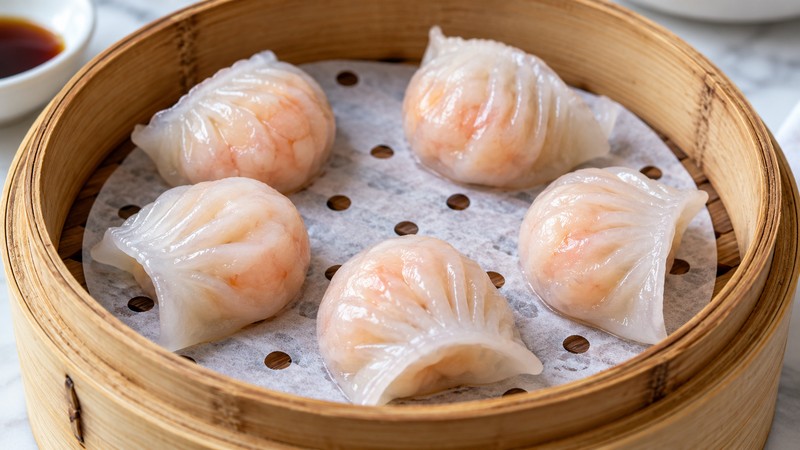
Load over boiling water, leaving about 1 1/2 inches between dumplings. The source steams this size for 6 minutes over high heat. Size and filling temperature can change the endpoint.
The translucent skin is a wrapper cue, not proof of safe filling temperature. Use the USDA fish-and-shellfish minimum of 145°F (63°C), probing a representative large dumpling with a thin thermometer where practical. Continue cooking if needed.
Lift with care so the wrapper is not dragged across the liner. Serve while warm rather than repeatedly handling dumplings to arrange a decorative tower. For a first batch, intact seams and safely cooked shrimp are more important than identical pleat counts.
Why does the dough crack?
Check the ingredient names, water temperature and whether the waiting dough was covered before changing the ratio. Follow the linked recipe’s dough photos rather than judging raw starch dough against an elastic wheat-flour dough.
Siu mai use a different, open-topped wrapper. Rice rolls start with poured batter rather than kneaded dough.
Illustration disclosure: accompanying AI-generated illustrations are illustrative, not evidence of a YueCuisine-tested recipe.