Cantonese seafood cooking starts with the ingredient: a delicate fish suits steaming, while prepared shrimp can be cooked quickly in a wok. Ginger, scallions and light soy can complement seafood, but strong sauce cannot rescue spoiled fish. Choose the method only after checking the product and its handling history.
Buy and keep seafood cold
The FDA seafood guidance recommends buying refrigerated or properly iced seafood. Avoid sour or ammonia-like smells, damaged frozen packages and soft, thawing products sold as frozen. Appearance alone cannot prove safety.
Refrigerate at 40°F (4°C) or below and use within 2 days, or freeze. Thaw in the refrigerator, not on the counter. Keep raw-seafood utensils away from cooked food. With live clams and mussels, reject broken shells or shells that do not close when tapped; buy from identifiable, regulated suppliers.
Before paying, ask whether a fish has been previously frozen and whether the shrimp are raw or already cooked. That distinction changes the job in the kitchen: cooking raw shrimp and warming cooked shrimp are not interchangeable instructions. Keep the packaging until the meal is prepared so allergen and storage information remain available.
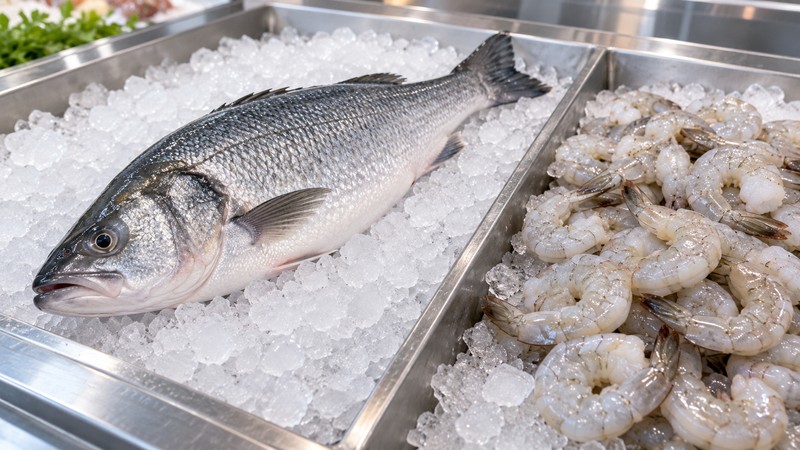
Match the cut to the cooking method
| Ingredient | Useful method | What to plan |
|---|---|---|
| Whole fish or a substantial fillet | Steam on a heatproof plate | Check the thickest flesh; do not use one time for every weight. |
| Peeled raw shrimp | Quick stir-fry | Prepare aromatics and sauce before heating the pan. |
| Clams or mussels | Covered cooking with a small amount of liquid | Sort first and discard shells that stay closed after cooking. |
For a fish dinner, ready the plate, steamer and finishing ingredients before loading the fish. For shrimp, separate the cold raw batch from the serving bowl and cook in manageable batches rather than overcrowding. These are different workflows: trying to use the fish’s plate-steaming instructions for a wok of shrimp obscures the actual cooking task.
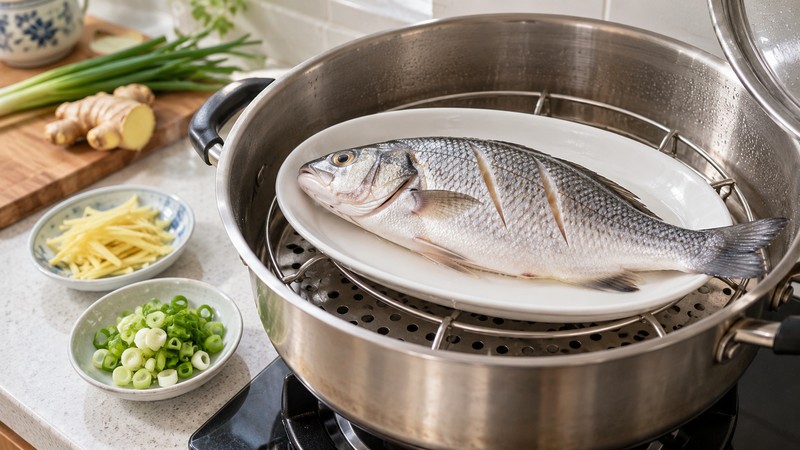
Season without drowning the seafood
Decide whether soy sauce is part of the cooking liquid or a finishing sauce. Add it deliberately rather than repeatedly pouring it in because a dish looks pale. Keep a dipping sauce separate if diners want different levels of salt. Check oyster sauce for shellfish and soy sauce for wheat; a fish dish can contain more allergens than fish alone.
Start with a specific dish rather than improvising a mixed-seafood pot. Ginger-scallion steamed fish shows the plate-steaming approach; har gow uses shrimp inside a starch wrapper and needs a different preparation.
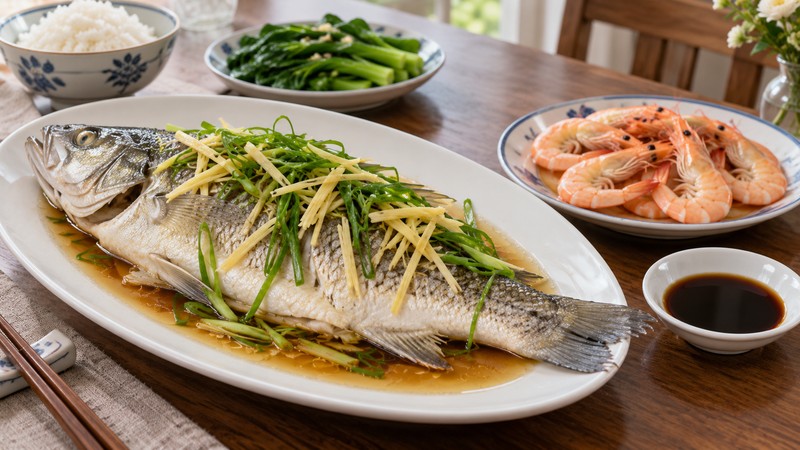
Check doneness before serving
FDA advises 145°F (63°C) for most seafood. Shrimp should be firm and opaque, and unopened cooked clams or mussels should be discarded. Serve promptly; refrigerate perishables within 2 hours, or within 1 hour above 90°F (32°C).
A browned sauce, pink shell or attractive garnish does not establish that the centre is cooked. Check the seafood itself. Never taste questionable seafood to decide whether it is safe.
Illustration disclosure: accompanying AI-generated illustrations show cooking concepts, not photographed freshness inspections or YueCuisine test results.