Rice noodles sold under similar names can have very different widths and textures. For beef chow fun, look for broad flat ho fun ribbons rather than thin rice vermicelli or rolled cheung fun. This guide helps you choose the noodles, beef and seasonings before cooking.
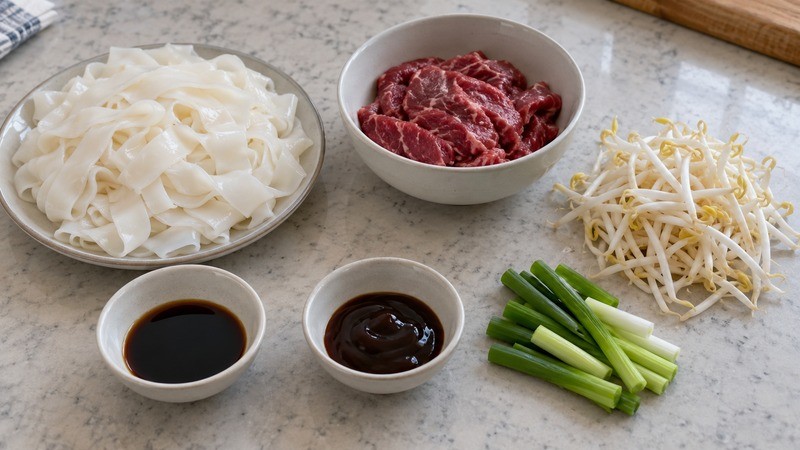
Today, we break down the exact beef chow fun ingredients you need, from the noodles to the secret seasonings, plus prep tips to avoid common missteps that leave your dish tasting flat or mushy.
The Essential Beef Chow Fun Ingredients
At its core, beef chow fun relies on a balance of chewy noodles, tender beef, aromatic seasonings, and fresh add-ins—each component plays a critical role in the final flavor and texture. Let’s break down each non-negotiable and optional ingredient:
Noodles
The most critical ingredient for authentic beef chow fun is fresh wide rice noodles, known as hor fun in Cantonese. These are made from rice flour and water, giving them a springy, chewy texture that holds up to high-heat stir-frying without turning mushy.
Dried hor fun is a common substitute, but it requires soaking and rehydrating, which often leads to a softer, less authentic result. Avoid any noodles that are brittle, have a sour odor, or are cut too thin—they won’t have the right bite.
Look for fresh ho fun in an Asian grocery and follow cold-storage directions. For product selection, see our wide rice noodle guide; cheung fun rolls are a different preparation.
Beef
Sirloin or flank can work when sliced thinly against the grain. Leaner cuts such as eye of round need cut-specific preparation and may remain chewy; quick cooking alone does not guarantee tenderness. Choose a full stir-fry recipe suited to the cut you buy.
Brisket is normally braised for tenderness, not treated as a direct substitute for a quick steak stir-fry. Slice flank or sirloin across the grain so fibers are shorter.
For even thinner slices, chill the beef until slightly firm; this makes it easier to cut with a sharp knife. For this version, mix about 250 g thin beef slices with 1 teaspoon light soy sauce, 1 teaspoon Shaoxing rice wine, ½ teaspoon cornstarch and a pinch of white pepper, then marinate in the refrigerator.
Marinate in the refrigerator for about 15 minutes. The coating helps texture, while slicing and cooking control remain important.
Aromatics
Scallions give an onion aroma; garlic and ginger are optional additions in this home version. If using them, prepare 2-3 cloves garlic, a small piece of ginger and 2 scallions before heating the pan.
Garlic and ginger are variations rather than mandatory ingredients in every version. Onion, scallion and sprouts are useful choices; pickled radish is optional personal variation, not a defining traditional ingredient.
Seasonings
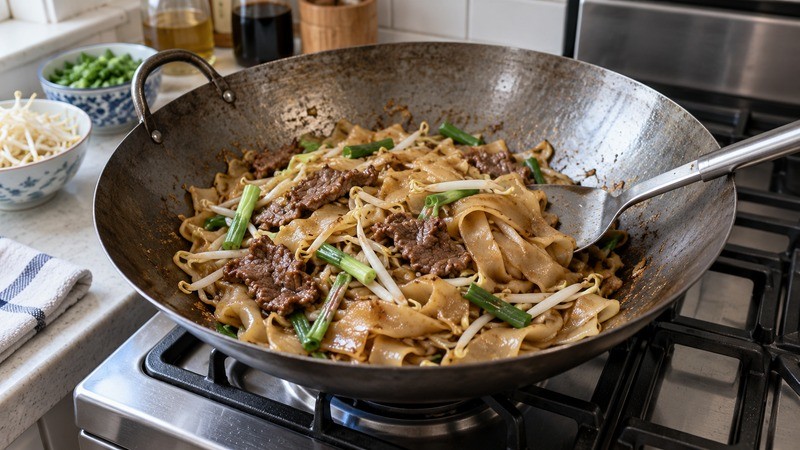
For a suggested ingredient batch of 450-500 g fresh noodles and about 250 g beef, start with 1 tbsp light soy, 1 tsp dark soy and 1 tbsp oyster sauce. Sugar, wine and sesame oil are optional; dark soy adds color but also salt. These are editorial starting quantities, not an independently tested formulation.
Mix these together in a small bowl before cooking to ensure even distribution, so you don’t end up with clumps of soy sauce on the noodles.
Supporting Extras
Bean sprouts should be crisp and free of spoilage, but appearance cannot establish safety. Cook sprouts thoroughly; a 30-second blanch or raw last-second garnish is not a reliable safety rule.
Chives add a mild onion flavor and vibrant green color; cut them into 2-inch pieces and add in the last minute of cooking to preserve their freshness.
Prepping Ingredients for Authentic Texture and Flavor
Cantonese stir-fries move fast, so prepping all ingredients in advance is essential—no mid-cooking chopping! For the beef, after marinating, set it aside on a plate.
For the noodles, gently separate strips with your hands (avoid tearing) and toss with ½ teaspoon of oil to prevent sticking. Pat bean sprouts dry with paper towels to remove excess moisture (wet sprouts make the dish soggy).
Separate scallion whites and greens, and mince garlic/grate ginger ahead of time.
A key expert tip here: don’t overcrowd the pan when cooking. If your skillet is too small, cook the beef in batches to ensure it browns evenly instead of steaming.
This step ensures each component cooks to perfection without overlapping flavors or textures.
Common Ingredient Mistakes to Skip
Dried wide rice noodles are a workable fallback with different texture. Follow the package and avoid over-softening rather than reject every dried noodle as inevitably mushy.
Cook thin beef in batches, then finish it after returning to the noodles. Slice thickness and heat matter more than an absolute one-to-two-minute limit. Add seasoning gradually to avoid over-salting.
Finally, skipping marinating the beef: this step is what keeps it tender, so don’t cut corners.
Home-Cooking Tips for Restaurant-Worthy Results
A wide skillet is an alternative to a wok. Use heat suitable for its material, ventilate the kitchen and cook in small batches. Do not preheat an empty nonstick pan until smoking.
Follow this order for cooking: first, stir-fry the beef until done, remove it from the pan. Then, sauté garlic and ginger for 10 seconds, add noodles, and toss quickly.
Pour in the pre-mixed seasoning, add bean sprouts and scallion whites, and stir-fry for 2 minutes. Finally, add the beef back in along with chives, and toss for 30 seconds.
This sequence ensures each ingredient is cooked to the right level without overdoing it.
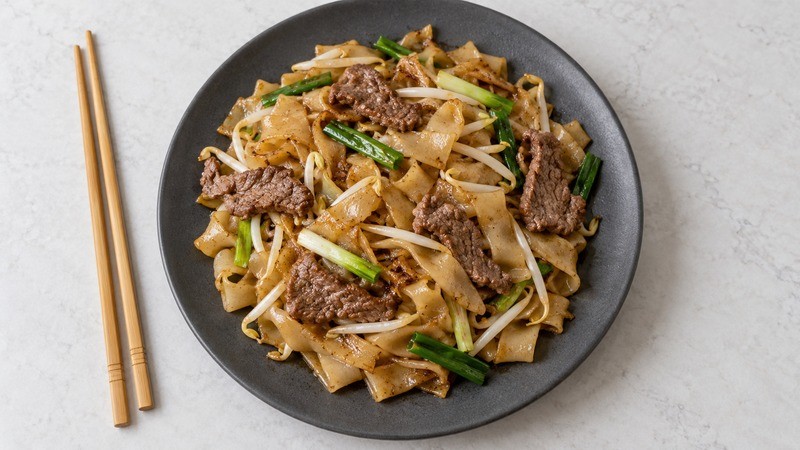
With these exact beef chow fun ingredients and prep steps, you can replicate the authentic Cantonese dish at home—no takeout needed. The key is prioritizing fresh noodles and properly marinated beef, then balancing the seasonings to hit that perfect savory-sweet note Cantonese cuisine is known for.
How to Check Ingredient Balance Before Cooking
A useful way to review beef chow fun ingredients is to group them by job: noodles carry texture, beef gives savoriness, sauce sets the salty-sweet base, and sprouts or scallions keep the dish from feeling heavy. If one group is too strong, the whole plate feels unbalanced.
For home cooking, prepare every ingredient before heating the wok. Fresh rice noodles should be separated gently, beef should be sliced thin enough to cook quickly, and sauce should be mixed in advance. This small setup step often matters more than adding extra seasoning later.
Frequently Asked Questions
What is the significance of beef chow fun ingredients in Cantonese cuisine?
Beef chow fun (乾炒牛河) is one of the most iconic dishes in Cantonese cuisine, representing the mastery of wok hei (鑊氣) – the breath of the wok. The combination of flat rice noodles, beef, and sauce showcases the balance of flavors and textures that define Cantonese cooking. It’s a staple in Hong Kong and Southern Chinese food culture, often found in dai pai dongs (大排檔) and restaurants.
Which ingredients should be prepared first?
Slice and marinate the beef, separate the noodles, wash and drain the vegetables and mix the seasoning before heating the pan. Keep raw beef separate from cooked food.
Is the dish gluten-free just because the noodles are rice-based?
No. Soy sauce, oyster sauce and other bottled seasonings may contain wheat or other allergens. Check every ingredient label, including the noodles.
What are common mistakes when making beef chow fun ingredients?
Common mistakes include: using noodles that are too wet or too dry, overcooking the beef making it tough, not heating the wok sufficiently causing sticking, adding too much sauce resulting in soggy noodles, overcrowding the wok which steams instead of stir-fries, and failing to achieve the characteristic smoky wok hei flavor.
Related Cooking Guides
For a complete published ingredient list, see Bill Leung’s beef chow fun. FDA produce guidance addresses raw-sprout risks. Images may be AI-generated illustrations; they are not a tested-batch record.