If you’ve ever grabbed a late-night meal at a Cantonese street stall in Hong Kong or a Chinatown restaurant in Toronto, you’ve likely spotted a plate of beef chow fun dry style—wide, flat rice noodles tossed with tender beef, crisp bean sprouts, and a savory dark sauce, no broth to weigh it down. This version of the classic Cantonese dish is a staple of street food and home cooking alike, prized for its smoky wok hei and balanced flavors that don’t overpower the natural taste of the ingredients.
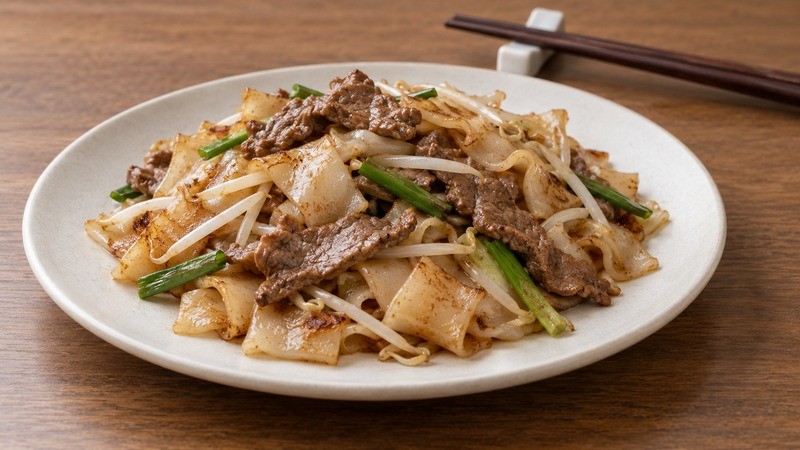
For home cooks looking to replicate the restaurant version, mastering the technique is key: from choosing the right noodles to controlling heat, small details make all the difference between a lackluster stir-fry and an authentic, satisfying plate.
What Is Beef Chow Fun Dry Style?
Dry-style chow fun uses only enough seasoning to coat the noodles. Wet-style chow fun normally has a distinct sauce or gravy; it is not simply the same stir-fry with a splash of broth.
Unlike other Cantonese stir-fries that prioritize crisp vegetables, this dish balances tender beef, chewy noodles, and a subtle smoky note from the wok. It’s often served as a main course for lunch or dinner, and is a favorite among both locals and overseas Cantonese communities because it’s hearty yet not heavy.
For overseas readers, finding fresh wide rice noodles (called “fun” in Cantonese) can be a challenge, but dried options work well when prepared correctly. Many new cooks confuse dry-style beef chow fun with other noodle dishes, but the key difference is the ratio of sauce to noodles—dry style has just enough to coat, not pool.
Key Ingredients for Authentic Dry-Style Beef Chow Fun
The ingredients for this dish are simple, but quality matters. Let’s break down what you’ll need, with tips for sourcing if you live outside a major Chinatown:
- Wide rice noodles: For the suggested two-to-three-serving batch, use 450-500 g fresh ho fun. If using dried wide noodles, follow the package and drain well; a universal 12-minute soak is not reliable.
- Beef: Use about 250 g flank or sirloin sliced thinly across the grain. Ask a butcher for suitable slices if needed; price and services vary.
- Vegetables: Bean sprouts (picked clean of their tails for a cleaner taste) and scallions add crunch and freshness. Some recipes also include garlic, which amplifies the umami depth of the sauce.
- Sauce: A mix of dark soy sauce (for color and depth), light soy sauce (for saltiness), oyster sauce (for umami), a pinch of sugar (to balance the salt), and a splash of Shaoxing wine (for aroma) creates the perfect base.
- Marinade: Soy, wine and cornstarch can season and coat beef. They are useful but not a guarantee of tenderness; cut, slicing and cooking matter too.
Step-by-Step Cooking Method
Stir-fry dishes move fast, so prep all ingredients first (this is called “mise en place” in professional kitchens) to avoid rushing. Here’s how to make it:
- Marinate the beef: Slice the flank steak as thin as possible (freeze it for 30 minutes first makes slicing easier, as firm meat holds its shape better). Toss with 1 tsp light soy sauce, 1 tsp Shaoxing wine, and 1 tsp cornstarch.
- Marinate about 15 minutes in the refrigerator. Cornstarch gives a light coating; it does not literally seal the meat or guarantee tenderness.
- Prep the vegetables: Pick the bean sprouts, wash them, and pat dry—wet sprouts will make the dish soggy. Cut the scallions into 1-inch pieces, mince 2 garlic cloves.
- Mix seasoning: Start with 1 tbsp light soy, 1 tsp dark soy and 1 tbsp oyster sauce for the batch above. Add a little sugar only if needed. These are proposed home quantities, not a tested formula; dark soy is for color as well as seasoning.
- Cook the beef: Heat a wok (or large cast iron skillet) on high heat at cookware-safe heat until added oil shimmers. Add 1 tbsp oil, then the marinated beef.
- Cook beef: Sear thin slices in a single layer and set aside briefly. Finish cooking when returned to the pan; residual warmth alone is not a safe doneness check.
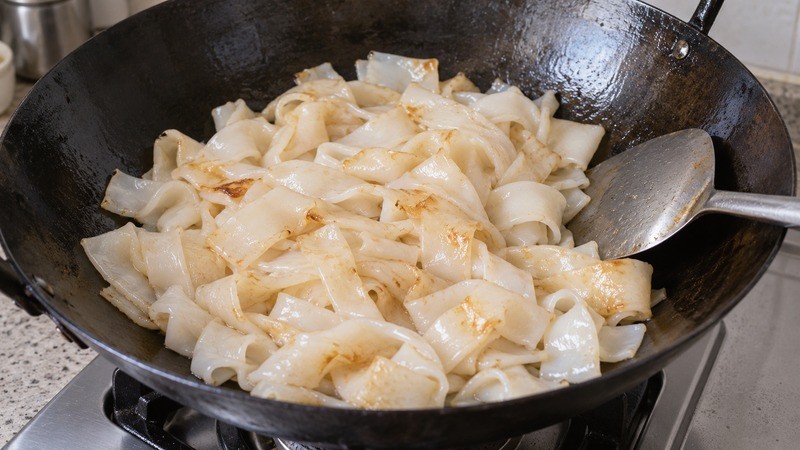
- Stir-fry the noodles: Add 1 more tbsp oil to the wok. Gently add the noodles, spreading them in a single layer.
- Let them sit for 1 minute to develop a slight crisp, then toss. Add the minced garlic and stir for 30 seconds—don’t burn the garlic, as it will turn bitter.
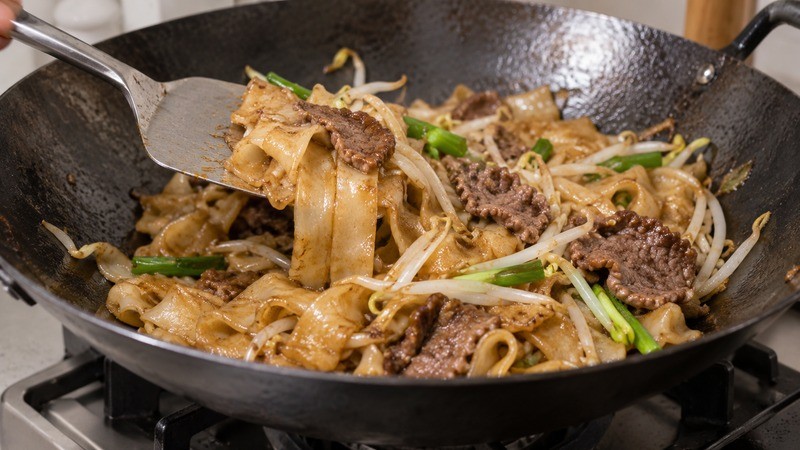
- Pour in the sauce, then toss the noodles to coat evenly. Be gentle here; rough tossing can break the noodles.
- Finish: Return beef, sprouts and scallions to the noodles. Cook until the beef and sprouts are thoroughly heated, then serve promptly.
- Serve immediately, as the noodles will get soggy if left to sit.
Common Mistakes to Avoid
Even experienced home cooks can mess up beef chow fun dry style. Here are the most frequent errors and how to fix them:
- Overcooking the beef: Slice evenly against the grain and use the marinade described above. Cooking time depends on slice thickness, batch size and pan heat. Finish cooking the beef when it returns to the noodles; there is no mandatory one-to-two-minute ceiling.
- Breaking the noodles: Rough tossing or low heat causes noodles to break apart. Fix: Handle noodles gently, use high heat, and let them sit in the wok for a minute before tossing to avoid sticking.
- If noodles do break, it’s not a disaster—just adjust the serving style, but aim for whole strands for authenticity.
- Using too much sauce: Excess sauce makes the dish soggy and bland. Fix: Stick to the sauce ratio, and adjust dark soy to get the right color (too much will make it salty and dark, while too little will leave noodles pale and flavorless).
- Taste the sauce before adding it to the noodles to balance salt and sweetness.
- Overcrowding the pan: Cooking a large batch in one pan steams the noodles instead of stir-frying. Fix: Cook in two smaller batches if needed, to keep heat high.
- Woks are designed for even heat distribution, but overcrowding limits that effect.
Home-Cooking Shortcuts for Overseas Cooks
If you don’t have a traditional wok or access to fresh ingredients, these shortcuts work without sacrificing too much flavor:
- Home cookware: Use a wide wok or skillet, smaller batches and safe heat for its material. A five-minute empty-pan preheat is not a universal instruction, especially for nonstick.
- Dried-noodle alternative: Follow the noodle package rather than a universal 15-minute soak. Drain and avoid over-softening before stir-frying.
- Pre-made sauce: If you’re short on time, use a pre-mixed Cantonese stir-fry sauce (look for one labeled “for beef chow fun”)—just adjust the salt to taste, as pre-made sauces can vary in sodium content.
- No wine: Omit Shaoxing wine or use a little unsalted stock if moisture is needed. Vinegar and sugar introduce a sour-sweet flavor rather than replicate wine.
For preparation, see our ho fun noodle guide. Cheung fun rolls are a different rice-noodle preparation.
For overseas readers, mastering rice noodles is a foundational skill for many Cantonese meals, so this resource is a great addition to your cooking toolkit. The final tip for home cooks: don’t be afraid to adjust ingredients to your taste—adding extra garlic or a bit more bean sprouts is perfectly acceptable, as long as you keep the core balance of flavors intact.
Frequently Asked Questions
What is the significance of beef chow fun dry style in Cantonese cuisine?
Beef chow fun dry style (乾炒牛河) is a iconic dish in Cantonese cuisine, considered a benchmark of a chef’s wok technique. It represents the “wok hei” (breath of the wok) cooking style and is a staple in dim sum restaurants and casual dining throughout Guangdong and Hong Kong. The dish showcases the ability to stir-fry flat rice noodles without them breaking, while achieving a smoky flavor from high-heat cooking.
How do I keep the dish dry rather than soupy?
Drain ingredients, separate the noodles and cook small batches. Add a thin seasoning coating rather than stock gravy. Dry style does not mean dry or uncooked noodles.
What ingredients are essential for beef chow fun dry style?
The essential ingredients include flat rice noodles (wide rice noodles), thinly sliced beef (typically flank or sirloin), light soy sauce, dark soy sauce, oyster sauce, bean sprouts, green onions, garlic, and vegetable oil or peanut oil for stir-frying. Some recipes also include sesame oil and white pepper for additional flavor.
Do I need a smoking-hot nonstick pan?
No. Use cookware-safe heat and avoid crowding. A home stove may not reproduce restaurant wok hei, but it can still make separated, well-seasoned noodles.
Related Cooking Guides
For a full published dry-style formulation, see The Woks of Life’s beef chow fun. Use FoodSafety.gov for meat temperatures. Images may be AI-generated illustrations, not a tested-batch record.