A rib broth with lotus root, not melon
Lotus root brings round slices with visible holes and a firm, starchy bite to pork-rib soup. This stovetop version keeps the ingredients simple so you can judge both the broth and the root. Lotus-root soup belongs to more than one regional Chinese cooking tradition; the preparation below does not claim an exclusive Cantonese origin.
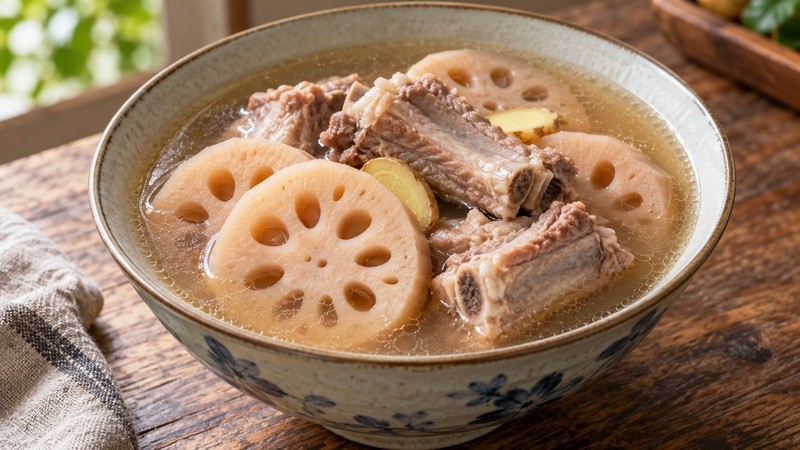
Ingredients and equipment
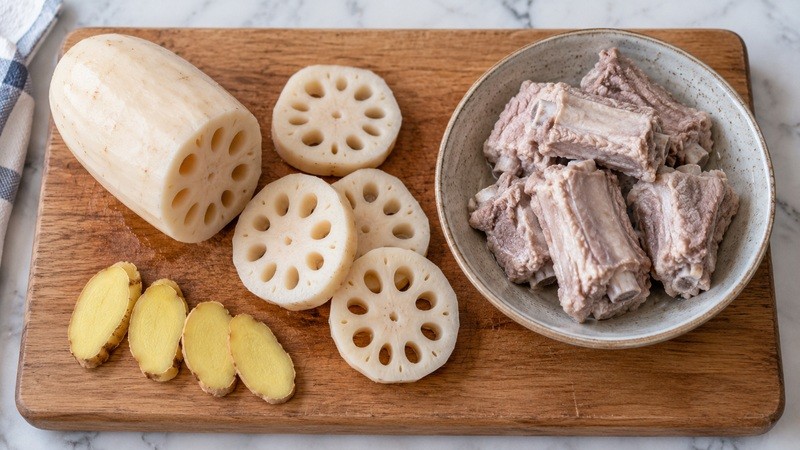
For a shared pot, use 900 g pork ribs cut into manageable pieces, 450 g peeled lotus root, four ginger slices and 12 US cups water (about 2.8 litres). Have salt available for the final seasoning. This is a simplified adaptation of Judy’s lotus-root and pork soup, omitting its optional kelp and goji berries. Use a covered pot large enough to leave space above the liquid.
Clean the broth before simmering
Cover the ribs with water in a separate pot. Bring to a boil, cook for about one minute, then drain. Transfer the ribs to a clean pot with the measured fresh water and ginger. Peel and rinse the root, including its holes, and cut it into substantial pieces rather than paper-thin slices. Add it to the pot.
Cook gently and judge two textures
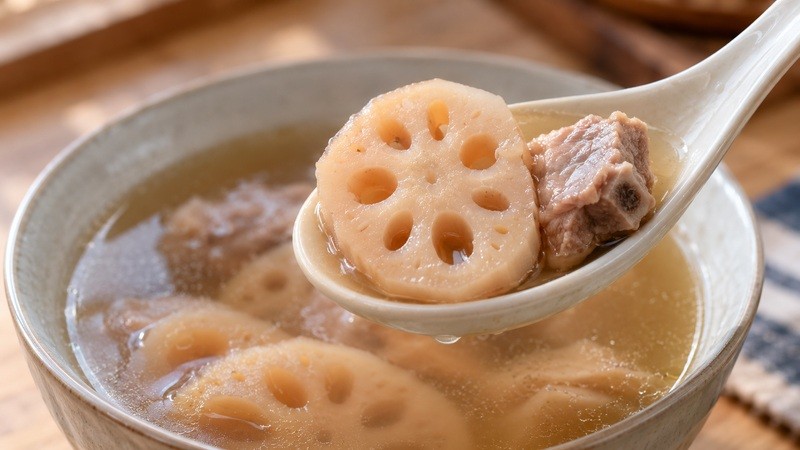
Bring the soup to a boil, reduce to a quiet simmer and cover. The source uses about four hours: check that the ribs are tender and the root is easy to bite. Keep the ingredients submerged, adding hot water if needed. Skim surface fat and add salt near the end. A rolling boil is not a shortcut to a clearer broth.
The finishing decision is not simply whether the pot has been hot for long enough. Root can remain crunchy while ribs soften, or become floury before the meat loosens. Taste a cooled piece of root and inspect a rib separately. Continue gently if either is still tougher than you want.
Frequently Asked Questions
Why is my lotus root still crisp?
Roots vary in texture, and thick pieces need longer than thin ones. Continue the gentle simmer rather than adding an unrelated vegetable or promising that every root turns floury.
Can I use a pressure cooker instead?
Do not copy the stovetop water quantity into a smaller pressure cooker. For a separate root-forward version with appliance-specific cautions, see the pressure-cooker recipe linked below.
Serve, store and read further
Divide leftovers into shallow containers and refrigerate promptly, within two hours, or one hour above 32 C. Bring reheated soup to a boil. Related dishes: lotus root and mung-bean pressure soup and winter melon soup with a late vegetable addition.
Recipe reference: Judy’s original lotus-root pork soup. Storage reference: FDA safe food handling.