A pineapple bun, or bolo bao, is soft bread under a sweet cookie-like cap. The usual plain version contains no pineapple: its name refers to the patterned crust. Dough and topping are separate mixtures, and proofing the bread properly matters as much as browning the cap.
Measure two mixtures for eight plain buns
This is a small home-baking formulation, not a claimed YueCuisine kitchen-tested recipe. Use a scale, a mixing bowl, two lined baking trays, and a rack. Allow roughly 3 hours including rising; room temperature and yeast affect the schedule.
- Bread: 300 g bread flour, 150 g milk, 1 large egg (about 50 g without shell), 30 g sugar, 3 g instant yeast, 3 g salt, and 30 g softened unsalted butter.
- Topping: 100 g all-purpose flour, 50 g fine sugar, 40 g softened unsalted butter, 1 egg yolk, 1 teaspoon milk, and 1/4 teaspoon baking powder.
- Wash: 1 beaten egg yolk mixed with 1 teaspoon water.
These quantities use a direct dough rather than tangzhong. For a separately tested tangzhong formulation, use King Arthur Baking’s complete bolo bao recipe, keeping its liquid and flour ratios together rather than mixing methods.
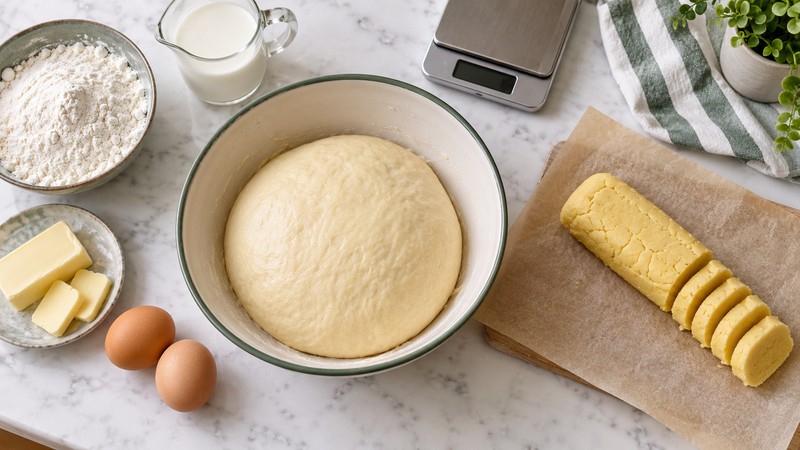
Knead soft bread and chill the cookie cap
Mix flour, milk, egg, sugar, yeast, and salt into a rough dough. Knead until it begins to smooth, then work in the butter and continue until elastic. The dough may be tacky; do not repeatedly add flour simply to make your hands clean. Cover in a lightly oiled bowl and let rise until noticeably expanded and airy, about 60 to 90 minutes in a warm room.
For the topping, beat butter and sugar together, mix in yolk and milk, then fold in flour and baking powder just until cohesive. Wrap and chill for about 30 minutes. Keep raw dough and egg wash away from ready-to-eat food, and do not taste uncooked flour mixtures.
Shape, proof, and apply the topping gently
Gently deflate the bread dough, divide into eight equal pieces, and round each with the seam underneath. Space four per tray with room to expand. Cover loosely and proof until puffy, usually another 40 to 60 minutes. A gentle finger press should recover slowly rather than spring back immediately; a collapsing surface suggests overproofing.
Divide the topping into eight pieces. Flatten each between parchment sheets into a thin disc about 7 cm across. Place over a risen bun without pressing the air out. If desired, score shallow crosshatching in the cap only, not into the bread. Brush a thin layer of egg wash on the topping.
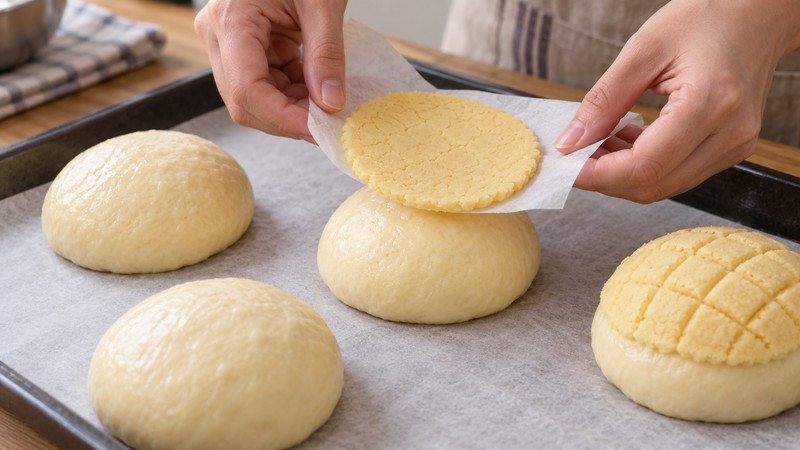
Bake for color and a set crumb
Preheat a conventional oven to 180 C (356 F). Bake one tray at a time on the middle rack, beginning checks at 18 minutes; roughly 18 to 22 minutes is a starting range, not a guaranteed finish. Look for a golden cap, a lightly browned base, and bread that is set rather than wet inside. If the cap darkens too soon, tent loosely with foil and continue baking the bread.
Cool on a rack. Cut one bun once it has cooled enough to handle: the crumb should be soft and cooked through, with a distinct crumbly cap. Note the actual oven setting and time before repeating the batch. The Woks of Life and Omnivore’s Cookbook publish first-hand recipes with different dough and topping formulas; their timings should not be treated as interchangeable.
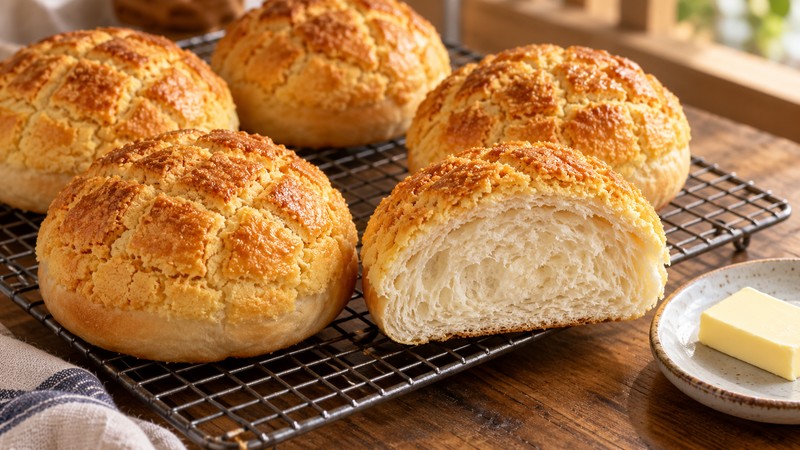
Keep the crust crisp when serving
Serve plain or split a warm bun and add a slice of butter. Butter is a serving option, not pineapple filling. Let unfilled buns cool fully before wrapping; trapped steam softens the cap. For best texture, eat on baking day or freeze cooled buns individually. A brief gentle oven rewarm can help the surface, but watch the topping so it does not burn. Custard-filled versions need a different preparation and storage plan.
This recipe contains wheat, milk, and egg. For another egg-based preparation see tomato and eggs; for a savory dim sum project see hakao shrimp dumplings.
Frequently Asked Questions
Should I add pineapple juice?
Not to this formulation. Plain bolo bao gets its name from the crust pattern, not pineapple flavor. Adding juice changes hydration and acidity and would require a different recipe.
Why did the topping slide off?
The cap may be too thick, too warm, or poorly centered. Chill it until workable, flatten evenly, and place it gently over a puffy bun without coating the whole bread surface in a slippery egg wash.
Can I judge proofing by the timer alone?
No. Use expansion and the gentle finger-press response alongside the estimated time. A cool room or sluggish yeast can extend both rises.
Illustration note: any AI-generated food images accompanying this article are illustrative, not photographs of a tested batch.