Hakao, also commonly written har gow, is a steamed shrimp dumpling with a translucent starch wrapper. It is not a wonton in a different shape. Use wheat starch rather than ordinary wheat flour, hydrate with boiling water, and begin with a simple sealed half-moon before attempting elaborate pleats.
A small batch and the right starches
For about 18 dumplings, the wrapper proportions in Judy Leung’s first-hand har gow recipe are 1 cup wheat starch, 1/2 cup cornstarch or tapioca starch, 1 1/4 cups boiling water, and 3 teaspoons oil or lard. Keep these proportions together; starch brands and measuring technique can affect handling.
For this simplified filling, use 250 g peeled, deveined raw shrimp, 2 tablespoons finely chopped cooked bamboo shoots, 1 teaspoon cornstarch, 1 teaspoon neutral oil, 1/2 teaspoon sesame oil, 1/4 teaspoon salt, 1/2 teaspoon sugar, and a pinch of white pepper. Have a steamer, heatproof mixing bowl, rolling pin, parchment liner, and a clean damp cover ready. Allow about an hour to prepare and fold, plus steaming in batches.
Wheat starch is not a blanket guarantee of gluten-free or wheat-allergy safety. Check the exact product’s certification and allergen statement. Shrimp is a crustacean allergen; sesame oil is optional but must still be disclosed if used.
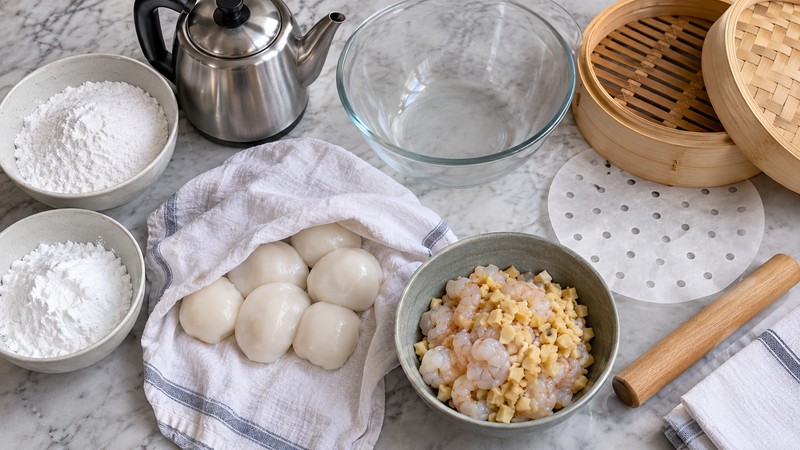
Keep the filling cold and textured
Pat shrimp dry, chop into small pieces, and mix with the filling seasonings until lightly sticky. Fold in bamboo shoots and refrigerate while making wrappers. Do not taste raw shrimp filling. The bamboo is optional, but large or wet pieces can puncture the skin.
Andrea Nguyen’s har gow sample recipe describes shrimp pieces, bamboo, and a half-moon option; pork fat belongs to her version and is not required in the filling above.
Make a warm, pliable wrapper
Stir the starches together. Add freshly boiling water while mixing briskly with a sturdy spoon, then add the oil. Once safe to touch, knead smooth. Divide into 18 pieces and keep covered. Roll one into a roughly 8 cm circle and check that its edges bend without cracking. Work one wrapper at a time rather than leaving all the discs exposed.
If edges crack, check that the water really was boiling and the dough has not dried. Try a few drops of hot water kneaded into one test piece before altering the batch. A very wet dough needs diagnosis, not repeated dusting with ordinary flour.
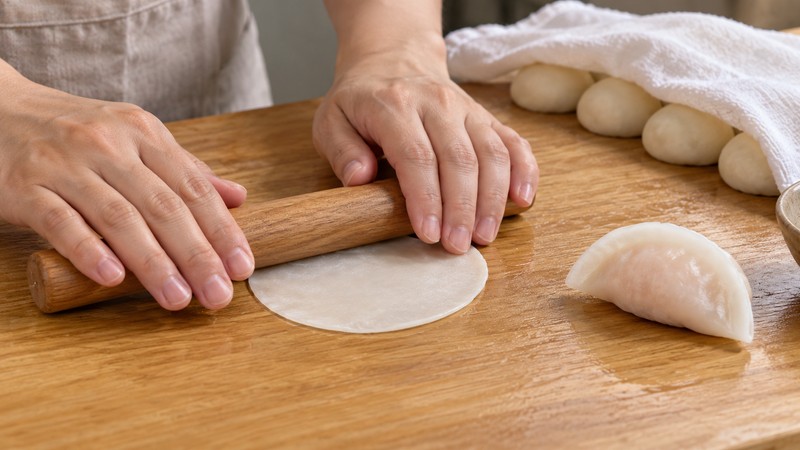
Seal without overfilling
Put about 2 teaspoons filling in the center, leaving a clean border. Fold into a half-moon and gently press the edges together. For pleats, fold only the front edge into several small tucks against the back edge, then press the seam. Do not stretch a thin wrapper around too much filling.
Steam a single trial dumpling before folding the rest if the dough feels uncertain. A sound seal matters more than a prescribed pleat count; intricate folding is not a food-safety check.
Steam, inspect, and serve immediately
Line the steamer with perforated parchment and leave space between dumplings. Set it over already boiling water, cover, and start checking after about 6 minutes. Larger dumplings or crowded tiers can take longer. Lift the lid away from your face and keep water below the basket, replenishing safely if needed.
Check one dumpling’s center: shrimp must be cooked, not translucent raw flesh. FDA seafood guidance recommends 145 F (63 C) for most seafood and describes cooked shrimp as firm, pearly, and opaque. A translucent wrapper alone proves nothing about the filling. Serve hot once the center is cooked.
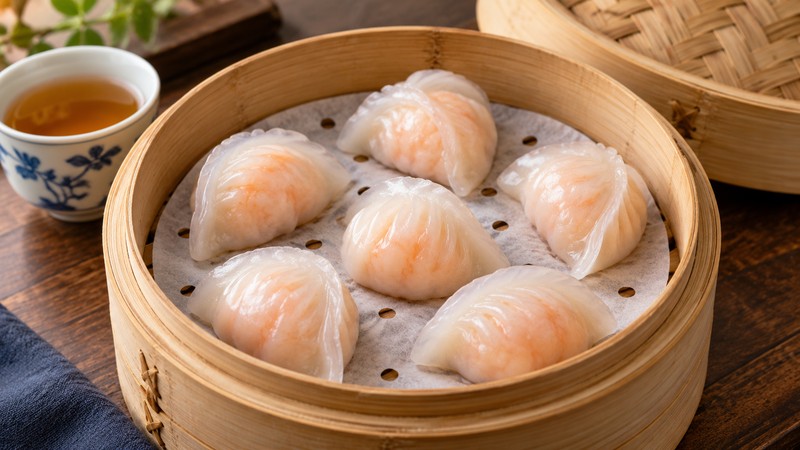
These delicate wrappers are best fresh; do not leave raw shrimp dumplings at room temperature while assembling multiple batches. Keep waiting filling chilled. For seasoning context see the Cantonese sauces guide; for a different bakery project see plain pineapple buns.
Frequently Asked Questions
Can I use wonton wrappers?
They can make shrimp wontons, but they will not reproduce har gow’s translucent starch skin. Use the specified starch dough for this dish.
How many pleats must a beginner make?
There is no necessary beginner pleat count. A cleanly sealed half-moon is a practical starting shape and helps you learn the dough before decorative folding.
Illustration note: any AI-generated food images accompanying this article are illustrative, not photographs of a tested batch.