Soy sauce chow mein uses thin pan-frying egg noodles, not the wide rice ribbons used for beef chow fun. Dry the boiled strands, brown them before adding sauce, and serve while the edges still have some bite. A small batch is easier to turn than a crowded mound.
Two portions and a measured sauce
Allow about 30 minutes. Use 225 g fresh Hong Kong-style pan-frying egg noodles, 1 1/2 cups washed bean sprouts, 2 scallions cut into thin strips, and 3 tablespoons neutral oil. Sauce: 2 teaspoons light soy, 1 teaspoon dark soy, 1/2 teaspoon sesame oil, 1/4 teaspoon each sugar and white pepper, and 1/2 tablespoon Shaoxing wine. Salt, up to 1/4 teaspoon, is optional after tasting.
The quantities and two-sided noodle browning follow The Woks of Life’s primary recipe. Read the noodle package: pan-frying noodles and wonton soup noodles are not interchangeable products.
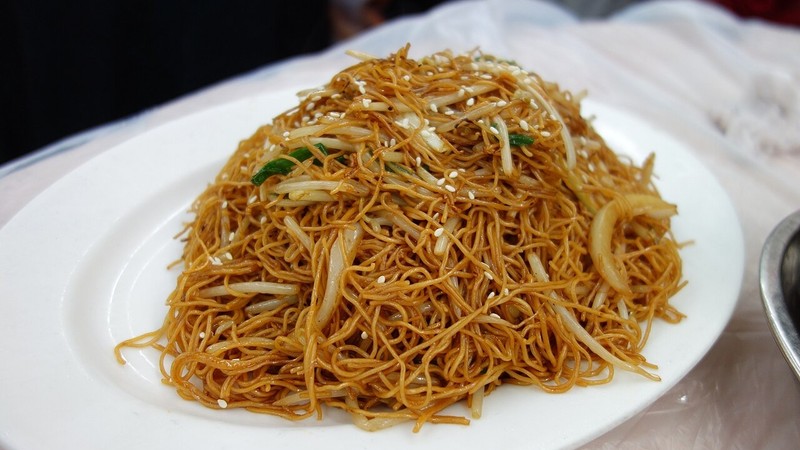
Drain first, then brown
- Mix the sauce. Boil noodles according to their package until cooked but springy, briefly rinse cold, and drain thoroughly. Separate scallion whites from greens.
- Warm a wok or wide skillet within its manufacturer’s heat limits. Add 1 tablespoon oil and spread noodles thinly. Brown the underside, checking around 5 minutes. Turn in manageable sections with another tablespoon oil; brown the other side and transfer out.
- Add the remaining oil and scallion whites. Return noodles, distribute the sauce, and lift apart rather than compressing the strands.
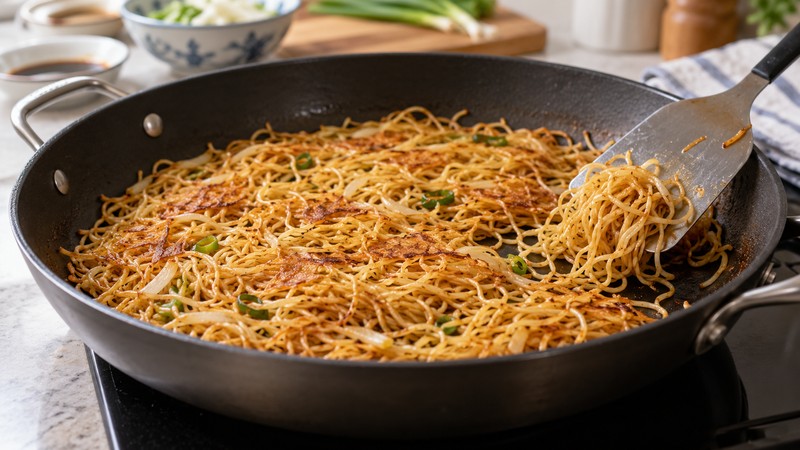
Cook the sprouts and stop before the noodles soften
Add sprouts and scallion greens and cook through before plating. Rinsing alone does not make raw sprouts safe; FDA guidance calls for thorough cooking. For higher-risk diners, cook sprouts separately until steaming hot and combine at the finish rather than retaining a barely cooked garnish.
If noodles are watery, more soy sauce will make the problem saltier. Next time drain better and use two batches. If the underside scorches before it releases, lower the heat; do not force a smoking pan to imitate a restaurant burner. Soy sauce, wheat noodles, egg and optional sesame require label checks.
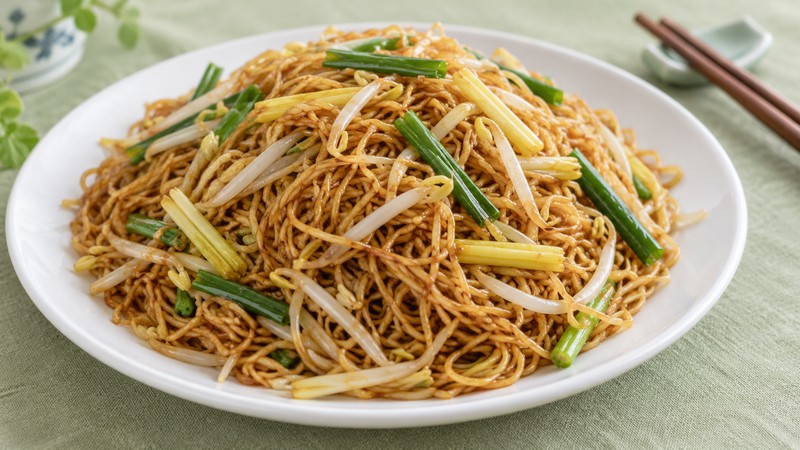
For a different noodle shape see wide rice noodles with beef; for a lighter side use bok choy. Chill leftover noodles promptly, not in a warm wok overnight.
Frequently Asked Questions
Can lo mein noodles give the same crisp edges?
They make a different, softer dish. Choose thin noodles labeled for pan-frying and follow their cooking directions.
Must I toss the whole noodle layer in the air?
No. Turn sections with a spatula or tongs. Stable cookware and controlled heat matter more than an airborne flip.
AI-generated illustrations, if used, are not photographs of a tested batch.