Cantonese steamed fish is about gently cooked fish, fresh ginger and scallion, and a light savory finish. Choose a fish that fits your steamer, start with boiling water, and judge doneness at the thickest part rather than trusting one fixed cooking time.
What makes this a Cantonese steamed fish method?
This version keeps the seasoning restrained so the fish remains the main flavor. It is not a chopped-chili fish-head recipe: the aromatics are ginger and scallion, with a little soy sauce and hot oil at the finish. Whole fish makes a striking family-style presentation, but a thick white-fish fillet is a practical alternative when a whole fish will not fit your kitchen equipment.
The three decisions that matter most are plate fit, fish thickness, and when to add the finishing sauce. A crowded plate makes handling awkward; a thick fish takes longer than a thin fillet; and too much sauce can overwhelm delicate flesh.
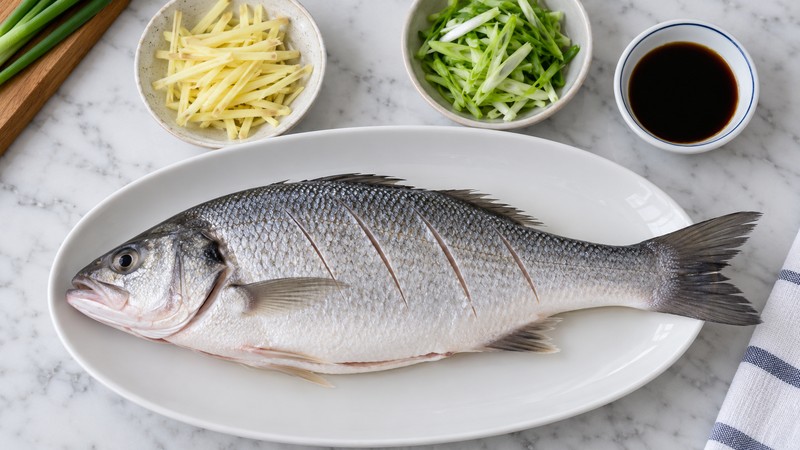
Prepare the fish, plate, and aromatics
Ask the fishmonger to scale and gut a whole fish. Keep it refrigerated until preparation, then pat it dry and check the cavity for remaining debris. Use separate utensils for raw fish and ready-to-eat garnishes, and clean the work surface afterward.
Use a shallow heatproof plate that fits inside the covered steamer with room for steam to circulate. Set the plate above the water rather than directly in it. Slice ginger thinly and cut scallion into fine strips. Place some ginger and scallion beneath and over the fish before steaming; reserve a separate portion of fresh ginger and scallion for the finish. For a thick whole fish, a shallow cut through the thick back helps expose that section to heat without breaking the fish apart.
Steam until the thickest section is cooked
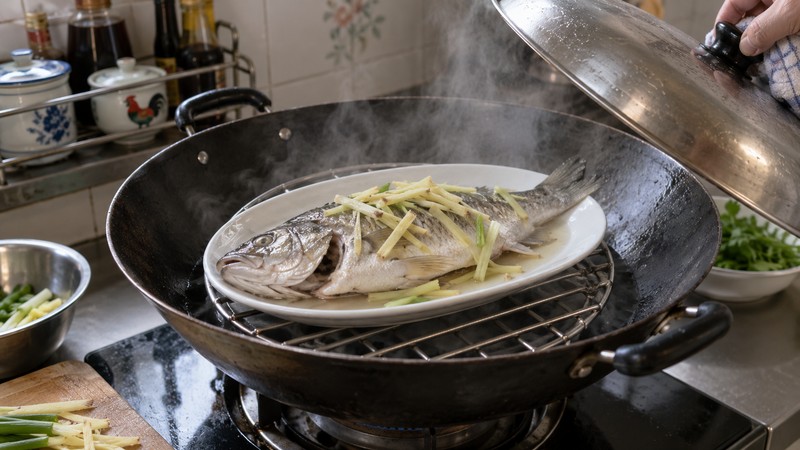
Bring the water to a boil before adding the plate. Cover promptly and keep the steam steady. There is no dependable universal minute count: fish size, starting temperature, plate depth, and steamer strength all change the cooking time.
Check near the thickest flesh, away from bone. FoodSafety.gov recommends 145 degrees F / 63 degrees C for fish. Opaque flesh that separates readily is a useful additional observation, but a thermometer gives a clearer check. If the thick section is not ready, cover and continue briefly, then check again. Lift the lid away from your face and use heatproof protection when removing the plate.
Finish with scallion, light sauce, and hot oil
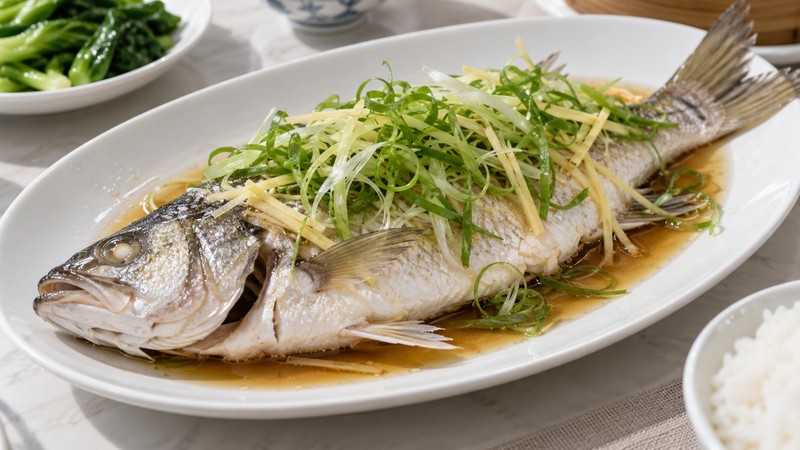
Carefully pour off excess steaming liquid if it dilutes the finish or tastes harsh. Add the reserved scallion and a little fresh ginger. Warm a small amount of neutral oil and spoon it carefully over the aromatics; avoid overheating the oil or pouring it onto standing water.
Add light soy sauce sparingly, preferably around the fish so the flesh is not covered in a heavy salty glaze. Taste a bite of fish with the sauce before adding more. Serve promptly with rice and a vegetable side, and warn diners about small bones. The goal is moist flesh with a fresh aromatic finish, not a plate swimming in sauce.
Fix the result, not just the cooking time
- Dry flesh: start checking earlier next time, especially with thinner fillets.
- Watery sauce: drain excess liquid before the finishing step.
- Too salty: use less soy sauce and taste it with the fish, not by itself.
- Uneven cooking: check fish thickness, plate position, and space under the lid.
Frequently asked questions
Can I use a fillet instead of a whole fish?
Yes. Use a heatproof plate and check the thickest part. A thinner fillet generally cooks sooner than a whole fish, so do not copy its timing unchanged.
Should the soy sauce go on before steaming?
This version adds it at the finish, after checking excess liquid. Other Cantonese preparations season before steaming, so follow one complete method rather than combining conflicting steps.
Why does my steamed fish turn dry?
Overcooking is one common cause. Begin checking before the fish looks completely firm and confirm doneness with a thermometer.
Compare the preparation techniques in Made With Lau’s ginger-scallion steamed fish. For other dishes, see our Cantonese recipes and steamed tofu guide. Illustrations are AI-generated cooking scenes, not photographs of a tested batch.