Cantonese steamed tofu with soy sauce is a mild side dish: warm soft tofu gently, drain excess liquid, and finish with a little warm soy dressing and fresh aromatics. The tofu should remain the main texture, rather than disappear under a salty or oily topping.
Choose soft tofu and a shallow plate
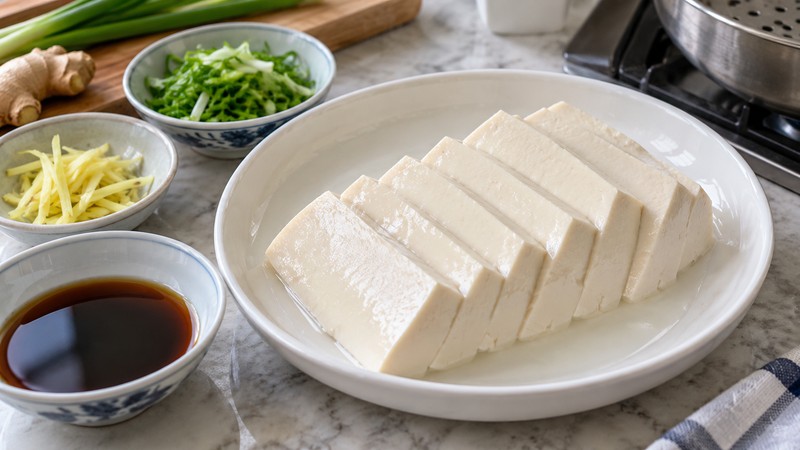
Silken tofu gives the smoothest texture; soft tofu is easier to slice and move. Firm tofu can be used, but it makes a different, less delicate dish. Choose a block that will fit on a shallow heatproof plate with a small rim, and make sure the plate fits inside your covered steamer.
Pour off the package liquid first. Move the tofu gently, preferably supporting it from underneath rather than gripping it with tongs. If liquid collects while it sits on the plate, drain it before steaming. Thin slices warm more quickly than a thick whole block, but cutting too finely makes the tofu harder to handle.
Steam to warm the tofu, not to change its texture
Bring the steamer water to a steady boil, place the plate on a rack above the water, and cover. Keep enough water in the pan to sustain steam without touching the plate. Lift the lid away from your face and use heatproof protection when handling the plate.
The existing guide gives about five to eight minutes as a starting range, depending on the block size and plate depth. Treat that as a kitchen estimate, not a universal rule: the goal is tofu that is hot through without a roughened surface. This version contains no raw meat or seafood topping. If you add one, its safe cooking requirements change the method.
Make the dressing while the tofu warms
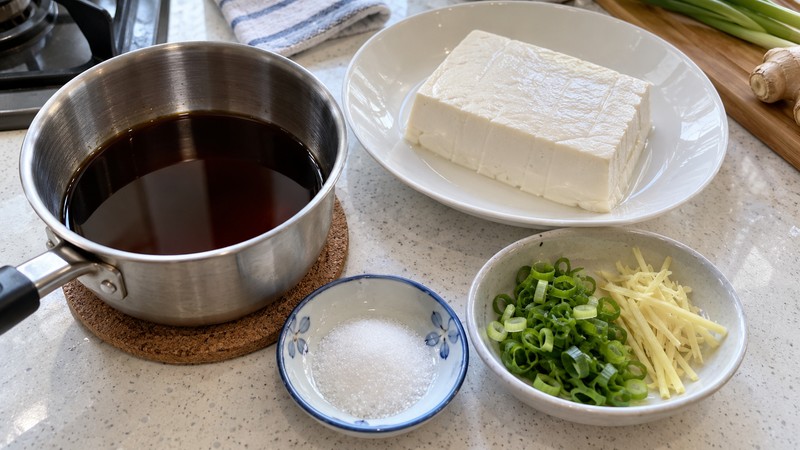
Warm a little light soy sauce with hot water and a small pinch of sugar. Taste before pouring: different soy brands vary, and the sauce should complement the tofu rather than make the first bite sharply salty. A few drops of sesame oil are optional.
Finely sliced scallion or ginger adds aroma without a heavy topping. Some cooks warm a spoonful of neutral oil with the aromatics; keep that step modest. You do not need minced pork, meatballs, or a thickened brown gravy for this simple dish.
Drain, dress, and serve promptly
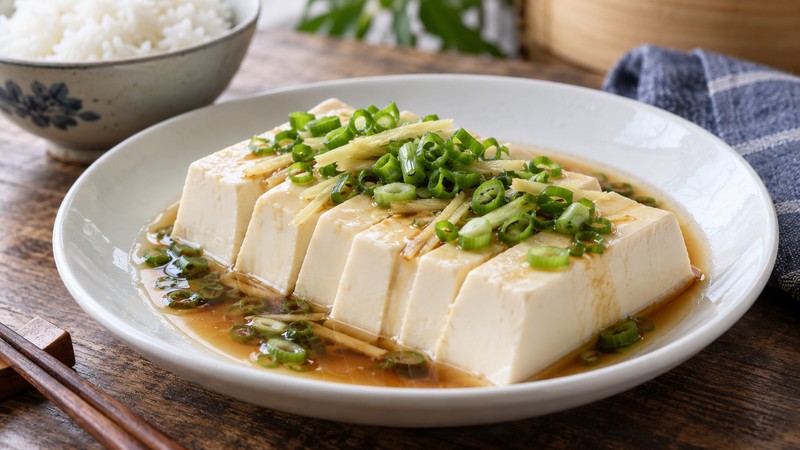
Once the tofu is hot, carefully drain most of the water that has gathered on the plate. Spoon the warm dressing over and around the tofu, then scatter the scallion. Add sauce a little at a time so you can still taste the tofu’s mild flavor.
Serve warm with rice and a stronger-flavored side, such as greens or Cantonese steamed fish. The dish is useful as the quiet part of a mixed meal. Do not leave the tofu in the steamer waiting while other dishes finish; prolonged holding releases more water and makes the sauce less balanced.
What to change if the result is watery or salty
- Water gathers under the tofu: drain before steaming and again before saucing.
- The first bite is too salty: dilute the dressing and use less; do not pour straight from the bottle.
- The tofu breaks apart: use a wider support when moving it, or choose soft rather than very fragile silken tofu.
- The topping overwhelms it: reduce oil and aromatics instead of adding more seasoning.
Frequently asked questions
Should soy sauce be added before or after steaming?
For this method, add the warm dressing afterward so you can first drain excess tofu water.
Can I use firm tofu?
Yes, but expect a firmer bite. Silken or soft tofu is better if you want a smooth, delicate texture.
Can I add shrimp or minced pork?
That becomes a different dish with raw-protein handling and doneness requirements. Do not assume the warming time for plain tofu will cook those toppings safely.
See our Cantonese recipes hub for meal ideas and this Cantonese cuisine overview for wider cultural context. Check soy, wheat, and sesame allergens on sauce labels. Illustrations are AI-generated cooking scenes, not photographs of a tested batch.