Asian BBQ pork recipe costs between $8-$12 per serving in Cantonese restaurants, but you can make it at home for under $3. A 1.5-pound cut of pork shoulder yields four generous servings, with total time from marinating to roasting clocking in at just under 2.5 hours, and ingredient costs for a homemade batch hovering around $10—less than a third of what you’d pay at a local siu mei (Cantonese BBQ) shop.
This iconic dish, known in Cantonese as char siu, is far more than a sweet glazed pork cut: it’s a cornerstone of Cantonese culinary identity, appearing in dim sum, Lunar New Year feasts, and everyday meals across Guangdong and global Chinese communities.
What Is Asian BBQ Pork Recipe?
More commonly known by its Cantonese name char siu, which translates literally to “fork roasted pork,” this dish has roots dating back over 1,000 years to the Tang Dynasty (618–907 CE), when Cantonese roasters skewered pork on long metal forks over charcoal fires to create a smoky, glazed cut that balanced sweet and savory notes. Over centuries, it evolved into a staple of siu mei—Cantonese BBQ shops that specialize in roasted meats, where char siu sits alongside roast goose (siu ngo), crispy roast pork (siu yuk), and duck (siu aap).
Asian Bbq Pork Recipe These shops are a cultural hub in Cantonese neighborhoods, with the smell of char siu glaze caramelizing over charcoal drawing crowds daily.
Culturally, char siu is deeply woven into Cantonese life. Its bright, glossy red color (traditionally from natural sources like red yeast rice, though modern versions often use food coloring for consistency) symbolizes good fortune and joy, making it a centerpiece of Lunar New Year reunion feasts, where families gather to share dishes that bring luck for the coming year.
It’s also an incredibly versatile ingredient: you’ll find it stuffed into steamed buns (char siu bao), tossed into fried rice or noodles, or served as a standalone main dish. Asian Bbq Pork Recipe Unlike Western BBQ pork, char siu avoids heavy smoke or tangy vinegar-based sauces, instead leaning into umami from soy and oyster sauce, subtle warm spice from five-spice, and a gentle sweetness that never overpowers the pork’s natural flavor.

Authentic Asian BBQ Pork Recipe
This recipe follows traditional Cantonese techniques, prioritizing slow marination and layered glazes to replicate the sticky, flavorful char siu sold in neighborhood siu mei shops.
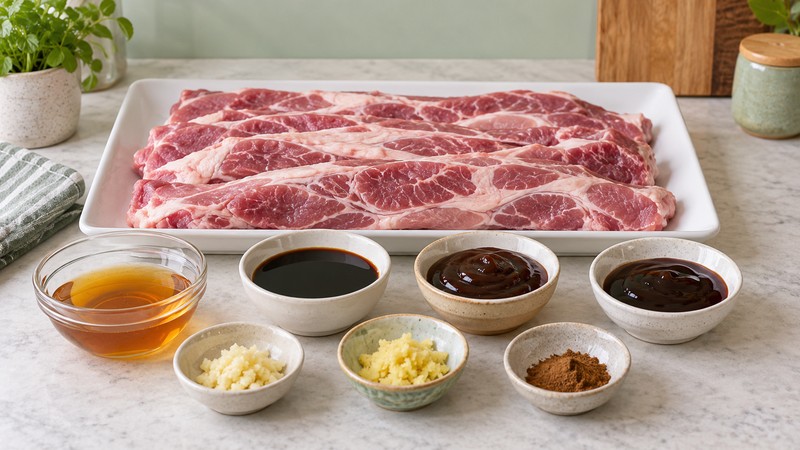
Ingredients (Serves 4)
- 2 tbsp light soy sauce
- 1 tbsp dark soy sauce (for deep, rich color)
- 3 tbsp hoisin sauce
- 2 tbsp oyster sauce
- 1 tbsp Shaoxing wine (Chinese rice wine, for depth)
- 2 tbsp raw honey
- 1 tbsp maltose (for signature sticky gloss; substitute with 1 extra tbsp honey + 1 tsp corn syrup if unavailable)
- 1 tsp five-spice powder
- ½ tsp freshly ground white pepper
- 1 tsp red food coloring (optional, for traditional bright red hue)
- 1 tsp toasted sesame oil
- 1 tbsp cornstarch (to thicken marinade)
Step-by-Step Instructions
- Prepare the pork: Cut the pork into 2-inch thick strips, each 6–7 inches long. This shape is traditional for Cantonese char siu, as it fits on roasting forks, absorbs marinade evenly, and cooks at a consistent rate.
- Asian Bbq Pork Recipe Trim any large fat chunks to prevent flare-ups during roasting.
- Mix the marinade: In a large bowl, combine all ingredients except honey and maltose. Asian Bbq Pork Recipe Whisk vigorously until the cornstarch is fully dissolved, creating a smooth, well-blended marinade that coats every part of the pork.
- Marinate slowly: Add the pork strips to the marinade, massaging each piece thoroughly to ensure no dry spots remain. Cover the bowl and refrigerate for 12–24 hours—this slow marination is non-negotiable for authentic char siu, as it infuses deep flavor into the meat, rather than just a surface taste.
- Asian Bbq Pork Recipe Skipping this step will result in flat, bland pork.
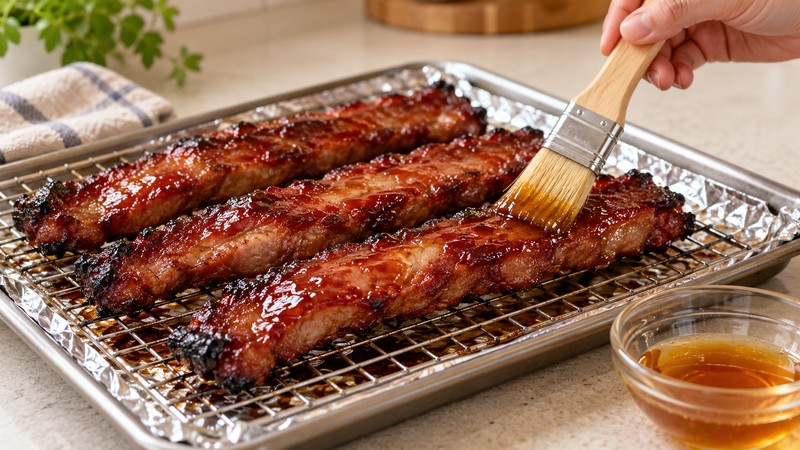
- Prep for roasting: Preheat your oven to 375°F (190°C). Line a baking sheet with aluminum foil for easy cleanup, then place a wire rack on top.
- Asian Bbq Pork Recipe The rack elevates the pork, allowing excess fat to drip away and preventing the bottom from steaming instead of roasting—a key Cantonese technique for crispy, caramelized edges.
- First roast: Remove the pork from the marinade, shaking off any excess liquid, and place it on the wire rack. Reserve the remaining marinade in a small saucepan.
- Asian Bbq Pork Recipe Roast for 20 minutes, until the edges start to turn golden brown.
- Make the glaze: While the pork roasts, heat the reserved marinade in the small saucepan over medium-low heat. Add the honey and maltose (if using), stirring until the maltose melts and the mixture thickens into a glossy, sticky glaze, about 5 minutes.
- Asian Bbq Pork Recipe Don’t let it boil, as this will make it too thick.
- First glaze application: Carefully flip the pork strips using tongs. Brush half of the prepared glaze evenly over the top surface.
- Asian Bbq Pork Recipe Roast for another 15 minutes, until the glaze starts to caramelize and bubble.
- Final glaze and cook: Flip the pork again, brush with the remaining glaze, and roast for 10 more minutes. Asian Bbq Pork Recipe Use a meat thermometer to ensure the internal temperature reaches 145°F (63°C)—this is the ideal temperature for juicy, tender char siu without being undercooked.
- Rest and slice: Remove the pork from the oven and let it rest on the rack for 5 minutes. Resting allows the juices to redistribute, preventing dryness when slicing.
- Asian Bbq Pork Recipe Slice against the grain into ¼-inch thick pieces for the best texture.
Asian BBQ Pork Recipe Variations
Regional differences shape how char siu is made and enjoyed across Cantonese communities. Hong Kong-style char siu leans heavily into sweetness, often using pork loin for a leaner cut and adding extra maltose to create an ultra-sticky, caramelized exterior that’s almost candy-like.
It’s typically served as a standalone dish or tossed into Hong Kong-style egg noodles, where its sweetness balances the savory broth. In contrast, Guangzhou (mainland Cantonese) char siu is more balanced, with less sugar, a stronger umami kick from oyster sauce, and uses pork shoulder for juicier, fattier meat that holds up better to slow roasting over charcoal.
Asian Bbq Pork Recipe Some regional variations even add a hint of Sichuan peppercorn for a subtle numbing spice, blending Cantonese and Sichuan culinary traditions.
Home versions of char siu often simplify the restaurant technique, skipping the charcoal grill (which siu mei shops use for smoky depth) for oven or air fryer cooking. Quick home versions may use a 1-hour marinade instead of 12–24, though this sacrifices some depth of flavor.
Another popular variation is char siu bao filling, where diced char siu is mixed with a sweet-savory sauce to stuff into steamed or baked buns. Asian Bbq Pork Recipe Some home cooks also use pineapple juice as a natural tenderizer, replacing a small portion of the marinade to make the pork more tender without extra sugar, a trick that adds a bright, fruity note to the dish.
Serving Asian BBQ Pork Recipe the Cantonese Way
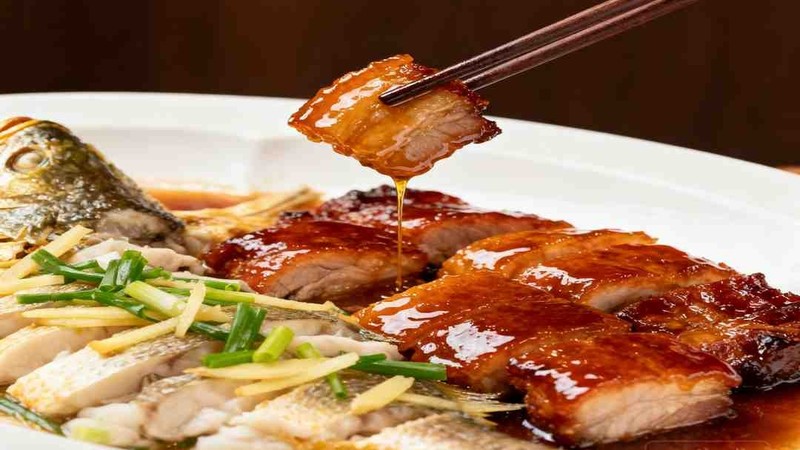
Traditional Cantonese serving style emphasizes simplicity to highlight the char siu’s layered flavor, rather than masking it with heavy sauces. The most common presentation is thinly sliced pork arranged on a platter, drizzled with any leftover glaze, and garnished with toasted sesame seeds or chopped scallions for a pop of color.
It’s typically served with steamed jasmine rice, paired with a side of pickled radish or mustard greens to cut through the richness of the glazed pork, balancing the sweet and savory notes with a tangy crunch. For dim sum-style meals, char siu is used as a filling for steamed buns (char siu bao) or tossed into egg fried rice, where its sweet-savory flavor complements other ingredients like peas, carrots, and scrambled egg.
Asian Bbq Pork Recipe Common mistakes to avoid include overcooking the pork (which leads to dry, tough meat), not marinating long enough (resulting in flat, bland flavor), and using too much red food coloring (which gives an artificial, chemical taste instead of the natural deep red from dark soy sauce and maltose).

FAQs
Q: Is authentic char siu hard to make at home?
A: Not at all! The only key to authentic flavor is the overnight marination—once your pork is coated and in the fridge, the rest is straightforward oven work.
Asian Bbq Pork Recipe Even if you don’t have specialized tools, a wire rack and regular baking sheet work just fine.
Q: Can I substitute pork loin for pork shoulder?
A: Yes, pork loin is a leaner alternative that works well if you prefer less fat. Asian Bbq Pork Recipe Just adjust the cooking time by 5 minutes (add 5 minutes total) to ensure the lean meat stays juicy, as it can dry out faster than shoulder.
Q: What if I don’t have maltose?
A: Maltose is what gives char siu its signature sticky, glossy exterior. Asian Bbq Pork Recipe If you can’t find it at an Asian grocery store, mix 1 tablespoon of honey with 1 teaspoon of light corn syrup to replicate the texture and sweetness.
Q: How long can I store leftover char siu?
A: Store leftover sliced char siu in an airtight container in the fridge for up to 3 days. Asian Bbq Pork Recipe For longer storage, freeze it for up to 1 month—just thaw in the fridge overnight before reheating.
Q: Do I need to use red food coloring?
A: No! The bright red hue is traditional, but it’s optional.
Dark soy sauce and maltose will give the pork a deep, rich brown color that’s just as delicious, with no artificial additives. Asian Bbq Pork Recipe Many authentic Cantonese home cooks skip food coloring entirely.
Q: Can I make a quick char siu without overnight marination?
A: Yes, for a shortcut version, marinate the pork for 1 hour instead of 12–24. Asian Bbq Pork Recipe The flavor will be less deep than authentic char siu, but it’s a great option for busy weeknights when you don’t have time to plan ahead.

Asian Bbq Pork Buns Yue Cuisine 2 Hong Kong Food Wikipedia
Frequently Asked Questions
What is the significance of asian bbq pork recipe in Cantonese cuisine?
In Cantonese cuisine, Asian BBQ pork (叉燒 – cha siu) is one of the most iconic and beloved dishes. It originates from the Cantonese roasting tradition and is a staple in cha chaan teng (茶餐廳) and roast meat shops. It represents the perfect balance of sweet and savory flavors that defines Cantonese cooking, and is used in various dishes like dan dan noodles, fried rice, and rice plates.
How is asian bbq pork recipe traditionally prepared?
Traditionally, Asian BBQ pork is prepared by marinating pork belly or pork shoulder in a mixture of sweet sauces for several hours or overnight. The meat is then roasted in an oven or over charcoal at high heat, frequently basting with the marinade to create a caramelized, glossy exterior. Traditional methods often use a charcoal oven to impart a smoky flavor, though home ovens are commonly used today.
What ingredients are essential for asian bbq pork recipe?
Essential ingredients for Asian BBQ pork include: pork belly or pork shoulder, hoisin sauce, soy sauce, dark soy sauce, sugar or honey, Chinese five spice powder, garlic, ginger, sesame oil, and optionally red yeast rice (紅麴) or food coloring for the characteristic red color. These ingredients combine to create the signature sweet, savory, and aromatic profile.
What are the health benefits of asian bbq pork recipe?
Asian BBQ pork provides several nutritional benefits, including high-quality protein for muscle maintenance, B vitamins (especially B1 and B12) for energy metabolism, and minerals like zinc and iron. The pork belly contains healthy fats that support satiety. However, it is relatively high in sodium and sugar, so it should be enjoyed in moderation as part of a balanced diet.
What are common mistakes when making asian bbq pork recipe?
Common mistakes when making Asian BBQ pork include: not marinating long enough (should be at least 4 hours, preferably overnight), using the wrong cut of meat (too lean results in dry meat), overcooking which makes it tough, not basting frequently enough during roasting, using too high heat which burns the outside before the inside cooks, and not letting the meat rest before slicing.