Asian BBQ pork sauce is a sweet-savory char siu-style glaze built from soy, hoisin, oyster sauce, honey and warm spices. This page focuses on mixing, thickening and using a clean sauce, not on replacing the separate pork-roasting instructions.
A small saucepan makes it easy to control reduction. Sauces differ in saltiness, so taste a cooled clean portion before adjusting.
What Is Asian BBQ Pork Sauce?
Char siu-style sauce combines sweet, savory and aromatic ingredients to season or glaze pork. Its use here is practical rather than a claim about an exact historical origin.
Hoisin, oyster sauce, soy and honey make a sweet-savory glaze. Recipes differ in coloring and spice; no fixed historical origin or global popularity ranking is needed to use the sauce well.
Hoisin and oyster sauce add savory depth, while honey adds sweetness and gloss. A bun filling normally needs its own thickening and portioning rather than simply more roast glaze.
Use this sauce as a thin finishing glaze for roasted pork. Char siu bao needs diced cooked pork in a separately thickened filling; pouring roast glaze into bun dough does not produce the same result.
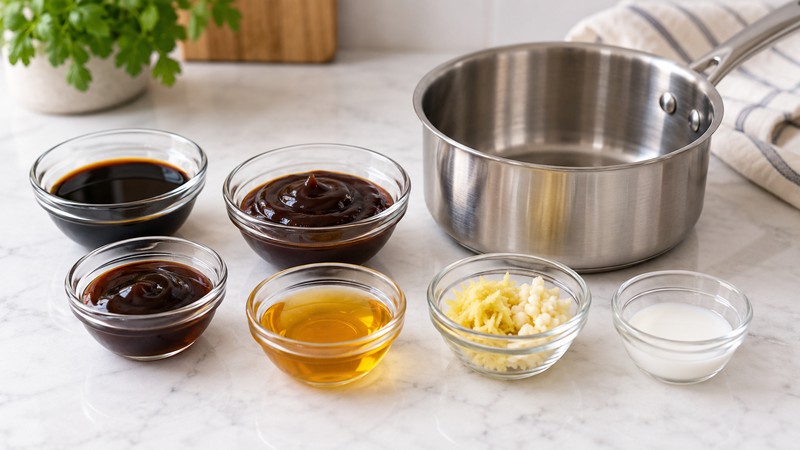
Mix and Cook a Clean Char Siu-Style Glaze
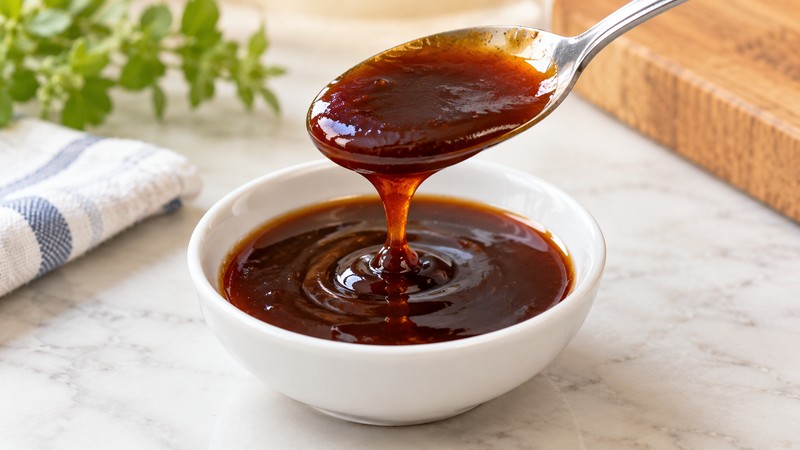
Soy, hoisin, oyster sauce, honey and spice form the base. Simmer the slurry until it lightly coats a spoon. Yield depends on reduction; keep serving glaze separate from raw-contact marinade.
Ingredients
- 2 tablespoons light soy sauce; 1 tablespoon dark soy sauce
- 3 tablespoons hoisin sauce; 2 tablespoons oyster sauce
- 2 tablespoons honey; 1 tablespoon Shaoxing wine, optional
- 1/4 teaspoon five-spice; 1/8 teaspoon white pepper
- 3 minced garlic cloves; 1 teaspoon grated ginger
- 4 tablespoons water, plus more to adjust
- 1 teaspoon cornstarch mixed with 1 tablespoon cold water
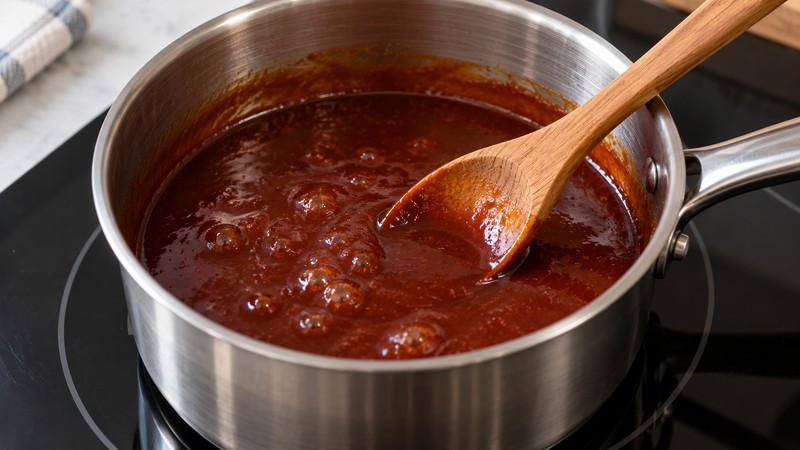
- Combine everything except the slurry in a small saucepan. Bring to a gentle simmer while stirring; keep the heat low enough that sugars do not scorch.
- Stir the slurry again and add about half. Let the sauce bubble gently while stirring until it coats a spoon. Add more slurry only if needed; this is a glaze, not a thick paste.
- Loosen with water if necessary. Cool a spoonful before tasting because the sugars retain heat. Check salt before adding any extra.
- Reserve serving sauce before any brush touches raw meat. Use a separate portion for marinating or basting. Used marinade requires a full boil for a few minutes before reuse; keeping a clean portion is easier.
- Brush onto nearly cooked char siu in thin layers and watch for burning. Safe pork cooking still needs its own center-temperature and rest checks.
Asian BBQ Pork Sauce Variations
Adjust honey and five-spice to taste after checking a cooled clean sample. These are household choices rather than fixed city formulas.
Some char siu formulas use fermented red bean curd or maltose. Use a recipe designed for those substitutions rather than assuming the amounts match hoisin and honey.
A small home batch needs only enough simmering to heat the aromatics and activate the slurry; longer reduction can make it too salty or thick.
Serving Asian BBQ Pork Sauce the Cantonese Way
Use a thin layer as a roast glaze or a clean small portion alongside cooked pork. There is no universal rule forbidding a side sauce.
For buns, use a cooled cooked-pork filling thick enough to stay inside the dough, not a runny roast glaze.
Keep the heat controlled and stir near the base of the pan. High heat can scorch sugar, while too much slurry can make the sauce pasty.
Frequently Asked Questions
Is this a marinade or a finishing sauce?
It is a cooked glaze. Cool a separate portion if you want to marinate pork; keep the serving portion untouched by raw meat.
Why is my sauce pasty?
Too much slurry or too much reduction can make it gluey. Stir in water a teaspoon at a time and simmer briefly. It thickens further as it cools.
Keeping Leftovers
Refrigerate perishable cooked food promptly in shallow containers, within two hours of cooking (one hour above 90 F / 32 C). Keep it cold at 40 F / 4 C or below. USDA generally allows three to four days for refrigerated leftovers; discard food left out too long. Reheat leftovers to 165 F (74 C), checking the center rather than relying on a few seconds or minutes.
Sources and Related Reading
Primary sauce technique and context source. The home adaptation above is not presented as an exact copy of that author’s recipe or as a recipe tested by YueCuisine. Food-safety temperature and handling guidance; USDA leftover guidance.
Asian BBQ Pork Recipe: Cantonese Char Siu at Home · How to Make Asian Bbq Pork Buns: The Authentic Cantonese Rec
Any newly generated food visuals accompanying this article are AI illustrations, not photographs documenting a kitchen test. Retained existing images are captioned only for their visible contents and context.