Chicken congee is rice porridge with chicken cooked into a softened rice base. It contains no egg custard. Let the grains break down first, then add thin chicken pieces separately so a long rice simmer does not overcook the meat.
Measure rice and water with different cups
For about four bowls, use one rice-cooker cup of raw white rice (about 180 ml by volume), 8 standard US cups water (about 1.9 liters), 340 g boneless chicken, 14 g ginger cut into fine strips, 2 sliced scallions and optional chopped cilantro. Chicken marinade: 2 teaspoons cornstarch, 1 tablespoon oyster sauce, 2 tablespoons water, 1/2 teaspoon bouillon and 2 tablespoons neutral oil. Have up to 1 teaspoon each salt and additional bouillon for final adjustment.
Made With Lau’s primary recipe uses a rice cup for rice and standard cups for water; this is not eight rice-cooker cups of water. Keep extra boiling water available because evaporation changes thickness.
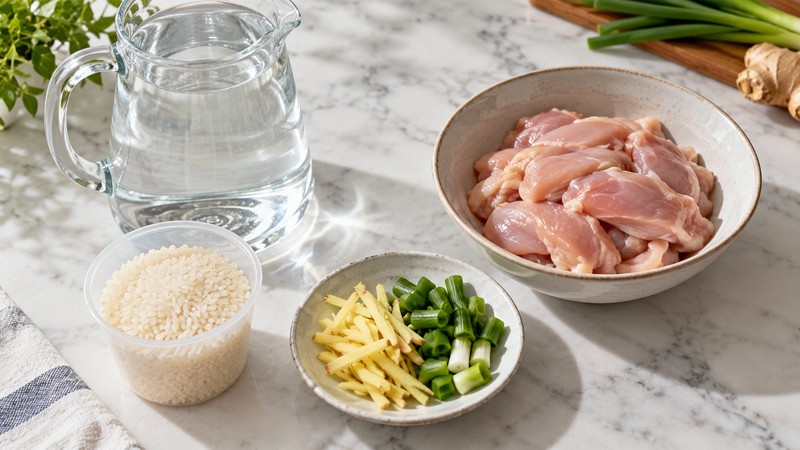
Soften the rice before adding meat
Rinse rice and drain. Bring the measured water to a boil in a deep pot, add rice and return to a simmer. Leave the lid partly open to avoid boiling over. Begin checking after about 25 minutes, cooking longer if grains are still firm. Once soft, whisk cautiously to break them down; lower the heat first so hot porridge does not splash.
Slice chicken thinly on a separate meat board, coat with the marinade and refrigerate while rice cooks. Never taste the raw marinade or use its utensil for a cooked-porridge taste test.
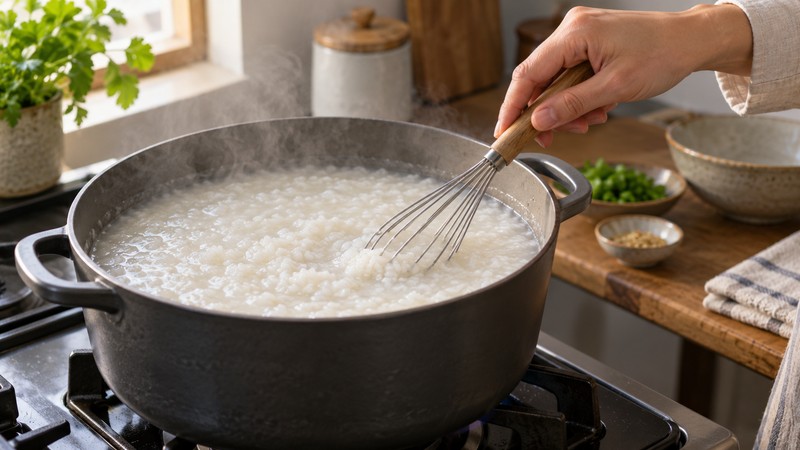
Separate the chicken slices in the hot base
Add chicken gradually to the bubbling porridge while stirring. Allow the pot to return to a simmer, then check that the thickest pieces reach 165 F (74 C), following official poultry guidance. The source’s brief final cooking stage is a checkpoint, not a guarantee for larger pieces. Add ginger, taste with a clean spoon and adjust salt or bouillon cautiously; oyster sauce and bouillon already season the pot.
If too thick, add boiling water a little at a time and recheck seasoning. If grains remain hard, more whisking is not a replacement for cooking. Avoid a high unattended boil that can scorch the bottom.
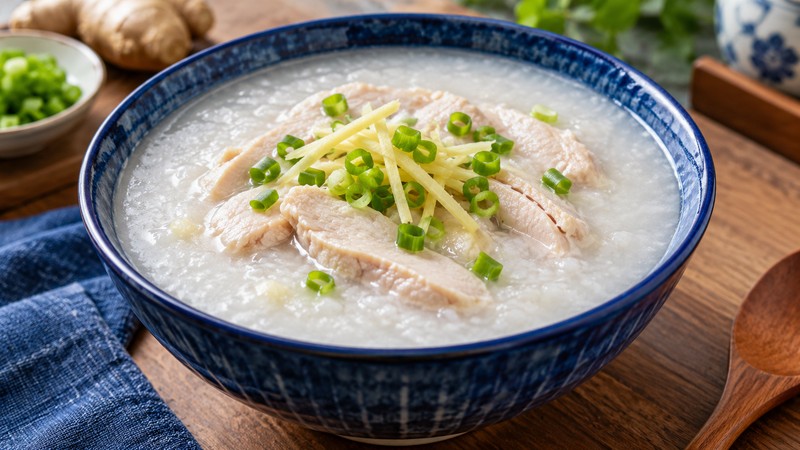
Cool portions, not a whole pot on the counter
Serve with scallion and optional cilantro. Divide leftovers into shallow containers and refrigerate within 2 hours, or 1 hour above 90 F (32 C). Use within 3-4 days and reheat to 165 F (74 C), adding water as needed, under USDA guidance. Do not assume reheating makes porridge left out overnight safe.
Compare wonton noodle soup for a broth-based meal or steamed egg for an entirely different texture. Check oyster sauce for shellfish and wheat.
Frequently Asked Questions
Can I use leftover cooked rice?
It makes a different, often lumpier base and changes water needs. Start with raw white rice for this measured formulation; do not substitute equal volumes of cooked and raw rice.
Is congee ready when the timer reaches 25 minutes?
Only if the grains have softened and broken down. Pot size, rice and simmer strength change the schedule, and chicken must still reach its safe temperature.
AI-generated illustrations, if used, are not photographs of a tested batch.