Quick Answer
Cantonese roast duck is an overnight project, not a quick soup recipe. The cavity carries the aromatic seasoning while the outside must dry before roasting. The detailed linked recipe includes the full marinade and skin-separation sequence.
Basic Facts
- One 5-6 lb Pekin duck; overnight refrigerated preparation; roasting rack, deep roasting pan and thermometer.
Ingredients
For the cavity: 1.5 tbsp fine sea salt, 2.5 tsp five-spice, 2 tsp sugar, 1 tsp sand ginger powder and 2 tbsp Shaoxing wine. For the cooked marinade: 2 tbsp chee hou sauce, 2 tbsp water, and 1 tbsp each ground bean sauce, hoisin, oyster sauce and red fermented bean curd; 2 tsp neutral oil, two ginger slices, two sliced garlic cloves, one scallion, two bay leaves, two star anise, one 3-inch cassia stick and a 2-inch piece of dried mandarin peel. For the baths: 6 cups water divided into 4 and 2 cups, 3 tbsp Chinese red vinegar, 2 tbsp maltose and 1.5 tsp salt. Have half a cup of hot water for the roasting pan.
Season inside and dry outside
Remove giblets and pat dry. Rub wine and cavity seasonings inside; refrigerate one hour. Mix the marinade sauces. In a saucepan, warm oil with ginger, garlic and the remaining aromatics, add the sauce mixture and bring to a simmer. Cool completely, then coat the cavity and seal the opening with a poultry skewer, keeping sauce off the skin.
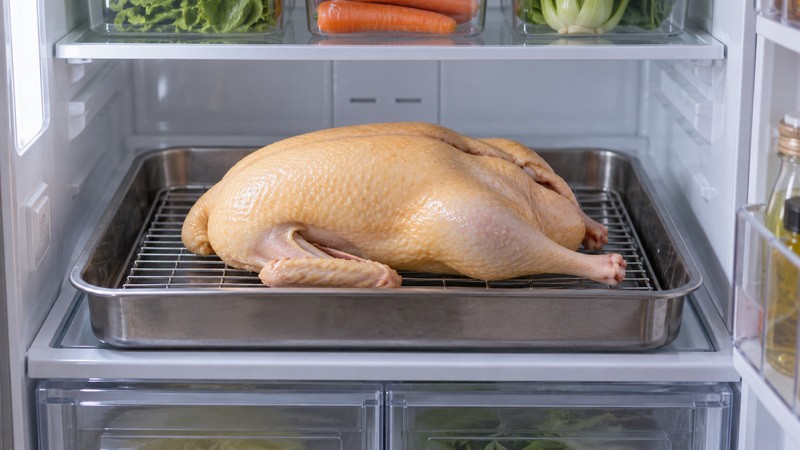
The linked illustrated method separates skin from flesh with an air pump and seals the neck with kitchen string. Only use food-safe equipment with a clean nozzle; never blow into the duck by mouth or use a dirty workshop compressor. This is an advanced step: consult the pictures before attempting it. Over a stable rack and deep catch pan, ladle the 4 cups of boiled water over both sides. Discard that water. Simmer the remaining 2 cups with vinegar, maltose and salt, then ladle over all exposed skin. Chill uncovered overnight in a clean tray on the refrigerator’s bottom shelf.
Use a rack and measured doneness
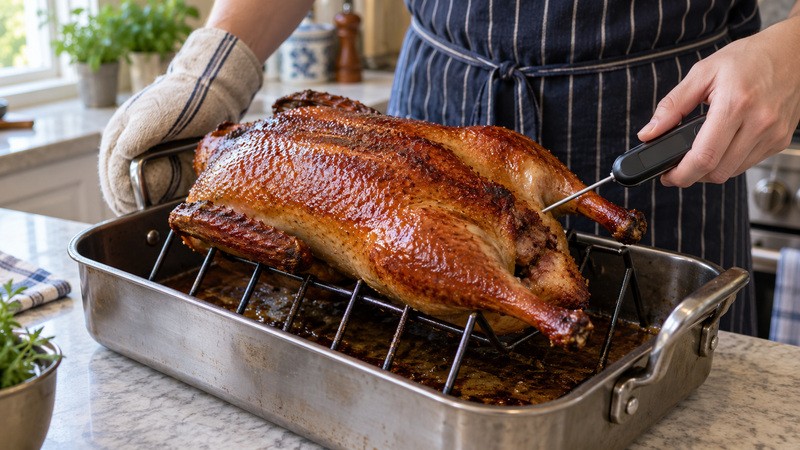
Preheat to 350 F (175 C). Put the duck on a roasting rack and add half a cup of hot water beneath it to limit smoking drippings. Roast breast down for 25 minutes, rotate the pan and roast another 25. Turn breast up and roast in two 20-minute intervals, rotating between them. These are checkpoints for the source’s bird size, not guaranteed doneness. Check breast and innermost thigh and wing to reach 165 F (74 C), avoiding bone.
Rest, carve and keep sauce off the skin
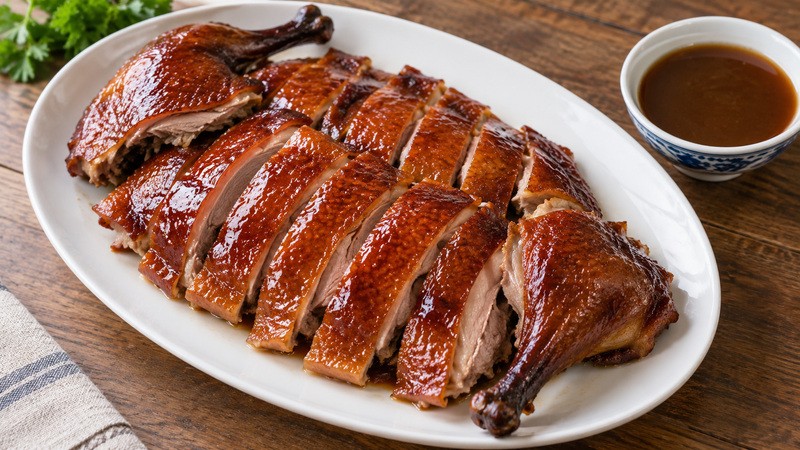
Rest approximately 20 minutes before carving. Collect cavity juices carefully, separate excess fat and bring serving juices to a rolling boil before serving. Offer sauce alongside the meat rather than flooding the skin.
Quick reference
Skip the source’s extended room-temperature warming step: keep raw poultry refrigerated during preparation. Do not wash raw duck under running water. Expect a cold bird to need extra roasting time; thermometer readings take precedence over the timetable.
Frequently Asked Questions
Does dark brown skin mean the duck is cooked?
No. Sugar browns the exterior before it proves anything about the meat near the joints. Measure internal temperature.
Is this the same as Peking duck?
No. This page concerns Cantonese cavity-seasoned roast duck, not the pancake-centered Peking duck preparation.
Related cooking and sources
For another dish at the table, see cantonese roast duck guide and cantonese roast pork recipe.
Recipe basis: The Woks of Life recipe and illustrated method. Food safety: USDA thermometer guidance, FDA safe food handling and USDA leftovers guidance. Cooking times are checkpoints; a thermometer determines meat doneness.