Beer-steamed shrimp combines a small amount of light lager with ginger and scallion on a steaming plate. It is a home-style variation, not a documented origin story or a tested restaurant recipe.
Quick Answer
Beer steamed shrimp works in Cantonese cooking because light beer aroma supports fresh shrimp sweetness while steaming keeps the texture clean, tender, and not greasy.
Basic Facts
- Dish type: Cantonese-style steamed seafood
- Main technique: Short steaming with ginger, scallion, and measured beer
- Texture goal: Tender shrimp with a clean finish
- Common mistake: Using too much beer or steaming too long
Quick reference: Beer steamed shrimp quality = shrimp freshness + beer amount + steaming time + aromatics + immediate serving.
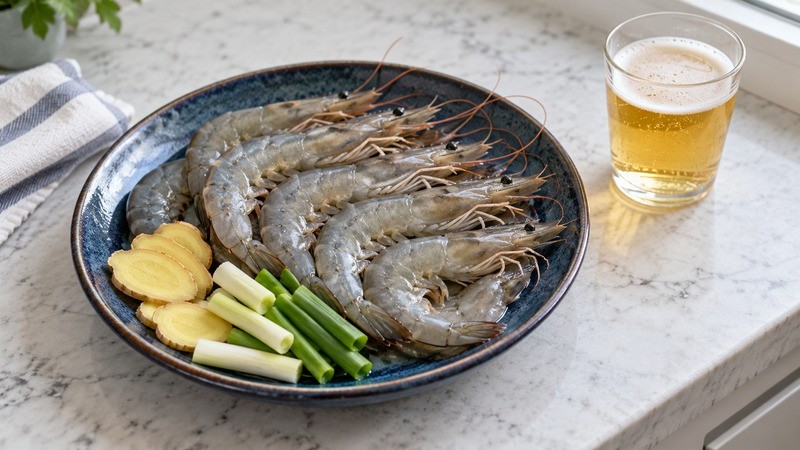
For home cooks looking to add an impressive, low-effort dish to their repertoire, beer steamed shrimp is a perfect fit, balancing subtle malt notes with fresh seafood to create a dish that works for weeknights or casual get-togethers.
What Is Beer Steamed Shrimp?
This version uses light beer as a cooking liquid on a heatproof plate above boiling water. Ginger and spring onions complement the shrimp; the beer is a flavor choice rather than an essential Cantonese ingredient.
Serve it as a shared seafood plate with rice and vegetables.
The method needs a pot, lid, rack and plate that fit together securely. Preparation and cooking take longer than the steaming itself.
Key Ingredients for Authentic Beer Steamed Shrimp
The success of beer steamed shrimp depends on using the right ingredients, as each component plays a specific role in the final dish. Here’s what you’ll need:
- Shrimp: For a suggested 450 g shell-on batch, choose one consistent size such as 16-20 per pound. That count describes large shrimp, not a universal medium size. Properly thawed frozen shrimp can work.
- Light lager beer: Dark beers or craft beers with strong flavors (like IPA) should be skipped—they’ll add bitterness or roasted notes that overpower the shrimp. A standard light lager, such as Tsingtao or Budweiser, works perfectly; it’s mild and adds just a hint of malt.
- Ginger: Thinly sliced, not grated. Grated ginger can make the dish cloudy, while sliced ginger infuses the beer with flavor without leaving gritty bits.
- Aim for 3-4 thin slices, about the size of a quarter.
- Spring onions: 2-3 stalks, sliced into 1-inch segments. Use both the white and green parts—white for flavor infusion, green for garnish.
- Salt: Season lightly if needed; beer is not a substitute for salt.
- Optional: Chinese rice wine: A teaspoon of Shaoxing wine can add extra depth, but it’s not necessary for a basic version.
Avoid damaged frozen packaging or poor cold handling. Thaw in the refrigerator and keep the shrimp cold while preparing the other ingredients.
Step-by-Step Cooking Technique
Cooking beer steamed shrimp is straightforward, but timing is everything to avoid overcooking. Follow these steps for perfect results every time:
- Prep the shrimp: Rinse them under cold water, then devein by making a shallow cut along the back and pulling out the dark vein. Leave the shells and tails intact—they add flavor and make the dish look more appetizing.
- Pat them dry with paper towels to remove excess moisture.
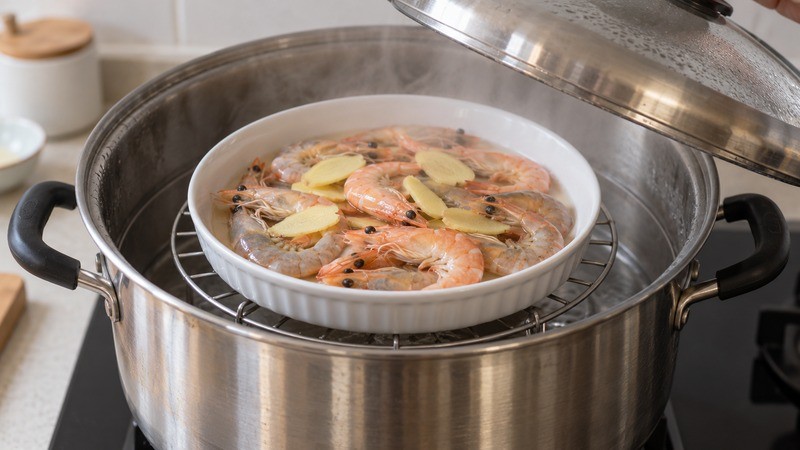
- Arrange the shrimp: Place the shrimp in a single layer on a heatproof plate, making sure they’re not overlapping. Overlapping will cause some shrimp to cook unevenly.
- Add the liquid and aromatics: Pour ¼ cup of light beer over the shrimp, then add the ginger slices, a pinch of salt, and the white parts of the spring onions.
- Steam: Put the plate on a rack above boiling water and cover. Start checking after a few minutes, but continue until the thickest shrimp is cooked; size and load change the timing.
- Check for firm, pearly, opaque flesh and 145 F (63 C) in the thickest accessible flesh. There is no safe universal five-minute ceiling.
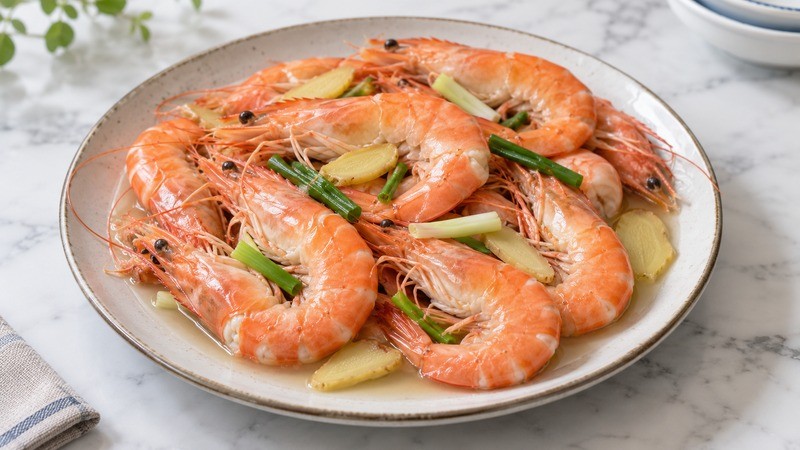
- Finish and garnish: Once done, remove the plate from the steamer. Sprinkle the green parts of the spring onions over the top, and if you want an extra touch, drizzle 1 teaspoon of hot oil over the spring onions to release their aroma.
- Serve immediately.
Maintain steady steam without letting the pot boil dry. Open the lid away from your face and use heatproof mitts to remove the hot plate.
Common Mistakes to Avoid
Even with simple steps, it’s easy to make small errors that ruin the dish. Here are the most common mistakes and how to fix them:
- Over-steaming: Check doneness rather than rely solely on shell color. Remove promptly once cooked to avoid a rubbery texture.
- Using the wrong beer: Dark beer or strong craft beer will overpower the shrimp. Stick to light lagers for a balanced flavor.
- Skipping the ginger: Ginger is essential for cutting the shrimp’s slight fishiness. Without it, the dish will taste flat and one-note.
- Not deveining properly: A hidden vein in the shrimp can leave a gritty texture, which is unpleasant. Take the extra 30 seconds to devein each shrimp.
- Adding too much liquid: Using more than ¼ cup of beer will make the dish soupy instead of steamed. The beer should just cover the bottom of the plate, not submerge the shrimp.
These mistakes are easy to avoid with a little attention to detail, but even experienced home cooks occasionally overcook shrimp—practice makes perfect, and each time you make beer steamed shrimp, you’ll get a better feel for the timing.
Home-Cooking Tips for Better Results
To take your beer steamed shrimp from good to great, try these practical tips:
- Use well-handled shrimp: Fresh and frozen shrimp are both practical options. Safe storage and careful thawing matter more than a blanket rule favoring fresh.
- Adjust the beer amount: If you like more flavor, add an extra tablespoon of beer, but don’t go overboard. The goal is to infuse, not drown, the shrimp.
- Keep the base simple: Ginger and scallion are sufficient. Extra dried seafood introduces another allergen and needs its own preparation.
- Serve immediately: Shrimp lose their tenderness quickly, so don’t let the dish sit for more than 5 minutes after steaming. Pair it with hot tea, like oolong, to balance the flavors.
- Customize for taste: If you like a little heat, add a slice of chili pepper to the ginger. For a sweeter note, add a pinch of sugar (though this is not traditional).
When serving beer steamed shrimp, it fits perfectly into a casual dim sum spread—pair it with other small dishes like har gow or siu mai, and follow the relaxed etiquette of yum cha, where dishes are shared family-style. Our guide to the art of yum cha dining tradition has more tips on making the most of casual Cantonese meals.
Beer steamed shrimp is a testament to Cantonese cuisine’s philosophy of simplicity and respect for ingredients. It doesn’t require complex techniques or expensive ingredients, but it delivers a dish that’s flavorful, light, and satisfying.
Whether you’re a beginner cook or an experienced home chef, this is a dish you’ll come back to again and again.
Frequently Asked Questions
Is this a traditional dim sum recipe?
This page presents a beer-flavored home variation of steaming shrimp, not a verified regional origin or standard restaurant dim sum item.
How much beer should I use?
For the suggested 450 g shell-on batch, start with the existing method’s 1/4 cup (60 ml) on a heatproof plate. It should not submerge the shrimp. This is a proposed starting quantity, not an independently tested formula.
Does steaming remove all alcohol?
Do not assume so. For an alcohol-free meal, omit beer and rice wine and use water or unsalted stock. Products labeled non-alcoholic can still contain alcohol; check the label.
What controls doneness?
Shrimp size, thickness, starting temperature and steamer load affect cooking. Use steady steam and check the flesh; a cold beer bottle, pink shell or fixed timer does not establish safe doneness.
Related Cooking Guides
See Chef Lau’s steamed-shrimp technique for a different, fully specified preparation, FDA seafood guidance for handling, and USDA alcohol-retention tables for why cooking is not an alcohol-free guarantee.
Images are illustrative and may be AI-generated; they do not document a tested batch or safe doneness.