Cantonese brunch represents one of the most beloved weekend traditions in southern China and among Chinese communities worldwide.
Yum cha means drinking tea and commonly brings tea together with shared dim sum.
A shared dim sum table offers a chance for family and friends to eat and talk.
Understanding the dishes and their different methods makes planning a home brunch easier.
Hong Kong and Guangdong both have important dim sum traditions.
Dim sum is also enjoyed by Chinese communities and other diners around the world.
Tea and Dim Sum at Brunch
Cantonese brunch, or “yum cha,” is a traditional meal combining various small dishes served alongside Chinese tea.
Serving hours vary by restaurant; brunch is not the only time for yum cha.
What makes Cantonese brunch distinctive within Chinese cuisine is its emphasis on variety, presentation, and technique.
A traditional dim sum spread might include steamed dumplings, baked buns, rice rolls, crispy fried items, and sweet desserts—each requiring different cooking methods and showcasing the chef’s mastery.
Some restaurants use carts; others use printed or digital order sheets. Ask how ordering works at the place you visit.
Shared small dishes support a relaxed meal and conversation.
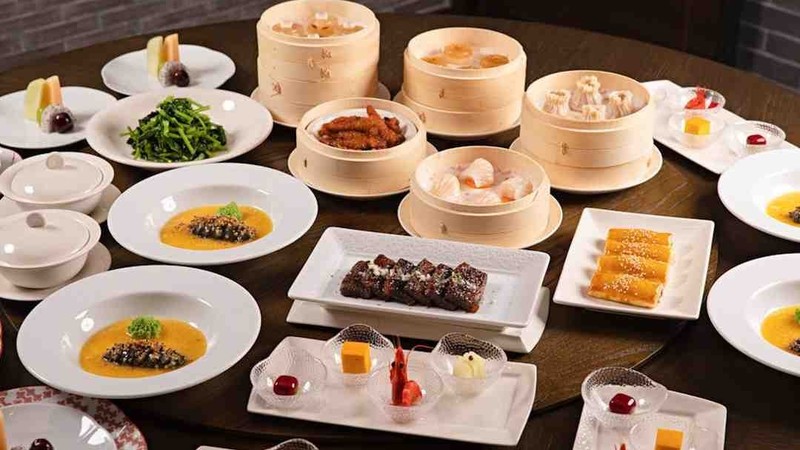
Four Home Brunch Options
Make one or two dishes, not four unfamiliar doughs at once. These concise working notes use the linked authors’ formulations; consult their illustrated recipes for shaping. YueCuisine has not kitchen-tested these dishes.
Har Gow: 18 Shrimp Dumplings
Judy Leung’s har gow recipe uses 1 cup wheat starch, 1/2 cup cornstarch or tapioca starch, 1 1/4 cups boiling water and 3 teaspoons oil. Filling: 1/2 lb prepared raw shrimp, 1/4 cup chopped bamboo shoots, 1 teaspoon each oyster sauce, sesame oil and sugar, 1 tablespoon vegetable oil, 1/4 teaspoon each salt and white pepper, and 1/2 teaspoon minced ginger.
- Mix the filling and refrigerate. Stir boiling water into the starches, add oil and knead when safe to handle.
- Divide dough into 18 covered portions. Flatten one at a time, divide filling evenly and seal without stretching a dry edge.
- Steam spaced dumplings over boiling water. Start checking around six minutes; shrimp centers must reach 145 F (63 C). Serve promptly.
Char Siu Bao: Ten Buns
Judy Leung’s steamed bun formulation uses 1 teaspoon active dry yeast, 3/4 cup warm water, 2 cups flour, 1 cup cornstarch, 5 tablespoons sugar, 1/4 cup oil and 2 1/2 teaspoons baking powder. Filling: 1 tablespoon oil, 1/3 cup chopped onion, 1 tablespoon each sugar and light soy, 1 1/2 tablespoons oyster sauce, 2 teaspoons each sesame oil and dark soy, 1/2 cup stock, 2 tablespoons flour and 1 1/2 cups diced cooked char siu.
- Knead dough without baking powder and rest covered about two hours. Cook onion and sauces, thicken with stock and flour, stir in pork and cool promptly.
- Knead baking powder into dough, rest 15 minutes and divide into ten discs. Divide filling between them; reduce portions if necessary to seal, rather than imposing a two-tablespoon measure.
- Steam above boiling water, checking from 12 minutes. Dough must cook through and reheated pork filling reach 165 F (74 C).
Egg Tarts: About Sixteen
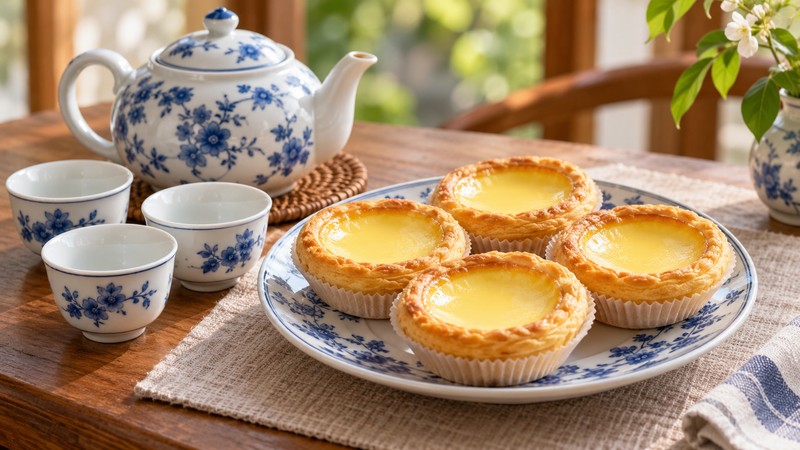
Sarah Leung’s egg tarts use 250 g flour, 1/8 teaspoon salt, 12 tablespoons slightly softened butter and 2 tablespoons cold water for pastry. Custard: 1/2 cup sugar dissolved in 1 cup hot water, cooled, then mixed with 1/2 cup evaporated milk, 3 eggs and 1 teaspoon vanilla.
- Combine pastry without turning butter into a paste. Chill 20 minutes, roll and fold in thirds twice, then chill an hour.
- Strain cooled custard. Roll pastry about 5 mm thick, cut roughly 4-inch discs and line shallow tart molds with clearance for shrinking. Fill three-quarters full.
- Preheat to 190 C (375 F), lower to 180 C (350 F) when tarts go in and check from 26 minutes. Custard must set and reach 160 F (71 C); oven and mold differences may require longer. Cool at least ten minutes.
Shrimp Rice Rolls
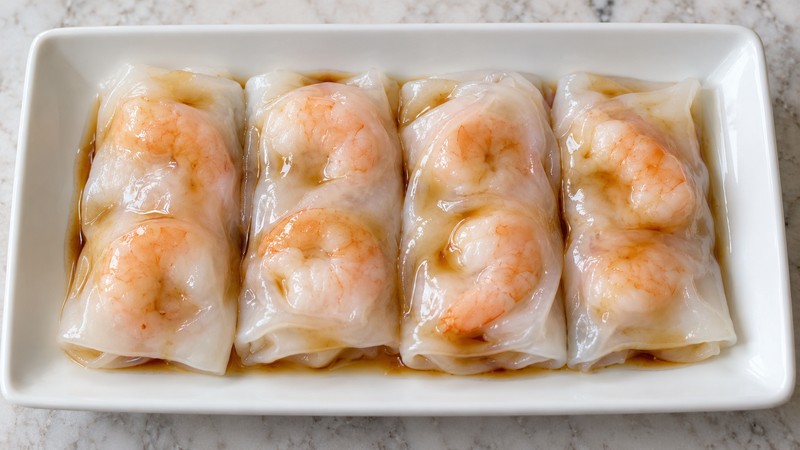
Judy Leung’s cloth-steamed rice rolls use 40 g rice flour, 9 g mung bean starch, 18 g wheat starch, 18 g cornstarch, 1/4 teaspoon salt and 235 ml water. Have 16 peeled shrimp and oil for brushing ready. The batter makes two sheets in a 9-by-13-inch pan.
- Cook shrimp separately to 145 F (63 C). Mix batter thoroughly and stir again before every pour; starch settles.
- Line the level pan with saturated clean food-use cotton cloth. Pour a thin covering layer and steam above boiling water until set, checking from two minutes.
- With heat protection and a plate gripper, transfer cloth noodle-side down to an oiled surface. Scrape off the sheet carefully. Halve each sheet, distribute cooked shrimp along an edge, roll and cut into serving pieces.
- Serve immediately with a little soy sauce, or follow the author’s separately measured sweet-soy sauce. Reheated cooked fillings must reach 165 F (74 C).
Cantonese Brunch Variations
Dim sum varies by restaurant and household. Named dishes and their cooking methods are more useful than ranking entire regions as refined or rustic.
For a home version, choose only the dishes you can cook and serve while hot.
Congee, buns, rice rolls or egg tarts can each have a place in a home brunch; no one needs to attempt them all.
Menus can include rice dishes, noodles, dumplings and bakery items.
New fillings and flavors also appear on menus. Check the actual ingredients instead of assuming every contemporary item is the same as a traditional one.
Serving Tea and Shared Small Dishes
Tea and shared small dishes are central to the experience, while service customs vary.
Tea Service: Tea is the foundation of yum cha.
Ask which teas are available; pu-erh, oolong or jasmine are possible choices.
A tea rinse may be part of a particular preparation, but it is not a universal cup-cleaning requirement.
Diners may tap two fingers as thanks after someone pours tea for them. It is not a rule that the person pouring must tap.
Order and serve in a sequence that keeps food hot. There is no universal requirement for steamed, fried and sweet items to arrive in that order.
Common Mistakes to Avoid: Never stick chopsticks vertically in rice—this resembles funeral incense.
Use condiments according to taste and guest needs rather than imposing a ban on mixing them.
Guests may decline tea; offer an alternative rather than treating refusal as impolite.
Frequently Asked Questions
What is a manageable first home brunch?
Choose one steamed item, one ready-to-serve item and tea rather than making four doughs at once. Frozen dim sum can help; follow its cooking instructions.
Is every dim sum item a dumpling?
No. Buns, rice rolls, fried items and egg tarts are also common options, alongside dumplings.
Must tea and dishes arrive in a fixed order?
No. Service varies by restaurant and household. Order a few dishes at a time and replenish tea without treating one sequence as a universal rule.
How do I serve guests with allergies?
Ask about requirements before choosing dishes. Wheat, shrimp, egg, soy, sesame and milk can appear in dim sum; check fillings, wrappers, sauces and shared equipment rather than relying on a menu name.
Keeping Leftovers
Refrigerate perishable cooked food promptly in shallow containers, within two hours of cooking (one hour above 90 F / 32 C). Keep it cold at 40 F / 4 C or below. USDA generally allows three to four days for refrigerated leftovers; discard food left out too long. Reheat leftovers to 165 F (74 C), checking the center rather than relying on a few seconds or minutes.
Sources and Related Reading
Hong Kong Tourism Board: dim sum restaurant context. The four recipe links above provide the respective ingredient and technique sources; the tourism article is context, not recipe evidence. Food-safety temperature and handling guidance; USDA leftover guidance.
How to Make Cantonese Cooking: The Authentic Cantonese Recip · How to Make Asian Bbq Pork Buns: The Authentic Cantonese Rec
Any newly generated food visuals accompanying this article are AI illustrations, not photographs documenting a kitchen test. Retained existing images are captioned only for their visible contents and context.