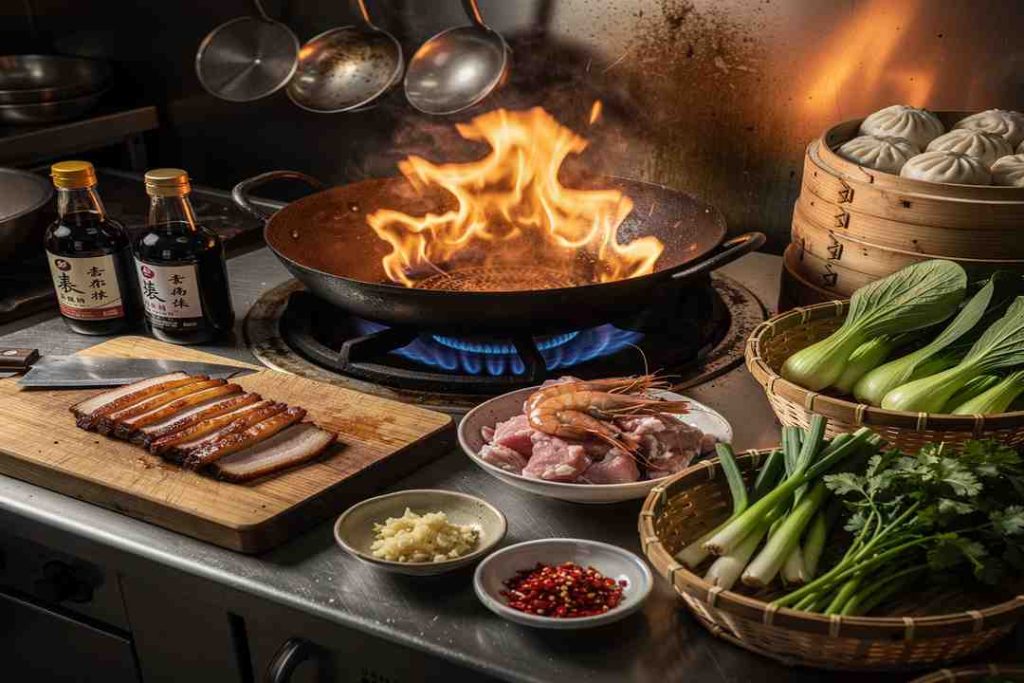
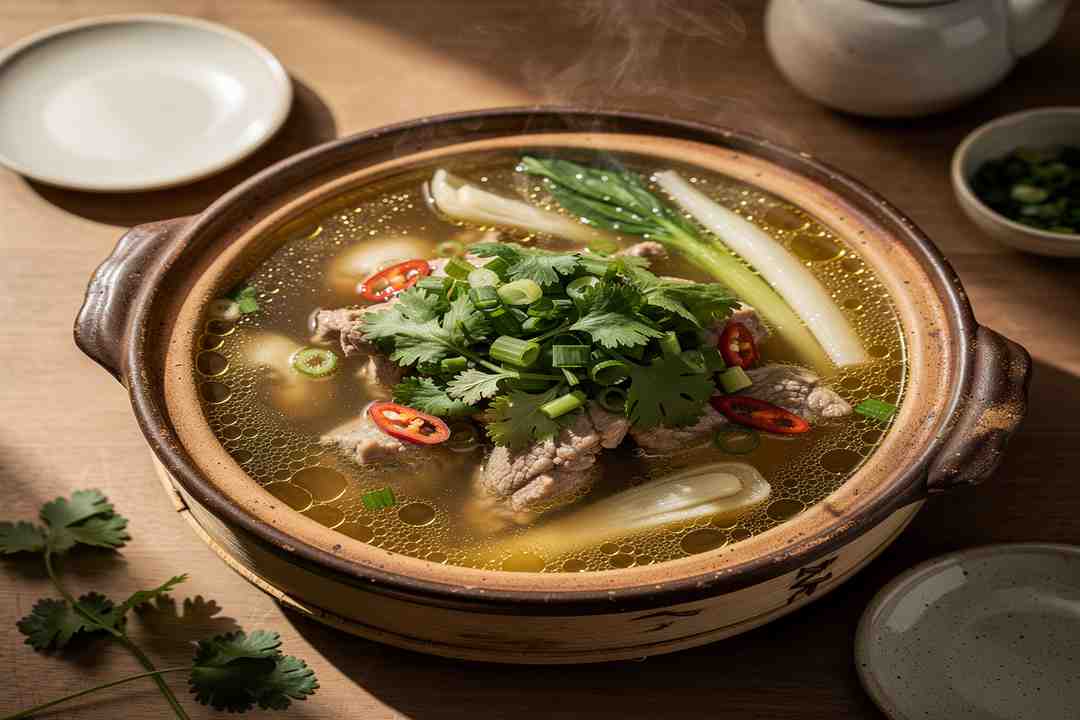
Cantonese cooking, often called the crown jewel of Chinese cuisine, represents one of the oldest and most refined culinary traditions in the world. Originating from the Guangdong province in southern China, this style of cooking emphasizes freshness, delicate flavors, and expert technique that has influenced kitchens across the globe.
From bustling street markets in Guangzhou to high-end restaurants in Hong Kong and beyond, Cantonese cooking has earned its reputation for being light, nuanced, and deeply rooted in centuries of tradition.
The philosophy behind Cantonese cooking centers on preserving the natural flavors of ingredients rather than masking them with heavy sauces or aggressive spices. This approach reflects the region’s abundant access to fresh seafood, vegetables, and aromatic herbs, as well as a cultural appreciation for balance and harmony.
Whether you’re steaming a whole fish, wok-frying vegetables, or preparing a rich braised dish, Cantonese cooking teaches you to let quality ingredients speak for themselves. In this article, we’ll explore the rich history, essential techniques, authentic recipes, and cultural significance that make Cantonese cooking a beloved culinary tradition.
What Is Cantonese cooking?
Cantonese cooking refers to the culinary style originating from Guangdong Province and its capital, Guangzhou, along with the specialized traditions developed in Hong Kong and Macau. This cuisine is one of the Eight Great Culinary Traditions of China and is characterized by its emphasis on freshness, natural flavors, and meticulous preparation.
The term “Cantonese” itself derives from the old foreign name for Guangzhou, reflecting how this cuisine was introduced to Western audiences through the port city that served as China’s primary gateway to the outside world for centuries.
The history of Cantonese cooking stretches back over two thousand years, evolving through periods of imperial influence, trade expansion, and cultural exchange. During the Tang Dynasty (618-907 CE), Guangdong was a frontier region that attracted settlers from northern China, bringing diverse culinary techniques that would eventually blend with local traditions.
The region’s geographic position—near the South China Sea with access to abundant seafood, subtropical vegetables, and exotic ingredients—shaped its distinct identity. Cantonese cooks developed a preference for steaming and quick wok-frying methods that preserved the textures and natural tastes of ingredients, contrasting with the heavier, braised preparations common in northern Chinese cuisine.
What truly distinguishes Cantonese cooking is its philosophy of “鲜” (xin), meaning freshness or succulence. Cantonese chefs believe that the best dishes require minimal seasoning to enhance rather than overpower the main ingredients.
This approach manifests in techniques like steaming whole fish with nothing more than ginger, scallions, and light soy sauce, or quickly stir-frying greens with garlic to maintain their crisp texture. The cuisine also embraces the concept of “五味调和” (wuwei tiaohe)—the harmonious balance of sweet, sour, salty, bitter, and savory flavors—achieving subtle complexity through careful seasoning.
Today, Cantonese cooking continues to evolve while maintaining its traditional roots, representing both comfort food for millions and a sophisticated art form celebrated in restaurants worldwide.
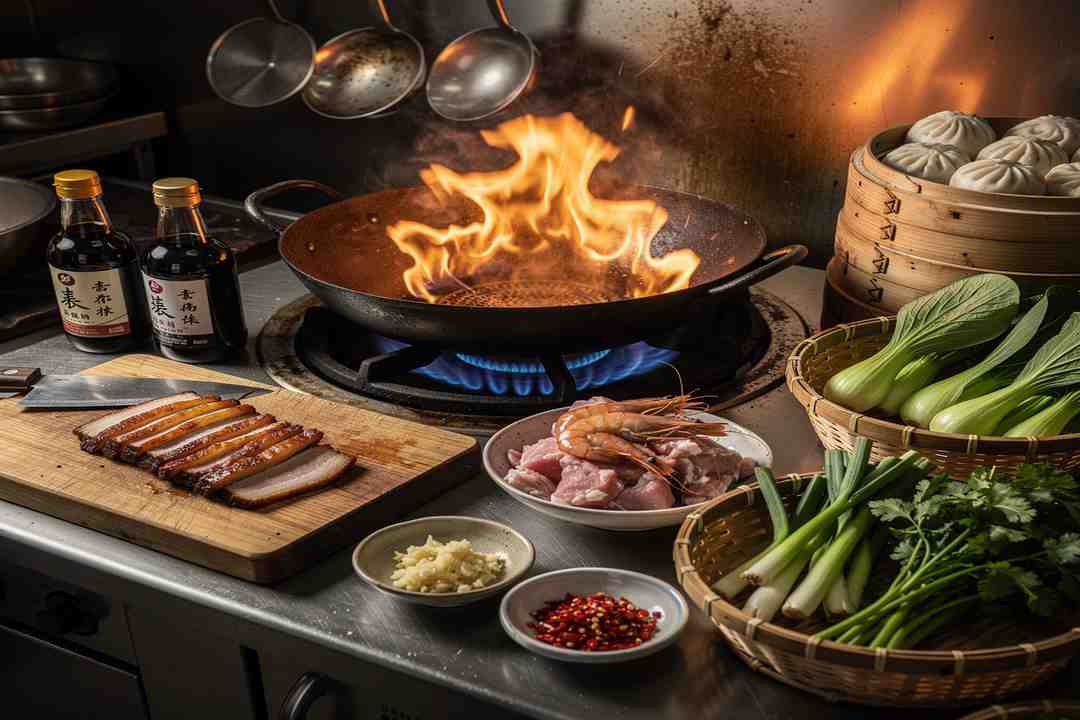
Authentic Cantonese cooking Recipe
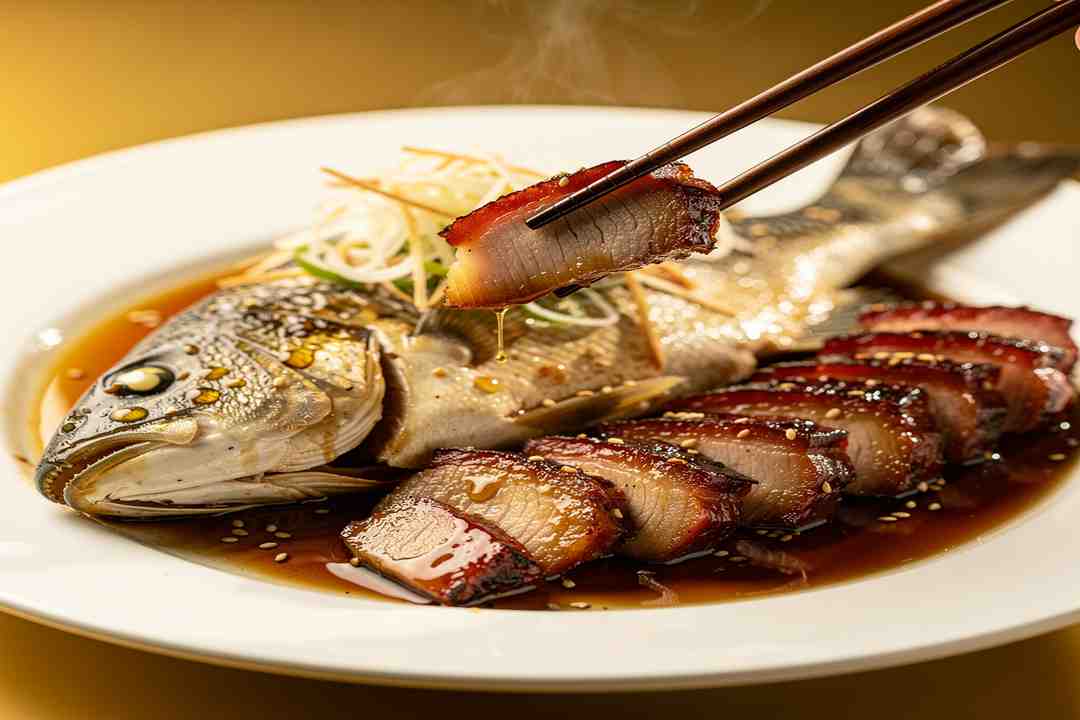
For this authentic Cantonese cooking recipe, we’ll prepare Cantonese Steamed Fish (清蒸石斑鱼), a dish that exemplifies the core principles of this cuisine—fresh ingredients, minimal but precise seasoning, and expert steaming technique.
Ingredients (Serves 4)
- 1 whole sea bass or grouper (approximately 600-700 grams), cleaned and scaled
- 3 tablespoons peanut oil
- 2 tablespoons light soy sauce (生抽)
- 1 tablespoon oyster sauce (蚝油)
- 1 teaspoon sesame oil (麻油)
- 4 slices fresh ginger
- 4 stalks spring onions, cut into 5-cm lengths
- 2 red chilies, thinly sliced
- 1 tablespoon Shaoxing wine (绍兴酒)
- ½ teaspoon white pepper
- ¼ cup water
- 1 tablespoon granulated sugar
- Fresh cilantro for garnish
Instructions
- Prepare the fish: Make three diagonal cuts on each side of the fish, about 1 centimeter deep. This ensures even cooking and allows flavors to penetrate.
- Cantonese Cooking Pat the fish completely dry with paper towels—moisture is the enemy of crispy skin and proper steaming.
- Season the fish: Rub the fish inside and out with Shaoxing wine, white pepper, and a pinch of salt. Let it rest at room temperature for 15 minutes.
- Cantonese Cooking This step removes any fishy odors and seasons the flesh.
- Prepare the steaming plate: Place ginger slices and half the spring onion pieces on a heatproof plate that will fit in your steamer. Cantonese Cooking Lay the fish on top, and scatter the remaining ginger and spring onion both inside the cavity and on top of the fish.
- Mix the sauce: In a small bowl, combine light soy sauce, oyster sauce, sesame oil, sugar, and water. Stir until the sugar dissolves completely.
- Cantonese Cooking This sauce (蒸鱼豉油) will be poured over the fish after steaming.
- Prepare your steamer: Fill your steamer wok or large pot with water and bring to a vigorous boil over high heat. Cantonese Cooking The steam must be fully rolling before you add the fish—insufficient heat will result in watery, overcooked fish.
- Steam the fish: Place the plate with fish into the steamer. Cover tightly and steam for exactly 8-10 minutes depending on the thickness of your fish.
- Cantonese Cooking The fish is done when the flesh is opaque and flakes easily when tested with a fork.
- Heat the oil: While the fish steams, heat peanut oil in a small saucepan until it just begins to smoke—this should take about 2 minutes. Cantonese Cooking The oil must be extremely hot to create the signature sizzling sound when poured.
- Remove and drain: Carefully remove the steamed fish from the steamer. Discard the ginger and spring onion that were in the cavity—they have served their purpose.
- Pour off any accumulated liquid from the plate into a small bowl; this “fish juice” is liquid gold in Cantonese cooking.
- Combine juices: Add the drained liquid to your prepared sauce mixture. Cantonese Cooking This incorporates the fish’s natural flavors back into the sauce.
- Add chilies and cilantro: Scatter the sliced red chilies over the fish and add a few sprigs of fresh cilantro for color and freshness.
- Final sauce pour: Pour the sauce mixture evenly over the fish, focusing on the cuts you made earlier so the flavor seeps into the flesh.
- The finishing touch: Pour the smoking hot peanut oil directly over the fish and ingredients. Cantonese Cooking You should hear an immediate, vigorous sizzle—this “oil explosion” (浇油) is the hallmark of properly executed Cantonese steamed fish, cooking the aromatics and releasing their fragrances.
- Serve immediately: Serve the steamed fish immediately while still sizzling, with steamed rice and simple stir-fried vegetables on the side.
Cantonese cooking Variations
Cantonese cooking encompasses remarkable regional diversity, with significant differences between the traditions practiced in mainland Guangdong, Hong Kong, and Macau, as well as between restaurant and home preparations. Hong Kong-style Cantonese cooking, for instance, has developed its own distinct identity influenced by British colonial administration, international trade, and the city’s position as a global culinary capital.
Hong Kong chefs often employ richer sauces, more elaborate presentations, and premium ingredients like abalone and dried scallops, reflecting the dining preferences of a prosperous, cosmopolitan population.
The distinction between home-style Cantonese cooking and restaurant versions is equally pronounced. In Cantonese households, dishes tend to be simpler, with emphasis on daily freshness and wholesome ingredients.
A typical home-cooked meal might feature a clear soup, a steamed fish, and two vegetable dishes—balanced, nutritious, and relatively quick to prepare. Restaurant Cantonese cooking, by contrast, often involves more complex techniques like “wet steaming” (水蒸), double-boiling, and elaborate wok hei (镬气)—the breath of the wok that gives stir-fried dishes their distinctive smoky flavor.
Common variations that home cooks make include adjusting seasoning levels to personal preference, substituting easier-to-find ingredients, and simplifying time-consuming techniques without sacrificing the essence of the dish.
Serving Cantonese cooking the Cantonese Way
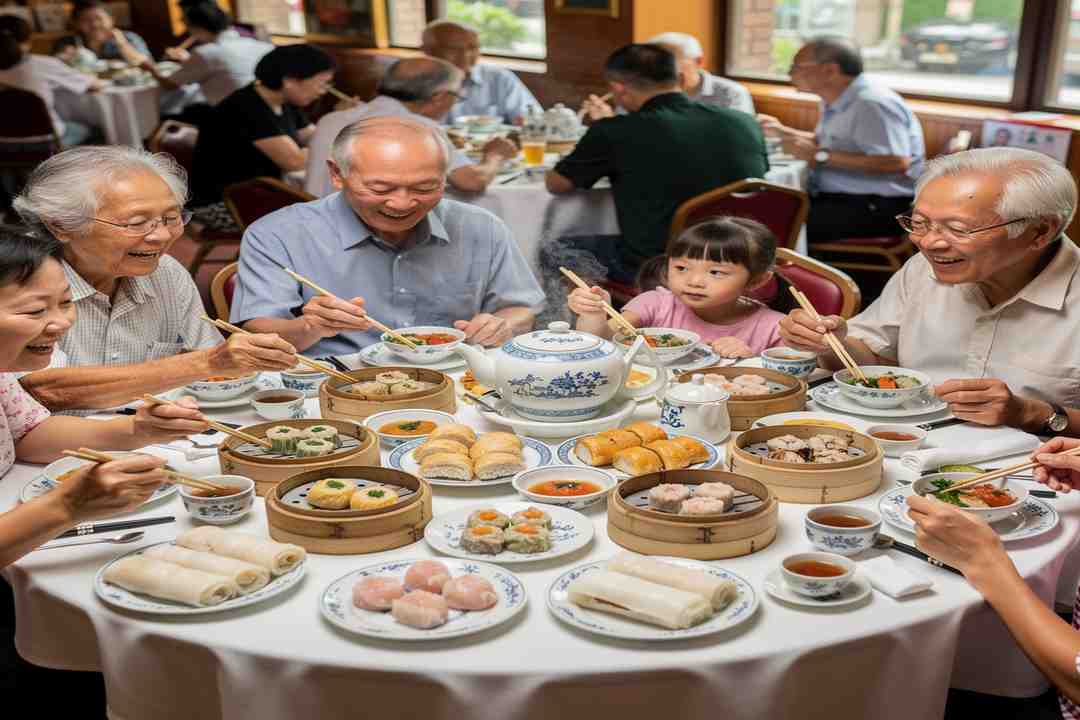
Traditional Cantonese dining follows specific protocols that enhance both the dining experience and the appreciation of the food. The concept of “toxboxing”—round plates on a lazy Susan—was invented in Cantonese restaurants to facilitate communal dining, allowing every guest to reach each dish.
Cantonese Cooking When serving steamed fish, Cantonese hosts always place the fish with its head facing the most senior or honored guest as a sign of respect, and the host typically serves others before themselves.
Presentation in Cantonese cooking emphasizes color, texture, and arrangement. Dishes should look visually appealing with contrasting colors—green vegetables alongside brown sauces, white fish next to red chilies.
The “three-knife” rule applies to whole steamed fish: the chef makes three strategic cuts that allow easy eating without the guest needing to use a knife. Common mistakes to avoid include overcooking the fish, using insufficiently hot oil for the finishing pour, and overcrowding the steamer, which creates steam rather than dry heat.
Remember that Cantonese cooking is about precision—every second and every degree of temperature matters.
Frequently Asked Questions
Is Cantonese cooking difficult to learn for beginners?
Cantonese cooking can be approachable for beginners, especially if you start with simpler techniques like stir-frying vegetables or steaming fish. The key is understanding the philosophy: fresh ingredients, minimal seasoning, and precise timing.
Start with a basic steamed fish or a simple egg fried rice, and you’ll quickly grasp the fundamentals. The more advanced techniques like achieving proper wok hei require practice, but the basic principles are straightforward.
What are the most essential ingredients in Cantonese cooking?
Every Cantonese kitchen should stock light soy sauce, dark soy sauce, oyster sauce, Shaoxing wine, sesame oil, ginger, garlic, and scallions. These eight ingredients form the foundation of most Cantonese dishes.
For more advanced cooking, add dried shrimp, Chinese sausage, preserved vegetables, and various cuts of pork. Fresh seafood is paramount—Cantonese cooking simply cannot achieve its signature freshness without quality fish and shellfish.
Can I substitute Western ingredients for authentic Cantonese components?
Absolutely. While authentic Cantonese cooking uses specific Chinese ingredients, many substitutions work well.
Japanese soy sauce can replace light soy sauce in a pinch, though the flavor profile will differ slightly. Shaoxing wine can be substituted with dry sherry or mirin.
For oyster sauce, you can mix mushroom sauce with a bit of soy sauce. However, for the most authentic results, seek out an Asian grocery store—these ingredients are affordable and transformative.
How do I store leftover Cantonese cooked dishes?
Cantonese dishes are generally best eaten fresh, but leftovers can be stored in airtight containers in the refrigerator for up to 2 days. Reheat steamed fish gently in a steamer or covered in the microwave with a splash of water to prevent drying.
Stir-fried dishes should be reheated in a wok over high heat to restore some of the original crispness. Cantonese Cooking Avoid freezing steamed dishes, as the texture of fish and vegetables degrades significantly.
What’s the difference between Cantonese cooking and other Chinese regional cuisines?
Cantonese cooking differs from other Chinese cuisines in several key ways. Compared to Sichuan cuisine’s bold, numbing spice, Cantonese cooking is subtle and delicate.
Unlike northern Chinese cuisine’s emphasis on wheat and hearty braises, Cantonese cooking centers on rice and fresh seafood. Compared to the bold flavors of Hunan cooking, Cantonese dishes prioritize balance and harmony.
The Cantonese approach to seasoning is notably lighter, with lighter soy sauces and minimal use of chili peppers compared to other regions.
How can I achieve restaurant-quality wok hei at home?
Wok hei (the breath of the wok) requires extremely high heat, a well-seasoned carbon steel wok, and very quick cooking. Home stoves rarely reach the BTU levels of restaurant burners, but you can maximize your results by using a carbon steel wok, heating it until it smokes before adding oil, working in small batches, and keeping the food moving constantly.
Cantonese Cooking The Maillard reaction that creates wok hei happens in seconds—patience and high heat are your friends.
Cantonese Brunch Cantonese Beef Recipes Wikipedia
Frequently Asked Questions
What is Cantonese cooking?
[Answer about the dish definition and characteristics]
What are the main ingredients in Cantonese cooking?
[Answer about key ingredients and their roles]
How do you cook Cantonese cooking?
[Answer about cooking methods and techniques]
What does Cantonese cooking taste like?
[Answer about flavor profile and texture]
When is Cantonese cooking typically served?
[Answer about occasions and cultural significance]