Guangdong food costs between $12–$25 per serving in mid-tier Cantonese restaurants across North America and Southeast Asia, but you can make a classic, authentic version at home for under $8 per serving, with a total cooking time of just 10 minutes for a staple like steamed sea bass. This cuisine, also known as Cantonese food, is the backbone of Chinese culinary identity for millions of diaspora communities, defined by its emphasis on fresh, high-quality ingredients rather than heavy seasoning.
Unlike regional Chinese cuisines that rely on bold spices or intense braising, Guangdong cooking prioritizes subtlety to highlight natural flavors, a philosophy rooted in the province’s coastal geography and centuries of trade along the ancient Maritime Silk Road.
What Is Guangdong food?
Guangdong food originates from Guangdong Province in southern China, centered on the fertile Pearl River Delta and bustling port city of Guangzhou (formerly known as Canton). For centuries, the region’s access to abundant fresh seafood from the South China Sea, tropical fruits, leafy greens, and rice shaped its culinary identity, with early trade routes bringing new ingredients like soybeans, tea, and spices that would become staples.
Unlike inland cuisines that developed to preserve food in cold climates, Guangdong cooking evolved to celebrate freshness—using ingredients harvested within 24 hours for most home and restaurant dishes, a rule that remains central to authentic preparations today.
Culturally, Guangdong food is more than a set of recipes; it’s a social and communal practice. The majority of Chinese immigrants who arrived in North America, Southeast Asia, and beyond in the 19th and 20th centuries were from Guangdong, so their cuisine became the first exposure many Westerners had to Chinese food.
Today, over 90% of Chinese restaurants in the United States serve Cantonese-style dishes, from dim sum to stir-fries. The core philosophy of Guangdong cooking, often summed up by the term xian (umami or natural deliciousness), guides every dish: less is more, with seasonings like light soy sauce, Shaoxing rice wine, ginger, and scallions used to enhance, not overpower, the base ingredients.
This focus on balance and freshness sets it apart from spicier, more intense regional cuisines like Sichuan or Hunan.

Authentic Guangdong food Recipe
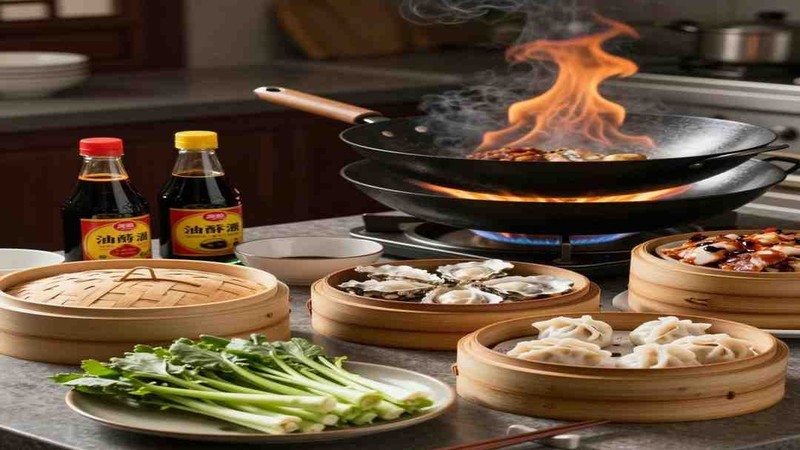
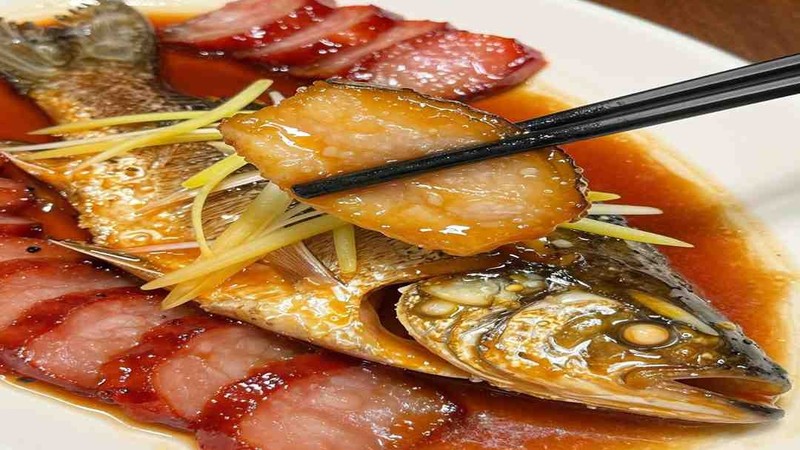
This recipe for Steamed Sea Bass with Ginger and Scallions is a classic example of authentic Cantonese cooking, showcasing the core technique of steaming—used to preserve the delicate flavor of fresh seafood. Guangdong Food It requires minimal ingredients and time, with precise steps to avoid common mistakes like overcooking or sogginess.
Ingredients (Serves 2)
- Whole sea bass (1.2 lbs, scaled, gutted, and fins trimmed)
- 2 tbsp light soy sauce
- 1 tbsp Shaoxing rice wine
- 1 tsp granulated sugar
- 1/2 tsp fine sea salt
- 3 slices fresh ginger (for stuffing)
- 1/4 cup julienned fresh ginger (for topping)
- 4 scallions (2 cut into 2-inch segments, 2 julienned)
- 1 tbsp sesame oil
- 2 tbsp peanut oil
- 1 small red chili (sliced, optional, for color)
- 1 small lime wedge (for serving, optional)
Step-by-Step Instructions
- Pat the whole sea bass completely dry with paper towels (dry skin ensures a crispy texture and prevents sogginess). Guangdong Food Make 2 diagonal scores, 1 inch deep, on each side of the fish to help it cook evenly.
- Rub the fish inside and out with 1/2 tsp salt and 1 tbsp Shaoxing rice wine. Guangdong Food Stuff the cavity with the 2-inch scallion segments and 3 ginger slices to infuse flavor while steaming.
- Mix light soy sauce, remaining Shaoxing rice wine, sugar, and sesame oil in a small bowl; set aside to combine the seasoning base.
- Fill a large pot with 1 inch of water, bring to a rolling boil, and place a steaming rack inside the pot. Guangdong Food The water should not touch the rack.
- Place the sea bass on a heatproof ceramic plate, set the plate on the steaming rack, and cover the pot tightly with a lid to trap steam.
- Steam for exactly 8–10 minutes: 8 minutes for a 1.2 lb fish, 10 minutes for a larger 1.5 lb fish. Guangdong Food Over-steaming will make the fish tough and dry, so timing is critical.
- While the fish steams, prepare the topping by tossing the julienned ginger, julienned scallions, and sliced red chili (if using) in a small bowl.
- Once steamed, carefully remove the pot lid (avoid burning yourself with escaping steam) and lift the plate out. Guangdong Food Immediately pour all excess water from the plate—this is a key Cantonese step to prevent a watery dish.
- Discard the stuffed ginger and scallion segments from the fish cavity. Guangdong Food Drizzle the pre-mixed soy sauce seasoning evenly over the entire fish.
- Heat peanut oil in a small pan over high heat until it smokes slightly (this is the “hot oil” step, essential for releasing the aroma of the toppings).
- Sprinkle the prepared ginger and scallion topping evenly over the fish.
- Pour the smoking hot oil over the toppings—you will hear a loud, satisfying sizzle that signals the dish is ready. Guangdong Food Serve immediately with a lime wedge, if desired.
Guangdong food Variations
Guangdong food has distinct regional variations within the province and across its global diaspora. Mainland Guangdong’s home-style Cantonese cooking, centered in Guangzhou, is straightforward and humble: think congee (rice porridge) with preserved egg and pork, stir-fried bok choy with garlic, and simple steamed seafood, designed for daily, comforting meals.
This style prioritizes affordability and accessibility, using ingredients that are easy to source in local markets.
Hong Kong-style Cantonese food, by contrast, evolved from Guangdong cooking but absorbed influences from Western trade and colonialism, creating more elaborate and creative dishes. Hong Kong dim sum, for example, includes innovative items like shrimp har gow with bamboo shoot filling and flaky egg tarts, while iconic street foods like wonton noodles (with thin, chewy wonton wrappers) and crispy roast goose are staples of Hong Kong’s culinary scene.
Macau’s Cantonese cuisine adds Portuguese twists, like African chicken (marinated in piri-piri sauce) and pork chop buns, blending local ingredients with colonial flavors to create a unique fusion style. Guangdong Food Diaspora Cantonese food also adapts to local tastes: in the U.S., sweet and sour pork, a thick, sugary dish, differs from authentic Guangdong’s subtle sweet-sour stir-fry, which uses a light, balanced sauce rather than a heavy coating.
Serving Guangdong food the Cantonese Way
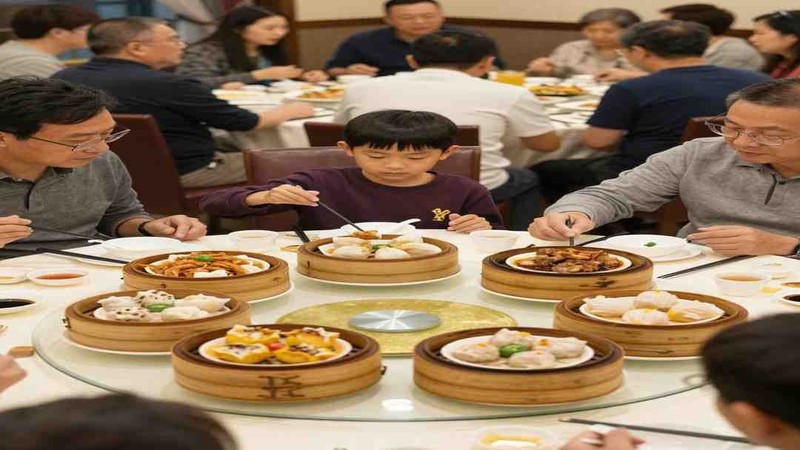
Serving Guangdong food the traditional Cantonese way emphasizes communal sharing and balance. Unlike Western meals that follow a sequential course order, Cantonese meals serve all dishes at once, with steamed rice as the central staple paired with multiple small dishes: one seafood, one meat, one vegetable, and a light soup.
This balance of flavors and textures is a core part of Cantonese culinary philosophy—each dish complements the others, avoiding overwhelming the palate with any single flavor.
The iconic yum cha (tea drinking) ritual, a weekend tradition for many Cantonese families, is a key example of traditional serving. Yum cha involves dim sum dishes rolled around in carts, with servers calling out the names of items, paired with hot tea (usually oolong or green tea, which cuts through the fat of fried dim sum items like har gow or siu mai).
For a regular weeknight meal, congee or rice is served in small individual bowls, while stir-fries and steamed dishes are placed in the center of the table for everyone to share. Common mistakes when serving or cooking Guangdong food include over-seasoning (authentic dishes rarely use heavy chili or excessive soy sauce), over-steaming seafood, and failing to drain excess water from steamed dishes.
Etiquette also plays a role: tea is poured for others before yourself, chopsticks are not stuck upright in rice (a sign of bad luck in Cantonese culture), and dishes are passed to the right to show respect.

FAQs
- Is authentic Guangdong food difficult to make at home?
Not at all! Many staple Cantonese dishes—like steamed fish, congee, or garlic stir-fried bok choy—are beginner-friendly.
The only non-negotiable is using fresh ingredients; frozen seafood or wilted greens will not deliver the same delicate flavor. Guangdong Food Even the core technique of steaming is easy to master once you get the timing right (8–10 minutes for a 1–1.2 lb fish).
- What are the best substitutions for hard-to-find Guangdong ingredients?
If you can’t find Shaoxing rice wine, dry sherry or mirin works as a substitute (though mirin is sweeter, so reduce added sugar by half). For fresh sea bass, snapper or tilapia are great, affordable alternatives.
Guangdong Food Light soy sauce can be swapped for low-sodium soy sauce if you want to control salt levels, and ginger and scallions are available at any grocery store.
- How do I store leftover Guangdong food?
Seafood-based dishes and stir-fries should be refrigerated in an airtight container for up to 2 days. To reheat, gently steam them for 3–5 minutes or use a microwave on low power—high heat will make the seafood tough.
Guangdong Food Dim sum can be frozen for up to a month; reheat by steaming for 5 minutes from frozen.
- What’s the difference between Cantonese food and other Chinese cuisines?
Cantonese food is lighter and more subtle compared to cuisines like Sichuan (which uses numbing Sichuan peppercorns and chili) or Hunan (bold and spicy). It prioritizes fresh flavors over heavy seasoning, with a focus on seafood, rice, and leafy greens.
Guangdong Food Unlike Shandong cuisine, famous for braised dishes, Cantonese cooking uses more steaming and stir-frying to preserve natural tastes.
- Can I make vegan versions of Guangdong food?
Absolutely! Vegan Cantonese cooking swaps animal products for plant-based alternatives: use tofu or king oyster mushrooms instead of seafood, vegetarian oyster sauce instead of regular oyster sauce, and vegetable broth for chicken broth.
Guangdong Food Vegan dim sum options like vegetable har gow or lotus seed paste buns are also easy to make at home.
- Why is yum cha such an important part of Cantonese culture?
Yum cha is more than a meal—it’s a social ritual that brings families and communities together. For Cantonese people, weekends are often spent gathering at dim sum parlors, sharing small plates, drinking tea, and catching up.
Guangdong Food It’s a way to pass down traditions, from the youngest children learning to use chopsticks to elders sharing stories about their hometown in Guangdong.

Guangdong Cuisine Yue Cuisine Cantonese Food Wikipedia
Frequently Asked Questions
What is the significance of Guangdong food in Cantonese cuisine?
Guangdong food, also known as Cantonese cuisine, is one of the Eight Great Traditions of Chinese cuisine and is considered one of the most influential regional styles in Chinese cooking. It originated in Guangdong Province and emphasizes fresh ingredients, delicate flavors, and meticulous preparation. Its significance lies in its emphasis on the natural taste of ingredients, lightweight cooking methods, and the balance of textures and colors.
How is Guangdong food traditionally prepared?
Guangdong food is traditionally prepared using cooking techniques that preserve the natural flavors and textures of ingredients. Common methods include steaming, stir-frying, braising, and roasting. Dishes are often cooked quickly over high heat to maintain freshness and crunch. Wok hei (breath of the wok) is an important element in stir-fried dishes, and careful attention is paid to achieving the right balance of sweet, salty, and savory flavors.
What ingredients are essential for Guangdong food?
Essential ingredients in Guangdong food include fresh seafood (fish, shrimp, scallops), pork, chicken, duck, and a variety of vegetables such as bok choy, snow peas, and bean sprouts. Key seasonings and sauces include light soy sauce, oyster sauce, ginger, garlic, scallions, Shaoxing wine, and sesame oil. Rice is the staple carbohydrate, and dishes often feature a combination of protein and vegetables in a single plate.
What are the health benefits of Guangdong food?
Guangdong food is generally considered healthy due to its emphasis on fresh ingredients and cooking methods that preserve nutritional value. The use of steaming and stir-frying with minimal oil helps retain vitamins and minerals in vegetables and proteins. The cuisine typically uses less oil and salt compared to other Chinese regional styles, and the focus on seafood provides omega-3 fatty acids and lean protein. The variety of vegetables also contributes fiber and essential nutrients to the diet.
What are common mistakes when making Guangdong food?
Common mistakes when making Guangdong food include overcooking ingredients, which destroys their natural texture and freshness; using too much oil or heavy sauces that mask the delicate flavors; not using fresh ingredients, as quality is essential to this cuisine; overcrowding the wok, which lowers the temperature and results in steamed rather than stir-fried dishes; and adding soy sauce or seasonings too early, which can cause ingredients to become watery and lose their crispness.