The best steamed shrimp are cooked over fully developed steam in one loose layer, then removed as soon as the thickest part turns pearly and opaque. For most thawed raw shrimp, that means roughly 3 to 6 minutes after the covered steamer returns to a strong flow of steam. Shrimp size, shell, starting temperature, plate material, and how tightly the pieces are arranged all change the result, so use the clock as a starting point and doneness as the finish line.
This guide uses a ginger-scallion household method with a light soy dressing. The shrimp stay recognizable and easy to judge; there is no heavy sauce to hide overcooking.
Quick answer
Bring the steamer water to a full boil before adding the plate. Arrange thawed shrimp in one layer, cover, and begin checking peeled 31/40 shrimp at 3 minutes, shell-on 21/25 shrimp at 4 minutes, and shell-on 10/15 shrimp at 5 minutes. Remove them when the flesh is pearly or white and opaque, the center is no longer glassy, and the shrimp feel firm without becoming hard. If the steamer loses steam when loaded, let it recover before treating the time range as meaningful.
At a glance
| Decision | Practical starting point |
|---|---|
| Shrimp | Raw, thawed, similar in size |
| Best layout | One loose layer on a heatproof plate |
| Heat | Water boiling before the plate goes in |
| Typical window | About 3–6 minutes, depending on size and shell |
| Doneness | Pearly or white, opaque flesh; firm but still springy |
| Featured flavor | Ginger, scallion, light soy, sesame |
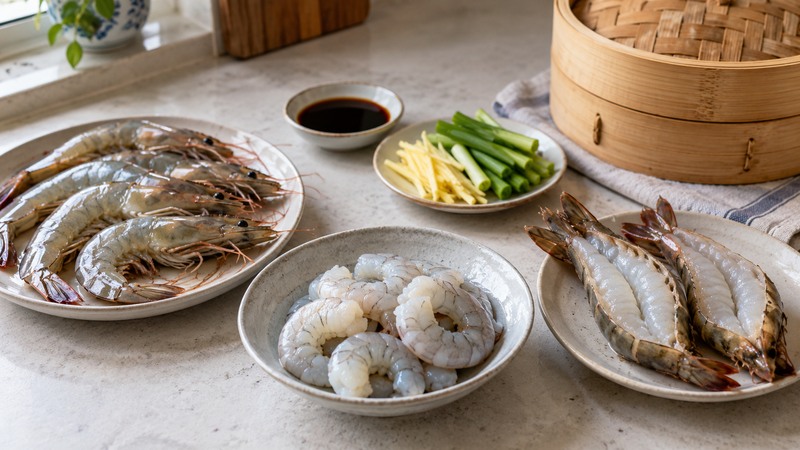
Choose shrimp that will steam evenly
Package counts describe how many shrimp make one pound. A bag marked 16/20 contains larger shrimp than a bag marked 31/40. Names such as medium, large, or jumbo vary by seller, so use the printed count-per-pound range as the more precise size measure. Mixing shrimp from widely different count ranges on the same plate makes it difficult to stop all of them at the right moment.
Shell-on shrimp are more forgiving because the shell shields the surface from direct condensation and slows heat slightly. Split the back just far enough to remove the vein; leaving the shell attached gives the finished shrimp a fuller appearance and helps retain moisture. Peeled shrimp absorb dressing quickly and are easier to eat, but they generally finish sooner.
Tail-on or tail-off makes little difference to steaming time. Thickness matters more. Pat thawed shrimp dry before seasoning. Excess thawing liquid pools on the plate, dilutes the dressing, and cools the steamer.
Quick reference: steaming time by shrimp size
Use these ranges for thawed raw shrimp arranged in one layer. Start counting when the lid is closed and the steamer has returned to a steady flow of steam. A thick ceramic plate may add a little time; a thin metal plate transfers heat faster.
| Approximate count per pound | Peeled | Shell-on | First check |
|---|---|---|---|
| 31/40 | 3–4 min | 3–5 min | 3 min |
| 21/25 | 3–5 min | 4–5 min | 4 min |
| 16/20 | 4–5 min | 4–6 min | 4 min |
| 10/15 | 4–6 min | 5–7 min | 5 min |
These are starting windows rather than guarantees. A crowded plate, very cold shrimp, a deep bowl, or a weak burner can extend the cook. Opening the lid repeatedly also drops the temperature. Check one thick shrimp at the first-check time: the center should be opaque instead of gray and glassy.
The existing beer-steamed shrimp guide uses a flavored steaming liquid. This page keeps the steam neutral so the timing differences are easier to see.
Ginger-scallion steamed shrimp recipe
This recipe serves 3 to 4 as part of a shared meal. It uses 16/20 shell-on shrimp; begin checking at 4 minutes and expect about 4 to 6 minutes in an efficient steamer.
Ingredients
- 1 pound (450 g) raw 16/20 shrimp, shell-on and deveined
- 1/2 teaspoon fine salt
- 2 teaspoons Shaoxing wine, optional
- 1 tablespoon finely cut ginger matchsticks
- 2 scallions
- 1 1/2 tablespoons light soy sauce
- 1 tablespoon hot water
- 1/2 teaspoon sugar
- 1 teaspoon toasted sesame oil
- 1 tablespoon neutral oil
Prepare the shrimp and steamer
- If the shrimp are frozen, thaw them safely in the refrigerator. For a faster method, thaw them in cold water and cook them immediately after thawing. Do not thaw seafood on the counter.
- Use kitchen scissors to trim long antennae. Cut along the back of each shrimp and remove the vein while leaving the shell attached. Rinse briefly only if needed, then pat very dry.
- Toss the shrimp with salt and optional Shaoxing wine. Rest for 10 minutes in the refrigerator, not on the counter.
- Cut the white parts of the scallions into fine strips. Slice the green parts thinly and reserve them for the finish.
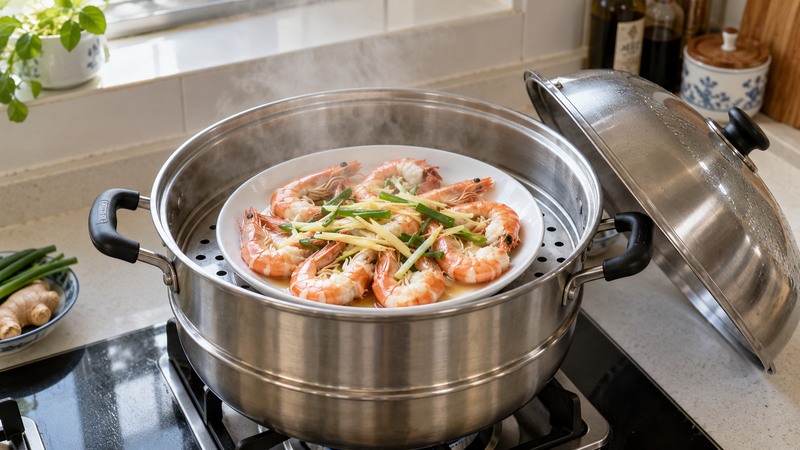
- Put a rack in a wok or steaming pot and add enough water to steam vigorously without touching the serving plate. Bring the water to a full boil.
Steam in one layer
- Arrange the shrimp on a heatproof plate in one loose layer, alternating head and tail ends so the thick bodies are not stacked. Scatter the ginger and scallion whites over them.
- Set the plate on the rack, cover immediately, and keep the water at a strong but controlled boil.
- At 4 minutes, open the lid away from your face and check the thickest shrimp. Continue in 30-second intervals only as needed. Remove the plate when the shells are coral, the flesh is pearly and opaque, and no gray translucent band remains at the center.
- Lift the hot plate with dry mitts or plate tongs. Let the shrimp stand for 1 minute while you mix the dressing.
Finish the dressing
Stir the light soy sauce, hot water, sugar, and sesame oil until the sugar dissolves. Spoon it around the shrimp instead of drowning the top. Scatter on the scallion greens.
Heat the neutral oil in a small pan until it shimmers but does not smoke, then pour it carefully over the scallions and ginger. The brief sizzle releases aroma. If you prefer to avoid the hot-oil step, omit the neutral oil and increase the hot water in the dressing by 1 tablespoon; the flavor will be lighter but balanced.
Serve immediately. The shrimp continue to firm as they sit on the hot plate.
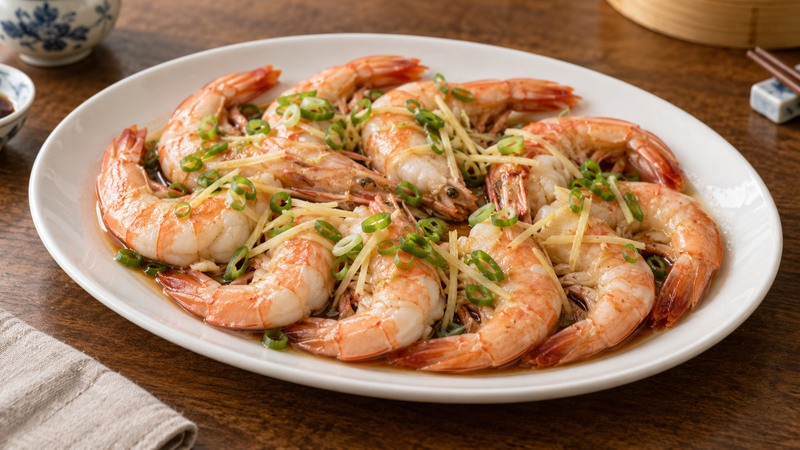
Why steamed shrimp turn rubbery
Overcooking is the usual cause, but the clock is only part of the problem. A tightly packed mound heats unevenly: the outside pieces become hard before the center pieces are opaque. Spread the shrimp on a plate wide enough to hold a single layer. If you need to cook twice the quantity, use two steamer levels only when the steamer is designed for them, or work in two batches.
Starting with a cold steamer also creates confusing time. The shrimp warm slowly while the water approaches a boil, so a five-minute instruction no longer describes five minutes of active steaming. Preheat first and keep enough water in the pot that it cannot boil dry.
Finally, do not wait for every shrimp to curl into a tight circle. Curl varies with species, size, and how deeply the back was cut. A loose C-shape may accompany good texture, but color and opacity at the thickest point are more useful than shape alone.
For another example of controlled moist heat, see the site’s Cantonese steamed egg recipe. Egg and shrimp need different doneness checks, but both benefit from stable steam and a deliberate stopping point.
Substitutions and what they change
| Change | Adjustment | Result |
|---|---|---|
| Peeled shrimp | Begin checking about 1 minute earlier | More direct seasoning; slightly less protection from heat |
| Smaller 31/40 shrimp | Begin checking at 3 minutes | Faster cooking; easier to overcook |
| No Shaoxing wine | Use 2 teaspoons water or unsalted stock | Cleaner flavor without wine aroma |
| No hot-oil finish | Add 1 tablespoon hot water to the dressing | Lighter aroma and less richness |
| Cilantro instead of some scallion | Add after steaming | Fresh herbal note; different from the classic ginger-scallion profile |
| Bamboo steamer | Put the shrimp on a heatproof plate inside it | Similar cooking, with less condensation dripping from a metal lid |
Do not replace raw shrimp with pre-cooked shrimp and follow the same timing. Pre-cooked shrimp need only gentle reheating; several minutes of active steam will usually make them tough.
Food-safety and storage checks
Keep raw shrimp cold and separate from ready-to-eat ingredients. The FDA safe food-handling guidance lists refrigerator, cold water, and microwave thawing as safe methods and says food thawed in cold water or a microwave should be cooked immediately. Wash hands, the cutting board, scissors, and utensils after they touch raw seafood.
For shrimp, the federal doneness description is more specific than a single recipe time: the flesh should be pearly or white and opaque. The current FoodSafety.gov cooking chart uses that visual standard for shrimp, lobster, crab, and scallops. If any thick center remains translucent, continue steaming briefly and check again.
Refrigerate leftovers within 2 hours, or within 1 hour when the surrounding temperature is above 90°F (32°C). Store them in a shallow covered container. USDA guidance says cooked seafood can be refrigerated for 3 to 4 days. Reheat only the portion you plan to eat, and do it gently because shrimp toughen quickly.
Frequently asked questions
Can I steam frozen shrimp without thawing?
You can, but the outside and center are harder to finish evenly, and ice adds water to the plate. Thawing first gives more reliable timing. If you must cook from frozen, separate the pieces, expect extra time, and judge the thickest shrimp by opacity rather than using the thawed-shrimp table unchanged.
Should I steam shrimp with the shell on?
Shell-on shrimp are more forgiving and retain moisture well. Peeled shrimp are convenient and absorb sauce faster. Either works; begin checking peeled shrimp earlier.
Why did my shrimp release so much water?
They may have been incompletely thawed, wet after rinsing, crowded, or treated with added water. Drain and pat them dry, use a single layer, and avoid pouring a large marinade onto the steaming plate.
Can I use a bamboo steamer?
Yes. Put the shrimp on a heatproof plate that fits inside the basket so the juices and dressing stay with the dish. Keep the plate clear of the basket walls so steam can circulate.
How do I reheat steamed shrimp?
Use brief, gentle heat. A covered skillet with a spoonful of water or a short steaming interval works better than prolonged high heat. Stop as soon as the shrimp are hot throughout; repeated cooking makes them firm and dry.