Asian steamed salmon costs between $12–$18 per serving in Cantonese restaurants, but you can make it at home for under $5, with a total cooking time of just 15 minutes from prep to table. This dish is a modern adaptation of a centuries-old Cantonese culinary tradition that prioritizes simplicity and preserving the natural umami of fresh seafood, making it a staple in both home kitchens and dim sum menus across the globe.
Unlike Western steamed salmon, which often incorporates herbs or citrus, the Asian version leans into bold, aromatic seasonings that enhance rather than overpower the fish’s delicate flavor. It balances accessibility with cultural significance, making it a favorite for casual weeknights and festive gatherings alike.
What Is Asian Steamed Salmon?
Asian steamed salmon is a Cantonese-style preparation that falls under the broader category of “qing zheng” (clear steaming), a core technique in Cantonese cuisine that uses gentle, consistent heat to cook seafood without heavy sauces or frying. The philosophy behind this method is rooted in two key values: “xian” (freshness) and “qing” (clarity), which prioritize letting the natural taste of ingredients take center stage.
Historically, Cantonese chefs used this technique for high-quality white fish like garoupa (grouper) or sea bass, reserved for special occasions such as Lunar New Year, family reunions, or wedding banquets. The word for fish in Chinese (“yu”) sounds identical to the word for “surplus,” making steamed fish a symbol of abundance and good fortune.
Salmon became a popular substitute for traditional white fish in the late 20th century, as it became widely available in global markets. Its firm flesh and high fat content hold up perfectly to steaming, avoiding the flakiness or dryness that can plague leaner fish.
This adaptation has made the dish more accessible to home cooks, as salmon is often more affordable than premium white fish. Today, Asian steamed salmon is a global staple, blending ancient Cantonese culinary wisdom with modern ingredient availability to create a dish that is both authentic and approachable.

Authentic Asian Steamed Salmon Recipe
This recipe follows strict Cantonese technique, using a bamboo steamer for even heat and a sizzling oil step to amplify flavor. Asian Steamed Salmon The ingredients are balanced to complement the salmon’s richness without overwhelming it.
Ingredients (Serves 2)
- Skin-on salmon fillet (6 oz, 1 inch thick, pin bones removed)
- Fresh ginger (1 inch, split into 1 thin slice and 1 tbsp julienned)
- Scallions (2, split into white parts sliced and green parts julienned)
- Shaoxing rice wine (1 tsp)
- Light soy sauce (2 tbsp)
- Dark soy sauce (1 tsp, optional for color)
- Toasted sesame oil (1 tsp)
- Crushed rock sugar (1 small piece, ~0.5 tsp)
- Neutral high-smoke-point oil (2 tbsp, peanut or canola)
- Red Thai chili (1, julienned, optional)
- Cilantro sprigs (for garnish)
- Water (2 tbsp)
Step-by-Step Instructions
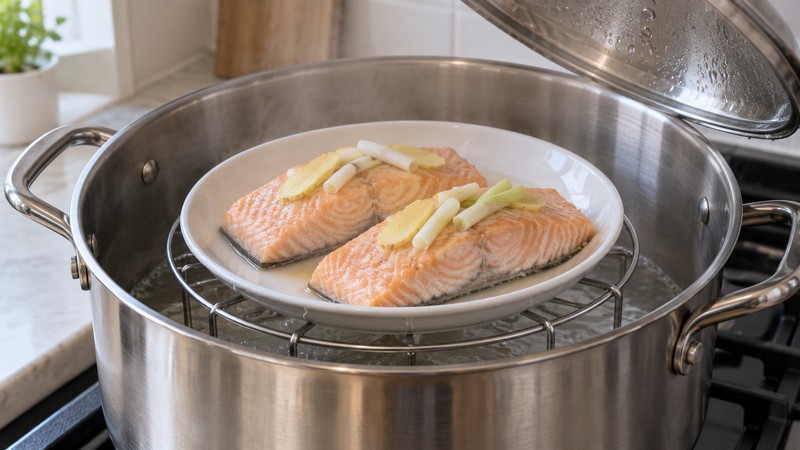
- Prep the salmon: Pat the fillet dry with paper towels (critical to avoid sogginess) and place it on a heatproof plate, skin-side down. Asian Steamed Salmon Top with the thin ginger slice and sliced scallion white, then drizzle with Shaoxing wine.
- Steam setup: Bring 2 inches of water to a rolling boil in a bamboo steamer (best for even heat and minimal condensation) or a metal steamer insert. Asian Steamed Salmon Rolling boil ensures consistent steam that cooks the fish evenly.
- Steam the salmon: Place the plate with salmon in the steamer, cover tightly, and steam for 8–10 minutes. For a 1-inch fillet, 8 minutes is ideal; 1.5 inches requires 10 minutes.
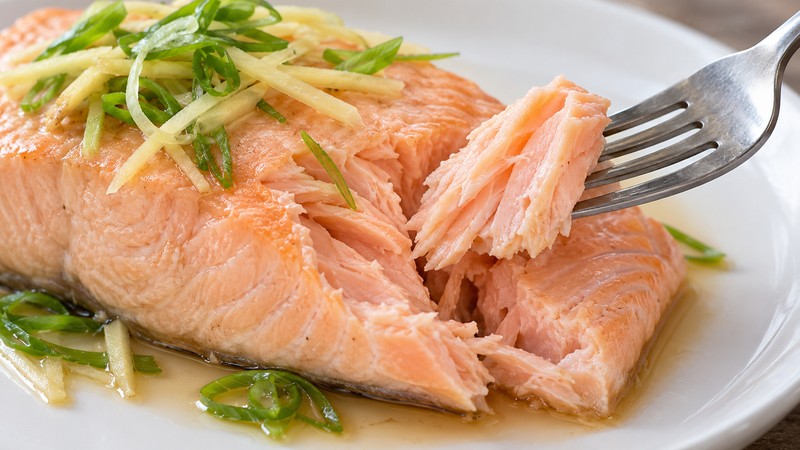
- Asian Steamed Salmon The salmon is done when a fork flaks easily and the center is no longer translucent.
- Prepare the sauce: While the salmon steams, combine light soy sauce, dark soy (if using), sesame oil, crushed rock sugar, and 2 tbsp water in a small pan. Asian Steamed Salmon Heat on low until the sugar dissolves completely, then set aside.
- Drain excess liquid: Once steamed, remove the salmon from the steamer and immediately pour out the liquid from the plate. This step is non-negotiable—this liquid contains fishy compounds that would ruin the dish’s delicate flavor.
- Asian Steamed Salmon Discard the ginger slice and scallion white.
- Top with aromatics: Arrange the julienned ginger, green scallion parts, and red chili (if using) over the salmon fillet.
- Sizzle the oil: Heat the neutral oil in a small pan until it smokes slightly. Asian Steamed Salmon This Cantonese “sizzling aromatics” step releases essential oils from the ginger and scallions, amplifying their flavor far more than raw addition.
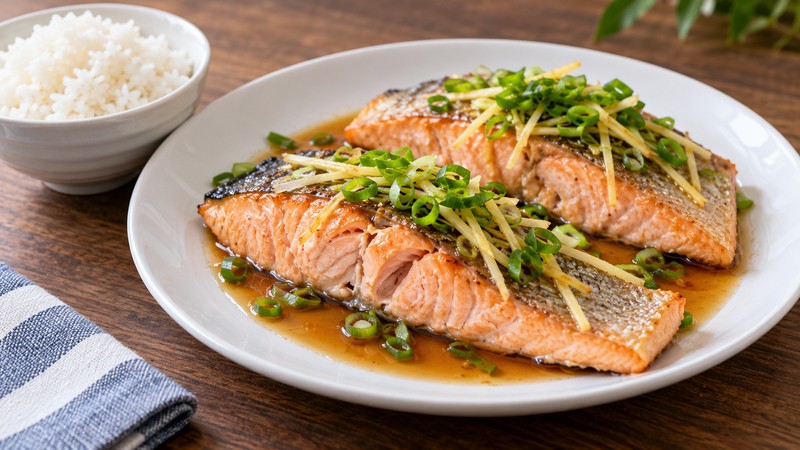
- Finish the dish: Carefully pour the hot oil over the aromatics (you’ll hear a satisfying sizzle), then drizzle the prepared sauce evenly over the salmon. Asian Steamed Salmon Garnish with cilantro sprigs and serve immediately.
Asian Steamed Salmon Variations
Asian steamed salmon has adapted to regional tastes across China and its diaspora, while still retaining core Cantonese principles. Hong Kong-style versions lean into the city’s fast-paced culinary culture, using thinner salmon fillets (1 inch thick) that steam in just 8 minutes, paired with a sauce that adds a splash of oyster sauce for extra umami.
This variation is common in Hong Kong’s casual cha chaan teng (tea restaurant) menus, where speed and flavor are key. Mainland Chinese regional variations add local twists: in Sichuan, cooks add a pinch of Sichuan peppercorns to the sauce for a subtle numbing kick, while in Fujian, fermented black beans (douchi) are used to add salty, earthy depth to the dish.
In Southeast Asian Cantonese communities (Singapore, Malaysia), the dish is adjusted with a squeeze of lime juice to balance salmon’s richness with bright, tangy flavors, reflecting the region’s love of balanced tastes.
Home-cooked vs. restaurant versions also differ.
Home cooks often simplify the process: many skip the hot oil step to reduce fat, or use pre-mixed soy sauce blends instead of making the sauce from scratch, making the dish even faster to prepare. Restaurant versions prioritize precision: they use fresh, wild-caught salmon, time steaming to the exact minute, and serve the dish immediately after finishing to lock in juiciness.
Asian Steamed Salmon Some high-end restaurants add garnishes like shiitake mushrooms or bamboo shoots on top of the salmon before steaming, adding texture and umami layers that elevate the dish for special occasions.
Serving Asian Steamed Salmon the Cantonese Way
In traditional Cantonese dining, Asian steamed salmon is served on a round, shallow plate—round shapes symbolize wholeness and unity, a nod to the dish’s role in family gatherings and celebrations. The salmon is placed skin-side up, with the sizzled aromatics and sauce drizzled over the top, creating a visually striking dish that is meant to be served hot.
It is almost always paired with steamed white rice, as the savory sauce is perfect for mixing into rice, turning each bite into a balanced, flavorful meal. The sizzle from pouring hot oil over the aromatics is a key part of the dining experience, releasing a fragrant aroma that signals the dish is ready to eat; many Cantonese restaurants even perform this step tableside for special occasions, adding a theatrical touch to the meal.
Common mistakes to avoid include oversteaming (which makes the fish tough and dry), patting the salmon insufficiently before steaming (leading to a watery, mushy texture), and skipping the step of discarding the steaming liquid. Even small missteps can ruin the delicate balance of flavors that makes authentic Asian steamed salmon so beloved.

FAQs
- How difficult is Asian steamed salmon for a beginner home cook?
It’s one of the most approachable Cantonese dishes, with minimal prep and a short cooking time. Asian Steamed Salmon The only tricky part is timing the steaming correctly—use a fork to check if the flesh flaks easily (no translucency left in the center) and you’ll get it right every time.
- Can I substitute salmon with another fish for this recipe?
Absolutely! Traditional Cantonese steamed fish uses firm white fish like garoupa (grouper), sea bass, or tilapia, which work just as well.
Asian Steamed Salmon Salmon is a popular substitute because its high fat content keeps it moist during steaming, but leaner fish like cod may dry out if overcooked.
- How do I store leftover Asian steamed salmon?
Leftovers should be stored in an airtight container in the fridge for up to 2 days. To reheat, use a steamer for 2–3 minutes—microwaving can make the fish mushy and lose its delicate flavor.
Asian Steamed Salmon Avoid freezing, as it will alter the texture of the salmon.
- What if I don’t have a bamboo steamer at home?
No problem! A metal steamer insert set inside a large pot works perfectly.
Just make sure the water level is below the plate holding the salmon, so the fish doesn’t sit in water. Asian Steamed Salmon You can also use a microwave steamer, though the texture won’t be as consistent as with a traditional steamer.
- Can I make this dish without Shaoxing wine?
Shaoxing rice wine is the traditional choice for Cantonese steamed dishes, but you can substitute it with dry sherry or mirin. Asian Steamed Salmon Avoid cooking wines with added salt, as they will make the dish too salty and overpower the salmon’s flavor.
- Is dark soy sauce necessary for the sauce?
Dark soy sauce is optional—it adds a deep, rich color to the sauce, which makes the dish look more vibrant. If you prefer a lighter, more subtle look, skip it and stick to light soy sauce.
Asian Steamed Salmon It won’t affect the flavor much, so feel free to omit it if you don’t have it on hand.

Asian Bbq Pork Recipe Asian Bbq Pork Marinade Asian Bbq Pork Loin Wikipedia
Frequently Asked Questions
What is the significance of asian steamed salmon in Cantonese cuisine?
In Cantonese cuisine, steamed salmon represents the culinary philosophy of preserving natural flavors through gentle cooking methods. While traditional Cantonese steamed fish typically uses whole fish like sea bass or grouper, salmon has become a popular adaptation that reflects the cuisine’s flexibility and emphasis on fresh, high-quality ingredients. The dish showcases the Cantonese technique of “clear steaming” (清蒸), which highlights the natural sweetness of the protein while maintaining its delicate texture.
How is asian steamed salmon traditionally prepared?
The traditional preparation involves cleaning the salmon fillet and placing it on a heatproof plate. Thin slices of ginger and chopped scallions are arranged on top of the fish. The plate is then placed in a wok or steamer basket over rapidly boiling water and covered tightly. Steam for approximately 8-12 minutes depending on thickness. After steaming, excess liquid is drained, fresh scallions and cilantro are added, and hot oil is poured over to release aromatic flavors. A sauce mixture of light soy sauce, sesame oil, and sometimes oyster sauce is drizzled around the fish.
What ingredients are essential for asian steamed salmon?
The essential ingredients include salmon fillet (preferably with skin on for texture), fresh ginger (julienned or sliced), scallions (cut into segments), light soy sauce, sesame oil, vegetable or peanut oil, and optionally oyster sauce, Shaoxing wine, and fresh cilantro. The key principle is using minimal ingredients that enhance rather than overpower the natural flavor of the fish. High-quality soy sauce is crucial as it serves as the primary seasoning.
What are the health benefits of asian steamed salmon?
Asian steamed salmon offers numerous health benefits due to its nutritional profile and cooking method. Salmon is rich in omega-3 fatty acids, which support heart health and brain function. It provides high-quality protein essential for muscle maintenance and repair. Steaming rather than frying preserves more nutrients and requires no added fats, making it a heart-healthy cooking method. The dish also contains anti-inflammatory properties from ginger and antioxidants from scallions, while maintaining lower sodium levels compared to many other preparation methods when made with moderate soy sauce.
What are common mistakes when making asian steamed salmon?
Common mistakes include overcooking the salmon, which results in dry, tough flesh; using too much soy sauce, which overwhelms the delicate fish flavor; not properly draining the steamed liquid, leading to a soggy dish; steaming at incorrect temperatures or times; overcrowding the steamer, which prevents