The wording “banh cuon tom dim sum” mixes two food traditions. Banh cuon is Vietnamese rice-sheet cooking; Cantonese shrimp rice rolls are cheung fun. Both can be filled with shrimp, but the names do not make their batters, sauces or serving customs interchangeable. The shrimp version below is a clearly labeled home adaptation of a Vietnamese pan-made rice sheet, not a claim that banh cuon is Cantonese.
Choose which rice roll you mean
Vicky Pham’s primary banh cuon recipe uses pork and wood-ear filling, fried shallots and nuoc cham, with a covered nonstick-pan method. The Woks of Life’s shrimp cheung fun uses a different starch mixture and steamer-tray technique with a soy-based serving sauce. Follow one complete formulation instead of mixing their flour ratios and timers.
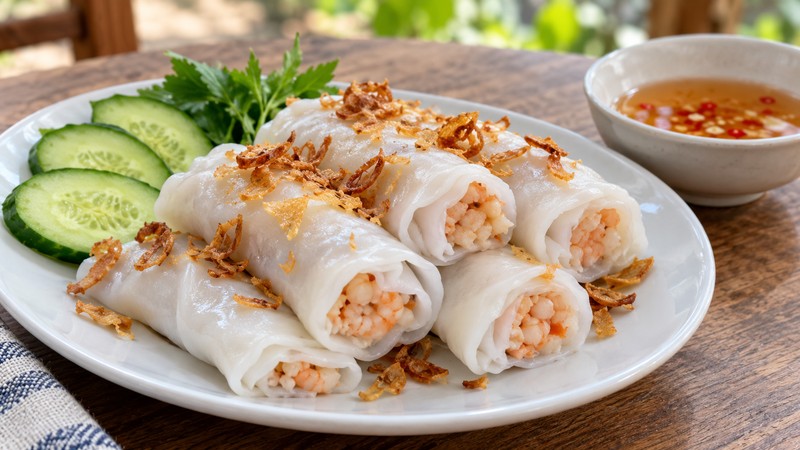
A small Vietnamese-style shrimp adaptation
For a small batch, halve Vicky Pham’s scratch batter: 1/2 cup regular rice flour, 1/2 cup tapioca starch, 2 US cups cold water, 1/4 teaspoon salt and 1/2 tablespoon neutral oil. Mix and rest at least 30 minutes. Use a good 25 cm nonstick skillet with a lid, a flexible spatula and an oiled receiving plate. Keep extra oil for a very thin pan coating.
For this substituted filling, use 200 g peeled, deveined raw shrimp, 1 minced garlic clove, 1 finely chopped small shallot, 1/2 tablespoon neutral oil, a small pinch of salt and pepper. This replaces the source’s pork and mushrooms; it is not its original filling or a documented universal banh cuon tom formula.
Cook shrimp before it goes inside the sheet
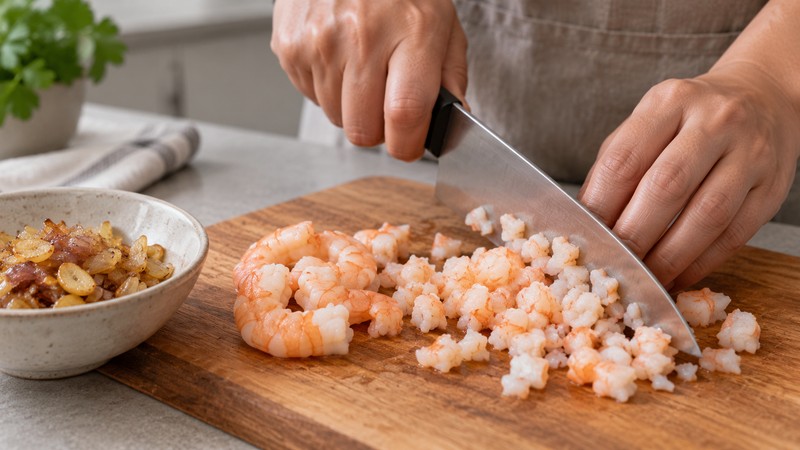
Gently cook garlic and shallot in the measured oil, then add shrimp. Cook to 145 F (63 C), with firm, pearly opaque flesh, under FDA seafood guidance. Transfer to a clean plate and chop small once safe to handle. The sheet’s brief cooking time must not be used to cook raw shrimp hidden inside.
Set a thin sheet and roll gently
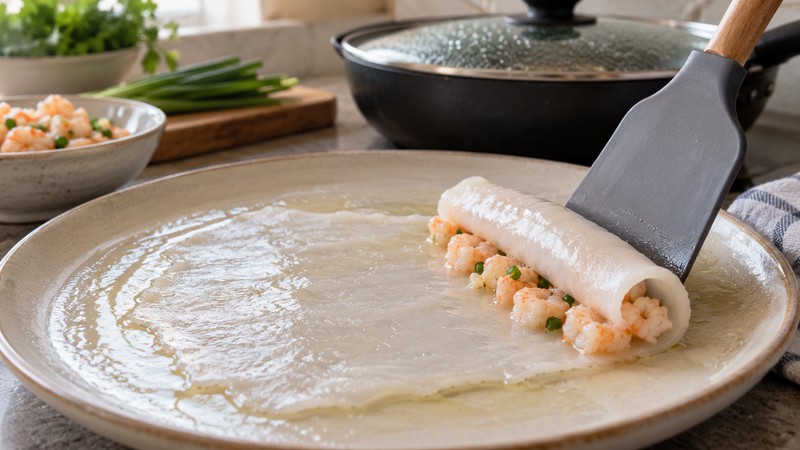
Stir batter before every ladle because starch settles. Lightly grease the warm skillet, add about 1/3 cup and swirl into a thin layer. Cover and begin checking around 30 seconds; the sheet must set throughout and release, not remain wet batter. Move to the oiled plate, place a thin line of cooked filling near one edge and roll with the spatula. If it tears, practice one unfilled sheet and adjust coating, heat or thickness before continuing.
Serve warm with fried shallots, cucumber and a separately prepared or purchased nuoc cham suitable for the diners. Check fish sauce and shrimp allergens. The dipping sauce belongs alongside the rolls, not in the measured rice batter.
For the Cantonese preparation use shrimp rice rolls; compare har gow to see why a folded starch dumpling is not a rice roll. Keep cooked shrimp and assembled rolls refrigerated if not serving promptly.
Frequently Asked Questions
Is banh cuon another spelling of cheung fun?
No. They refer to different Vietnamese and Cantonese preparations. Similar rice-sheet shapes do not erase their different formulas and accompaniments.
Can I use a premixed banh cuon flour with this scratch water quantity?
Use the premix package’s directions instead. A different blend may require different hydration, and the scratch batter ratio does not automatically transfer.
AI-generated illustrations, if used, are not photographs of a tested batch.