If you’ve ever ordered a steak at a family-style Cantonese restaurant in a Chinatown and noticed it’s tender, subtly savory, and paired with a glossy sauce instead of a charred exterior, you’ve had beef steak cantonese style. This dish is a staple in Cantonese home cooking and casual eateries, designed to highlight the meat’s natural flavor while infusing it with the umami of classic Cantonese seasonings.
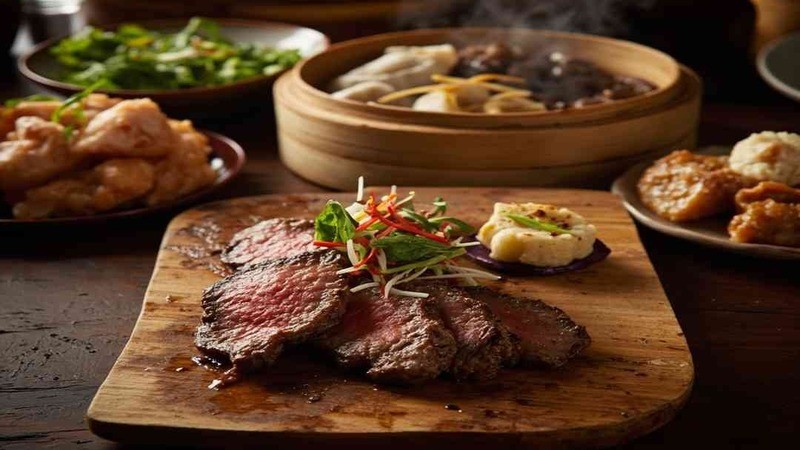
It’s perfect for home cooks looking to try something beyond Western steak, with techniques that are accessible even for beginners. Today, we’ll break down how to make authentic cantonese style beef steak at home, including key ingredients, step-by-step methods, and tips to avoid common errors.
What Is Cantonese Style Beef Steak?
Unlike Western steak, which is often focused on a crispy sear and bold, herbaceous rubs, beef steak cantonese style leans into balance and tenderness. It’s a weeknight-friendly dish, taking under 45 minutes total to prepare, that blends the comfort of steak with the subtle, savory notes of Cantonese cuisine.
This version uses a pan-seared whole steak with an oyster-soy sauce. Sirloin, tenderloin and ribeye are possible choices; tenderloin is filet mignon, not a cheaper contrasting cut. Tomato, black-pepper and mushroom gravies are other Hong Kong steak variants, not ingredients silently added to this sauce.
Use a thermometer rather than a color label to judge safety. Whole beef steaks need at least 145 F (63 C) and a 3-minute rest under U.S. guidance; pinkness alone cannot determine the temperature.
Key Ingredients for Authentic Cantonese Beef Steak
To get the flavor right, stick to ingredients that are central to Cantonese cooking—avoid pre-marinated Western steaks, as they often have herbs or spices that don’t align with this dish’s profile. Here’s what you’ll need:
- Beef: 1-inch thick sirloin or tenderloin steak (about 6 ounces per person). This thickness holds up well to marinating and searing without drying out.
- Marinade: 1 tablespoon light soy sauce (adds saltiness without bitterness), 1 teaspoon Shaoxing rice wine (cuts through gamey notes), 1 teaspoon grated fresh ginger (bright, spicy depth), ½ teaspoon cornstarch (protects moisture), and a pinch of white pepper (subtle warmth).
- Sauce: 1 tablespoon oyster sauce (umami core), 1 teaspoon dark soy sauce (for a deep, glossy color), ½ teaspoon granulated sugar (balances salt), ¼ cup chicken broth (adds body), and 1 teaspoon cornstarch mixed with 2 tablespoons water (slurry for thickening).
The listed marinade and sauce are suggested quantities for about 340 g steak, or two 6-ounce portions, not an independently tested formula. Cornstarch helps coating and sauce texture; it does not guarantee that the meat becomes tender. Dry sherry may replace cooking wine, or omit wine for an alcohol-free version.
Step-by-Step Cooking Process
Cooking beef steak cantonese style is straightforward, but timing is key to keeping the meat juicy. Follow these steps:
- Prep: Choose steaks of similar thickness and pat dry. Gentle tenderizing can be useful for some cuts, but do not pound a steak thinner while still applying a one-inch cooking schedule.
- Marinate: Coat the steak with the listed marinade and refrigerate about 30 minutes. Time adds flavor; it is not a guarantee that muscle fibers break down.
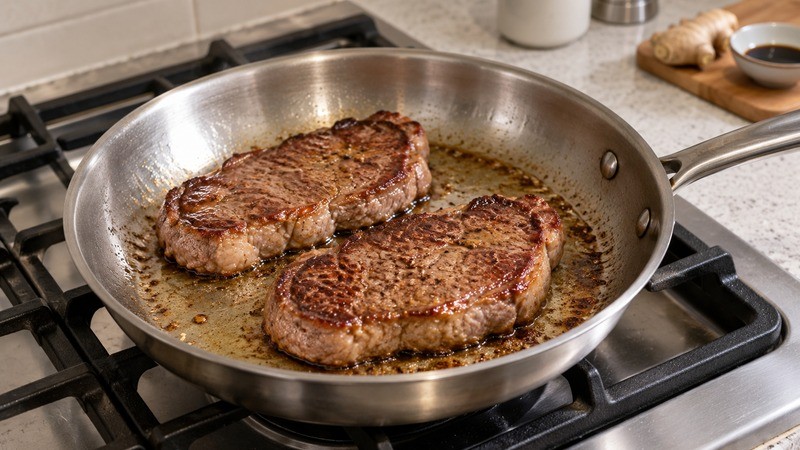
- Sear: Heat a little neutral oil in a pan according to its instructions. Sear both sides, then adjust heat and continue to the required internal temperature. Do not use 1.5 minutes per side as a universal doneness rule.
- Check temperature in the thickest part without touching the pan. Rest at least 3 minutes after reaching 145 F (63 C), then slice or coat with the finished sauce.
- Make sauce: Simmer oyster sauce, dark soy, sugar and broth in a clean pan. Stir the cornstarch-water slurry again before adding it gradually, then simmer while stirring until the starch is cooked and the sauce coats a spoon. The marinade’s raw-beef juices must not be used as an uncooked finishing sauce.
- Bring to a simmer, then add the cornstarch slurry while stirring constantly. Cook for 1 minute until the sauce thickens into a glossy glaze.
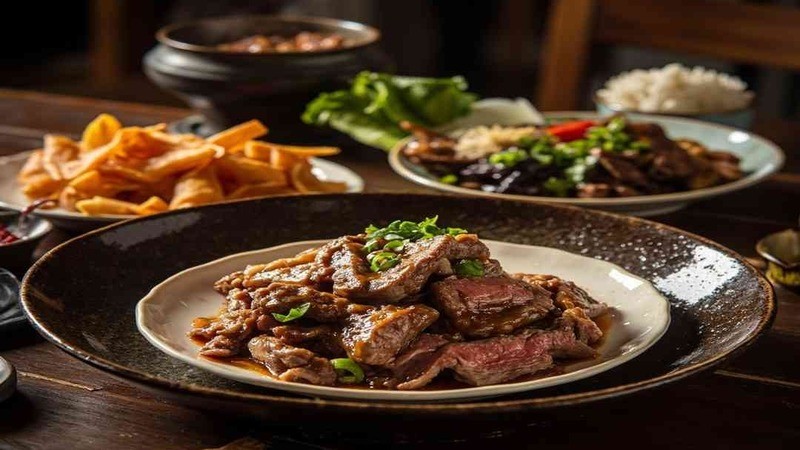
- Combine: Spoon the cooked sauce over the rested steak, or return briefly to coat. Serve with rice and vegetables.
- Serve immediately over steamed white rice—this is the traditional Cantonese way to balance the savory sauce and tender meat.
Common Mistakes to Avoid
Even with simple steps, small errors can make your beef steak cantonese style tough or bland. Here are the most frequent mistakes and how to fix them:
- Expecting marinade to fix a tough cut: Good cut selection, gentle handling, doneness control and slicing against the grain matter more than a mandatory 30-minute threshold.
- Cooking by a fixed clock: Thickness and starting temperature change the time. Check with a thermometer rather than stop at a fixed two-minute limit.
- Skipping the cornstarch in the sauce: The slurry is what gives the sauce its silky, glossy texture—without it, the sauce will be thin and run off the steak.
- Using the wrong heat: High heat will burn the outside before the inside is cooked. Medium-high is perfect for searing without charring.
Home-Cooking Tips for Perfect Results
To elevate your beef steak cantonese style beyond basic, try these pro tips:
- Keep preparation cold: Refrigerate during marinating. Brief preparation outside the refrigerator is not a substitute for temperature-based cooking.
- Adjust the sauce to taste: If you prefer more umami, add an extra teaspoon of oyster sauce. If you like a sweeter profile, increase the sugar by ¼ teaspoon—Cantonese cooking is flexible, so don’t be afraid to tweak to your preference.
- Pair with a light soup: A bowl of traditional Cantonese slow-cooked soup, like lotus root and pork soup, complements the savory steak perfectly. It’s a classic combination that makes for a complete, authentic Cantonese meal.
This dish is a testament to how Cantonese cuisine balances simplicity and flavor—no fancy techniques or expensive ingredients needed, just a few key steps to get that tender, savory bite. Whether you’re cooking for a weeknight dinner or a small gathering, beef steak cantonese style is sure to become a regular in your home cooking rotation.
Pair your homemade beef steak cantonese style with a light traditional Cantonese slow-cooked soup for a complete, authentic meal—learn how to make it in our guide.
Frequently Asked Questions
What is the significance of beef steak cantonese style in Cantonese cuisine?
This Cantonese-style steak variation uses a soy-and-oyster-sauce gravy with ginger and a little sweetness. Other versions use different sauces; the label does not mean one compulsory steak cut or seasoning formula.
Which steak style does this page cover?
Pan-seared steak with oyster-soy sauce. Tomato gravy and mushroom gravy are separate variations, not part of the listed method.
Can I use ribeye instead of sirloin?
Yes. Ribeye has more fat, so trim as appropriate and adjust cooking to thickness. The sauce remains the oyster-soy version described above.
How long should I cook a one-inch steak?
There is no universal 1.5-minute-per-side answer. Pan, cut and temperature vary. Check at least 145 F (63 C) for whole steaks and rest 3 minutes.
Related Cooking Guides
For another Chinese-style pan-seared formulation, see Chef Lau’s steak. Follow FoodSafety.gov’s temperature guidance, not the color shown in an image.
Illustrative images may be AI-generated. Visible pink steak or a browned surface cannot verify safe doneness.