Quick Answer
Beef tripe dim sum in this guide uses cleaned honeycomb tripe, blanched and then gently braised with aromatics and seasoning. Serve it hot in small portions; a final steam is optional reheating, not what defines dim sum.
Basic Facts
| Preferred cut | Honeycomb tripe |
|---|---|
| Core method | Blanch, slow-braise, slice, and steam |
| Flavor profile | Savory and aromatic with a mild natural chew |
| Useful pairing | Pu-erh or aged oolong tea |
Quick Reference
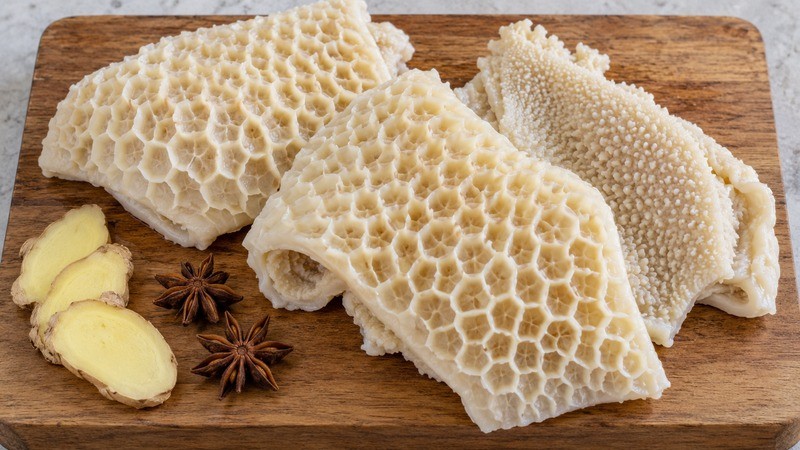
What Makes Authentic Beef Tripe Dim Sum Different
Beef tripe dim sum stands out from other tripe preparations around the world because of its focus on tenderness and balanced flavor. Unlike Mexican menudo (a spicy tripe soup) or Italian trippa alla romana (a tomato-based stew), Cantonese versions prioritize slow cooking to break down the tough connective tissue of tripe, resulting in a texture that’s tender but still has a subtle chew.
This page covers braised honeycomb tripe. Quick-cooked ginger-scallion book tripe is another dim sum preparation with a different texture and cooking method; do not use its brief cooking time for honeycomb tripe.
Many overseas readers might hesitate to try tripe, but authentic beef tripe dim sum avoids the gamey taste that puts some people off, thanks to careful blanching and braising.
Traditional Cooking Steps for Home-Made Beef Tripe Dim Sum
To make authentic beef tripe dim sum at home, you’ll need ingredients that are easy to find at most Asian grocery stores, and a bit of patience for slow cooking. Here’s a step-by-step guide:
Ingredients
1 lb pre-cleaned honeycomb beef tripe (pre-cleaned cuts save you the hassle of scrubbing raw tripe at home)
3 thin ginger slices
2 crushed garlic cloves
1 tied scallion (white and green parts)
1 star anise
1 small cinnamon stick (broken into pieces)
2 tbsp light soy sauce
1 tbsp oyster sauce
1 tbsp Shaoxing rice wine
1 tsp white pepper
½ tsp granulated sugar
2 cups water
Small bamboo steamers (or metal steamers as a substitute)
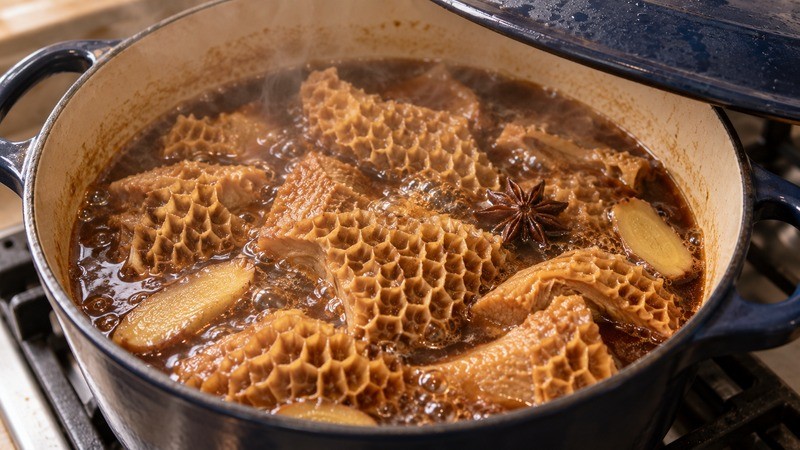
Steps
- Blanch the tripe: Bring a pot of water to a boil, add 1 ginger slice and ½ tbsp of rice wine, then add the tripe. Let it boil for 5 minutes, then remove and rinse under cold water.
- This step is critical to remove surface impurities and reduce any off-flavors.
- Braise the tripe: In a heavy-bottomed pot, combine the blanched tripe, remaining ginger, garlic, scallion, star anise, cinnamon, soy sauce, oyster sauce, the remaining 1/2 tbsp rice wine, 1 tsp white pepper, sugar, and water. Bring to a rolling boil, then reduce heat to a gentle simmer, cover, and simmer for 1.5 to 2 hours.
- Test a cooled bite as well as fork resistance. It should be easy to bite with some spring, not hard and gristly. Pre-cleaned tripe varies in prior processing, so continue simmering as needed; the clock alone is not reliable.
- Prepare for dim sum: Remove the tripe from the braising liquid, let it cool slightly, then cut into 1-inch slices. Arrange 3-4 slices per small bamboo steamer, then steam for 5 minutes.
- If serving immediately, plate the hot braised tripe directly. For chilled leftovers, reheat thoroughly to 165 F (74 C); five minutes of steaming is not a universal guarantee.
Common Mistakes to Avoid When Making Beef Tripe Dim Sum
Even with the right ingredients, home cooks often make small errors that affect the taste and texture of beef tripe dim sum. Here are the most frequent mistakes and how to fix them:
- Skipping the blanching step: This is the number one error. Blanching removes surface impurities and gamey flavors—without it, your tripe will taste off, even after braising.
- Boiling aggressively: Use a gentle simmer and enough liquid to prevent drying. Low heat alone does not guarantee tender tripe; check texture and continue cooking as needed.
- Adjust the heat to keep a steady gentle simmer rather than blindly use the lowest stove setting.
- Confusing tripe preparations: Honeycomb tripe suits this braise. Thin book tripe, often served quickly cooked with ginger and scallion, is a different dish. Neither cut is universally compulsory for all dim sum tripe.
- Over-seasoning early: Soy sauce and oyster sauce are salty—adding too much during braising can make the final dish too salty. Start with the amounts listed, and adjust at the end if needed (though most home cooks don’t need more).
- Unnecessary reheating: Braised tripe can be served directly when hot. If chilled, reheat safely before serving; steaming does not lock in flavor.
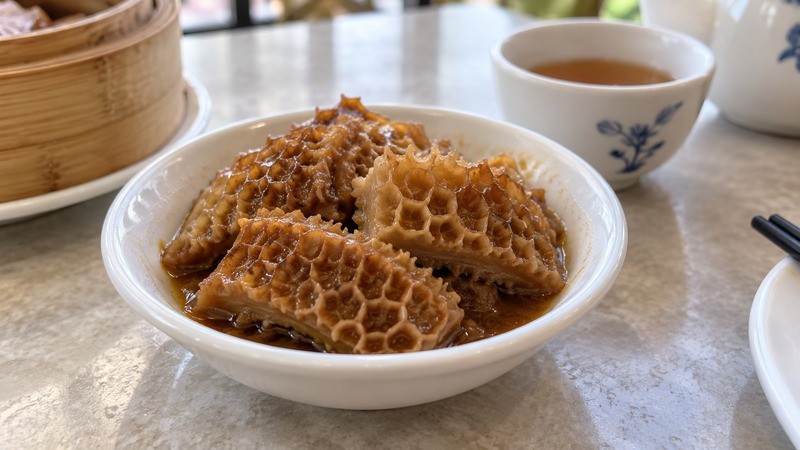
Serving & Pairing Beef Tripe Dim Sum
Beef tripe dim sum is best served hot, straight from the steamer. Many yum cha restaurants serve it with a small dish of chili oil or light soy sauce for dipping, but purists prefer it plain to taste the natural flavor of the tripe.
When ordering at a yum cha house, it pairs beautifully with strong teas like pu-erh or aged oolong—these teas cut through the richness of the tripe and balance the spices. If you’re making it at home, serve it alongside other classic dim sum like siu mai or har gow, as part of a full yum cha spread.
For more on the tradition of yum cha dining, check out our guide to the art of yum cha dining tradition.
For those new to beef tripe dim sum, start with a small portion to get used to the texture—it’s not as intimidating as it sounds, and once you develop a taste for it, it will become a staple in your dim sum rotation. The key is to follow the traditional slow-cooking steps, avoid common mistakes, and take your time to let the flavors develop.
Whether you’re enjoying it at a local yum cha house or making it at home, beef tripe dim sum is a dish that rewards patience and attention to detail, just like the best Cantonese cuisine.
How to Judge Beef Tripe Dim Sum in a Real Meal
A useful way to judge beef tripe dim sum is to look past the first bite and ask whether the dish still feels balanced after two or three pieces. Good tripe should be springy, not rubbery, and the sauce should carry ginger, garlic, soy, and a little sweetness without covering the natural beef aroma. In a Cantonese tea meal, this matters because beef tripe dim sum usually sits beside lighter plates such as steamed dumplings, rice noodle rolls, greens, and tea. If the seasoning is too heavy, the dish quickly becomes tiring; if it is too plain, it loses the restaurant-style character people expect.
For home cooks, the practical test is simple. Cut the tripe evenly, simmer it long enough to soften the connective texture, then finish it with a sauce that clings lightly instead of pooling at the bottom of the plate. This gives the dish a clear Cantonese identity while keeping the texture clean and pleasant.
One final detail is portion size. Beef tripe dim sum is usually more satisfying as a small shared plate than as a large main dish, because the texture is distinctive and the seasoning is concentrated. Serve it early in the meal, while the tea is hot and the palate is still fresh, so the aroma feels clean instead of heavy.
Frequently Asked Questions
Is honeycomb tripe the same as book tripe?
No. Honeycomb tripe has a recognizable cellular surface and is used for this braise. Book tripe has thin leaf-like folds and is often prepared as a different, quicker-cooked dim sum dish.
How do I know the braise is ready?
Check a small cooled bite. It should be tender enough to chew comfortably while retaining spring. Processing and thickness vary, so extend the gentle simmer if it is still gristly.
Is a dipping sauce compulsory?
No. The braising seasonings already flavor the tripe. Serve a little chili oil separately if desired rather than insist on an oyster-sauce dip.
Does longer cooking always make tripe tougher?
Not in this honeycomb-tripe braise. Undercooking can leave it hard; continue simmering until the intended tender-chewy texture develops. Do not copy timing advice for quick-cooked book tripe.
Related Cooking Guides
Bill Leung’s dim sum tripe stew notes that processing differences can require longer simmering. The quantities above are a suggested home version rather than a claim of recipe testing. Use FoodSafety.gov for safe reheating temperatures.
Images are illustrative and may be AI-generated, not evidence of a tested batch or a medical benefit.