Bean curd dim sum here means tofu-skin rolls, often called fu pei guen. Thin bean curd sheets surround a pork-and-shrimp filling; vegetarian rolls require a separate meat-free filling and sauce.
Unlike crispy fried dim sum that can feel heavy after a few bites, these steamed parcels prioritize balance: the soft, slightly chewy tofu skin pairs with savory, well-seasoned filling, making them a go-to for anyone looking to build a varied dim spread without sacrificing authenticity. Today, we’ll break down everything you need to know about this Cantonese classic, from its core ingredients to step-by-step cooking methods, common mistakes to avoid, and home-cooking tips to get it right every time.
What Is Bean Curd Dim Sum?
The wrapper is a thin bean curd sheet, not wheat dough, compressed tofu sheets or brittle bean curd sticks. Soft or frozen sheets and dried sheets behave differently, so follow the package instructions rather than one universal soaking time.
It’s typically served hot, straight from the bamboo steamer, and paired with a small dish of light soy sauce for dipping—no extra garnish needed, though a dash of chili oil or grated garlic can add a kick if you prefer.
Essential Ingredients for Authentic Homemade Bean Curd Dim Sum
To make bean curd dim sum that tastes like the yum cha versions, you’ll need two core components: the wrapper and the filling. Let’s break down each, with specific notes for overseas home cooks:
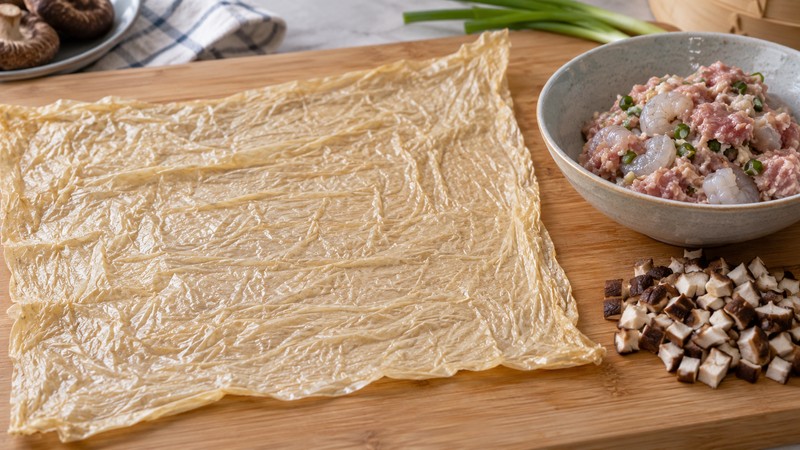
Wrapper: Buy thin, pliable bean curd sheets suitable for rolls. Thaw frozen sheets as directed; soften dried sheets according to their label. Silken tofu and thick pressed tofu are not substitutes.
Cut sheets into squares large enough to enclose the filling. Keep unused sheets covered so their edges do not dry out.
For the published KP Kwan filling batch, use 200 g ground pork, 100 g chopped shrimp, 50 g prepared bamboo shoots, 50 g rehydrated shiitake mushrooms, 20 g rehydrated wood ear fungus, 1 tbsp ginger juice and 2 spring onions. Soak the mushrooms and fungus until soft, drain, weigh the prepared portions and chop. Blanch the prepared bamboo shoots for one minute and chop. Season with 1/2 tsp each salt and sugar, 1/4 tsp white pepper, 2 tsp light soy, 1/2 tsp sesame oil, 1 tbsp Shaoxing wine and 1 tbsp cornstarch.
A vegetable filling is a separate adaptation, not the same recipe with pork omitted. Use a published vegetarian roll recipe if exact proportions are needed; oyster sauce and stock must also be meat-free.
Step-by-Step Method to Make Bean Curd Dim Sum
Making bean curd dim sum at home is simpler than you might think, as long as you follow the key steps carefully:
- Mix the prepared filling until cohesive, keeping raw pork and shrimp separate from ready-to-eat food.
- If you have time, chill the filling in the fridge for 30 minutes; this makes it easier to scoop and wrap.
- Soften only if the wrapper requires it. Drain and handle gently; stop when flexible, not after an arbitrary ten-second soak.
- The goal is to make it flexible enough to bend without tearing. Lay the softened sheet flat on a clean, dry surface (like a cutting board).
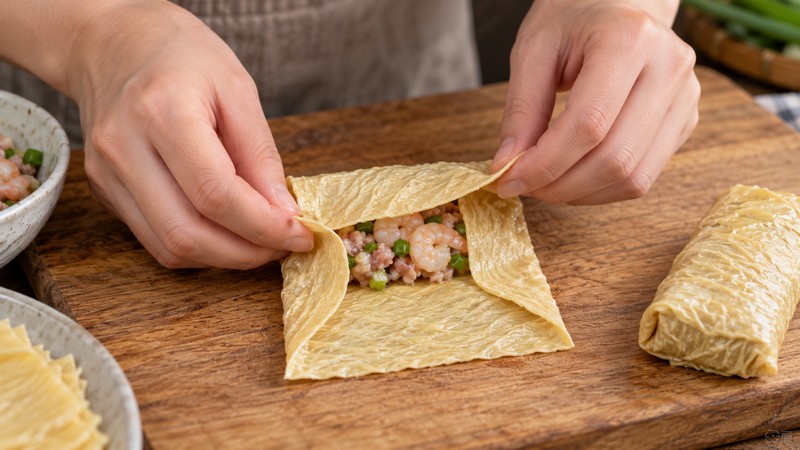
- Place a small portion of filling in the center and leave room to fold the sheet without stretching it.
- Fold the sides over the filling and roll into a compact envelope, seam down. Tofu skin is not dough that can be crimped into a watertight seal.
- A cornstarch-and-water paste can help hold the final flap; use the wrapper method in the linked recipe.
- Set the rolls on a heatproof dish in a steamer. The source browns the rolls before steaming; direct steaming is a home adaptation, not an identical restaurant result.
- Steam until the center reaches 160 F (71 C) for the ground-pork filling. Browning or a fixed eight-minute timer does not establish safety.
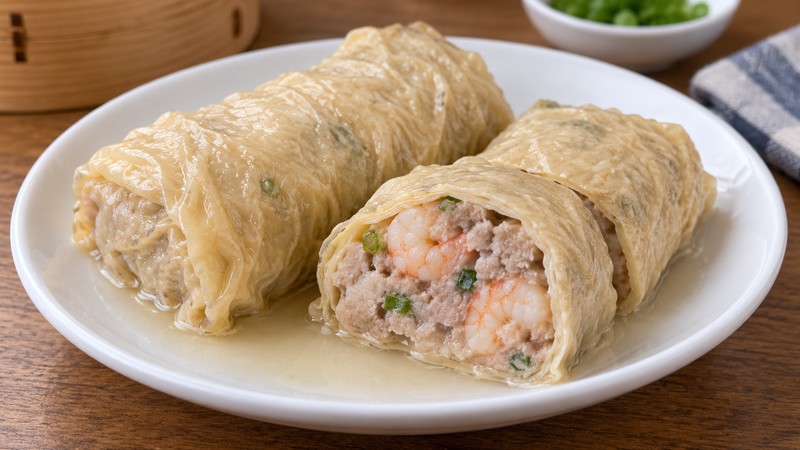
- Serve immediately: Carefully transfer the steamed bean curd dim sum to a plate, and serve hot with a side of light soy sauce for dipping. Enjoy as part of a yum cha spread, or as a light appetizer.
Common Mistakes to Avoid When Making Bean Curd Dim Sum
Even experienced home cooks can make small errors that ruin their bean curd dim sum. Here are the most frequent ones, and how to fix them:
- Wrong wrapper: choose thin bean curd sheets, not silken tofu or brittle bean curd sticks.
- Overfilling: reduce the portion if the sheet stretches or splits. Fold gently rather than pulling the skin tight.
- Over-soaking: follow the wrapper label and stop when flexible. Products differ, so a thirty-second failure rule is not reliable.
- Loose folds: set the seam underneath and handle with a spatula. Avoid crimping the fragile sheet as though it were wheat dough.
- Undercooked filling: check the center temperature. Continue steaming when needed even if a suggested recipe time has elapsed.
Home-Cooking Tips for Perfect Bean Curd Dim Sum
To take your bean curd dim sum from good to restaurant-worthy, follow these simple tips:
- Prep the filling ahead: Making the filling the night before and chilling it in the fridge allows the flavors to meld together, resulting in a more savory, well-rounded taste. It also makes the filling firmer, so it’s easier to scoop and wrap.
- Either a bamboo or metal steamer can work. Keep the dish above the water and maintain enough water for the cooking period.
- Freeze wrapped rolls promptly if preparing ahead. Frozen rolls take longer to heat through; check the same filling temperature instead of promising a fixed extra steaming time.
- For gluten-free needs, check every wrapper, soy sauce and seasoning label. A tofu wrapper alone does not establish that the finished dish is gluten-free.
If you’re new to dim sum and want to master another classic steamed option, our guide to classic siu mai Cantonese dim sum guide walks you through that iconic pork and shrimp dumpling, including its history and traditional cooking techniques.
Recipe References
Published recipe and technique reference; Published recipe and technique reference; FoodSafety.gov cooking temperatures.
Related recipes: Steamed BBQ pork buns; Cantonese dish families.
AI-generated illustrations, where added, show recipe concepts rather than photographs of a tested cooking session.