Chinese BBQ pork sauce gives char siu its sweet-savory seasoning and glossy finish. Mixing a marinade, reserving clean glaze and controlling sugar during roasting are separate tasks.
For home cooks outside of China, getting this sauce right means avoiding common missteps like over-sweetening or using the wrong type of soy sauce, and understanding how it interacts with the meat during marinating and roasting. In this guide, we’ll break down exactly what goes into a traditional Cantonese bbq pork sauce, how to adapt it for home cooking (no fancy restaurant equipment required), and the small techniques that make all the difference between a good char siu and a restaurant-worthy one.
What Makes Authentic Cantonese BBQ Pork Sauce Unique?
Cantonese BBQ pork sauces combine salty seasonings, sweetness and aromatics. Soy sauce, hoisin, Shaoxing wine and five-spice appear in many versions, but there is no single mandatory formula.
Hoisin and oyster sauce are different condiments, but both can appear in char siu marinades. Do not treat oyster sauce as inauthentic or assume that swapping it for hoisin leaves the same sweetness and salt balance.
Dark soy mainly changes color and flavor. Saltiness varies by brand; taste a clean portion before adding raw pork rather than treating a 2:1 soy ratio as a universal rule.
Step-by-Step: Making Cantonese BBQ Pork Sauce at Home
The following is the existing home-style sauce formula for about one pound of pork. It is a variation, not a personally tested claim or a mandatory Cantonese ratio.
Ingredients
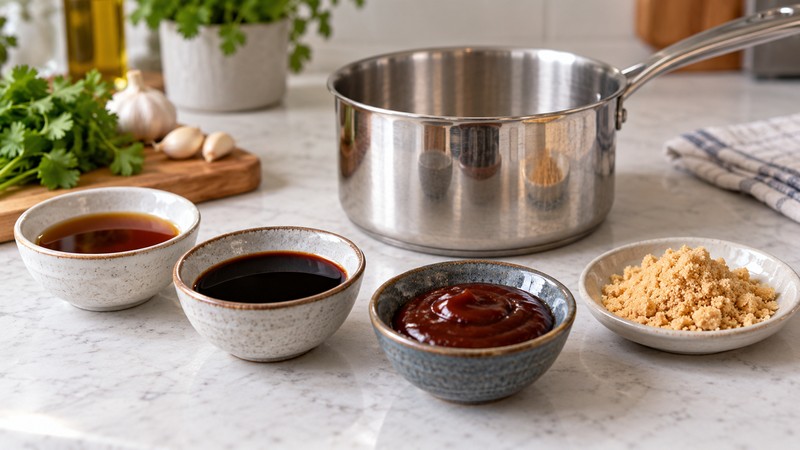
- 3 tbsp light soy sauce (preferably Chinese brands like Lee Kum Kee for consistent flavor)
- 1.5 tbsp dark soy sauce
- 2 tbsp hoisin sauce
- 1.5 tbsp Shaoxing rice wine
- 2.5 tbsp crushed rock sugar; brown or granulated sugar can also sweeten a home sauce
- 1 tsp five-spice powder
- 1 tsp toasted sesame oil (optional, for added richness)
Instructions
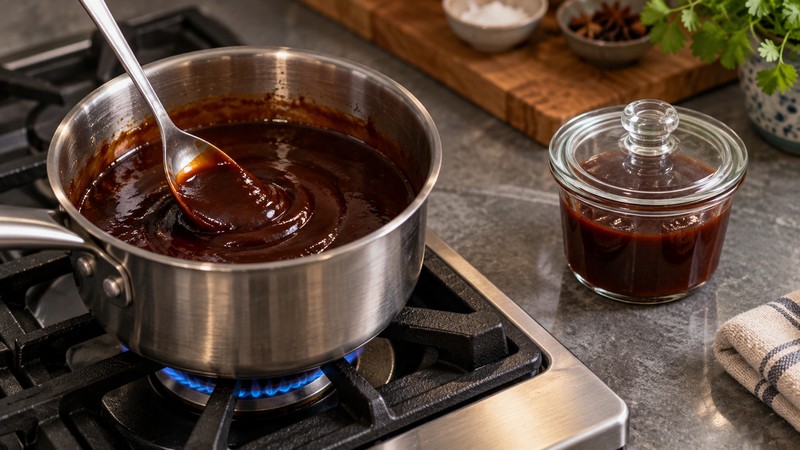
- In a small saucepan, combine all ingredients except the sesame oil. Heat over low-medium heat, stirring gently, until the rock sugar is fully dissolved—this takes about 3 minutes.
- Stir until sugar dissolves. Reduce heat if the sauce catches or reduces too far.
- Cool the sauce before adding raw pork. Reserve clean glaze first and refrigerate it separately; do not reserve glaze from the used marinating bag.
- If using sesame oil, stir it in once cooled.
- For marinating: Trim 1 pound of pork shoulder (leave a thin layer of fat to keep the meat juicy) and cut into 1-inch thick slices. Place in a zip-top bag, pour in the cooled sauce, and massage the pork to coat every piece.
- Seal the bag, squeeze out excess air, and refrigerate for at least 2 hours (or up to 12 hours for deeper flavor). Avoid marinating longer than 24 hours, as this can make the pork overly salty.
- When roasting: Preheat your oven to 375°F (190°C). Place the marinated pork on a wire rack set over a baking sheet (this is a key technique—roasting on a rack prevents the pork from steaming in its own juices, which would make it soggy instead of glossy).
- Turn the pork during roasting and brush with the clean reserved glaze near the end. Cooking time varies with thickness: reach at least 145 F (63 C), then rest at least three minutes.
- Rest before slicing. Discard used raw-pork marinade, or bring it to a boil before reuse; do not drizzle untreated marinade over cooked meat.
Common Mistakes That Ruin Your BBQ Pork Sauce
Even with the right ingredients, small errors can derail your Cantonese bbq pork sauce. Here are the most frequent missteps and how to avoid them:
- Sauce too salty: reduce salty condiments next time. Dark soy is not universally saltier than light soy, and color is not a seasoning measurement.
- Glaze burning: apply thin coats near the end and watch closely. Lower heat or move the rack away from the element if sugar darkens before the pork is cooked.
- Skipping the wire rack: As mentioned earlier, roasting on a rack is critical for getting that crispy, glazed exterior. Without it, the pork sits in its own juices and steams, losing its signature texture.
- Sugar choice: rock, brown and granulated sugar can all sweeten a sauce. Dissolve it fully rather than making unsupported claims that one type prevents cloying sweetness.
- Not straining the sauce: If you have undissolved sugar crystals or clumpy five-spice powder in your sauce, strain it through a fine-mesh sieve before marinating. This ensures a smooth, even coating on the pork.
Beyond Char Siu: Other Uses for Your Cantonese BBQ Pork Sauce
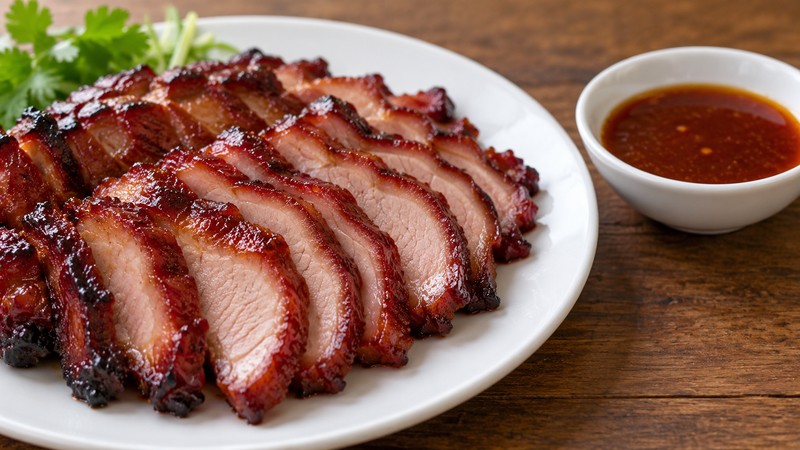
The bbq pork sauce chinese isn’t just for char siu—it’s a versatile condiment that works in many Cantonese dishes. For example, you can brush it on grilled chicken wings during the last 10 minutes of cooking for a sweet-savory glaze, or use it as a dip for steamed rice or congee to add instant flavor.
It also makes a great stir-fry sauce: mix 2 tablespoons of sauce with 1 tablespoon of chicken broth and toss with bok choy or mushrooms for a quick weeknight meal. For a vegetarian twist, marinate firm tofu in the sauce for 1 hour, then pan-fry until golden for a flavorful side dish.
If you’re exploring more Cantonese condiments, you might also enjoy our guide to the art of yum cha dining tradition, where sauces play a central role in classic dim sum.
Only clean sauce that has never touched raw meat is suitable to keep as a separate condiment. Cool and refrigerate promptly at 40 F (4 C) or below. Make a small batch for near-term use or freeze portions promptly; this recipe does not establish a two-week refrigeration life.
Adjusting the sauce to your taste is easy too: add a pinch of chili flakes for a spicy kick, extra rock sugar for more sweetness, or a splash of rice vinegar for a subtle tang—just remember to keep the balance of flavors intact to maintain that authentic Cantonese profile.
Recipe References
Published recipe and technique reference; USDA marinade handling; FoodSafety.gov cooking temperatures.
Related recipes: Chinese BBQ pork marinade; Roasting char siu.
AI-generated illustrations, where added, show recipe concepts rather than photographs of a tested cooking session.