BBQ pork buns combine soft steamed dough with cooked char siu in a thick, sweet-savory sauce. This home version explains filling, shaping and proofing without claiming a tested restaurant result.
Unlike some dim sum that requires specialized tools, this bbq pork buns recipe uses ingredients you can find at most international grocery stores, making it accessible for home cooks who crave authentic Cantonese flavors without the trip to a bustling yum cha house.
What Makes Authentic BBQ Pork Buns Stand Out
At their core, bbq pork buns are all about contrast: soft, airy dough that melts in your mouth, paired with a filling that’s rich, slightly sweet, and just a touch salty. The best versions aren’t too dense (thanks to proper proofing) or too sweet (the filling balances hoisin and oyster sauce to keep it savory).
Allow the shaped buns to puff before steaming; the time varies with room temperature and yeast activity.
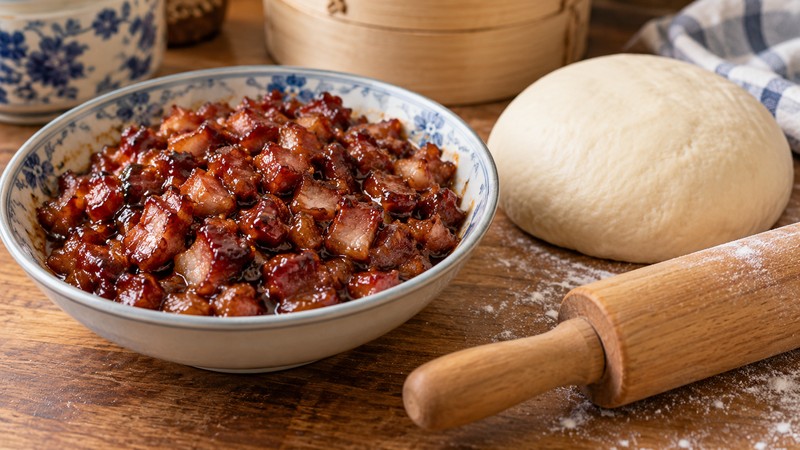
Ingredients You’ll Need
This recipe is designed for 8 medium-sized buns, enough for a small family or a cozy dim sum snack. Split the ingredients into two clear parts—dough and filling—to keep prep organized and avoid confusion.
For the dough:
- 2 cups (250 g) all-purpose flour; use the measured flour rather than adding an unverified cornstarch correction
- 1 tsp instant yeast
- 2 tbsp granulated sugar
- ½ cup (120ml) warm whole milk (around 105°F/40°C—too hot kills yeast, too cold slows it)
- 1 tbsp neutral vegetable oil (canola or sunflower)
- ½ tsp baking powder (for extra lightness in the final texture)
For the filling:
- 1 cup (150g) pre-cooked char siu pork (chopped into small, bite-sized pieces; homemade is ideal, but store-bought works in a pinch)
- 2 tbsp hoisin sauce
- 1 tbsp oyster sauce
- 1 tsp granulated sugar (adjust if your char siu is already sweet)
- 1 tsp toasted sesame oil
- 1 tsp cornstarch mixed with 2 tbsp cold water (slurry, to thicken the filling and prevent sogginess)
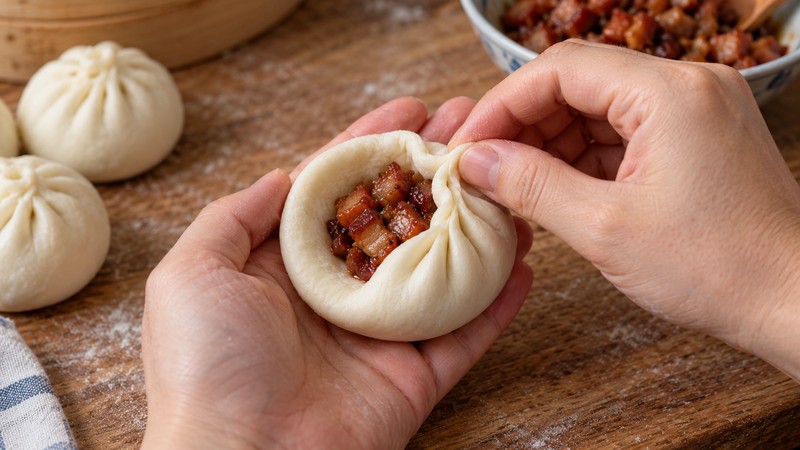
Step-by-Step Cooking Instructions
The process is split into three main phases—dough prep, filling prep, and assembly—each with small details that make a big difference in the final result.
- Mix instant yeast with the dry ingredients, or follow its package directions. If using active dry yeast instead, follow the label for hydration and proofing.
- Mix the flour, sugar, yeast and baking powder. Add the warm milk and oil, then mix to form a dough; flour absorption varies, so judge consistency rather than expecting identical stickiness.
- Turn the dough onto a lightly floured surface and knead for 5-7 minutes until it’s smooth and elastic (it should spring back slightly when pressed with a finger).
- First rise: Grease the large mixing bowl lightly, place the kneaded dough back inside, then cover with a damp kitchen towel. Let it rise in a warm, draft-free spot for 1-1.5 hours until it doubles in size.
- Proof in a comfortably warm, draft-free place. Do not use a just-heated oven without checking that it has cooled to a yeast-safe temperature.
- Prep the filling: While the dough rises, heat a small skillet over medium-low heat. Add hoisin, oyster sauce, sugar, and sesame oil, stirring to combine.
- Pour in the cornstarch slurry and cook for 1 minute until the sauce thickens. Turn off the heat, add the chopped char siu, and mix well.
- Cool the filling before wrapping so it does not soften the dough or encourage overproofing. Refrigerate it if preparing ahead.
- Divide the risen dough into eight equal portions by weight, rather than assuming each is exactly 50 g.
- Roll each piece with a thicker center and thinner edges. Add enough cooled filling to close comfortably, then pleat and pinch the edges together without stretching the center.
- Second rise: Place each sealed bun on a small square of parchment paper (cut to fit your steamer) in a bamboo or metal steamer basket. Leave 1 inch of space between each bun—they’ll expand as they rise.
- Cover and let sit for 20-30 minutes until the buns are puffy and look light to the touch.
- Bring the steamer water to a boil, keeping it below the buns. Steam until the dough is cooked through and the cooked-pork filling reaches 165 F (74 C); monitor water level. A gentle simmer is not a universal rule for char siu bao.
- Keep the lid closed during cooking. After steaming, allow the steam to settle before carefully lifting the lid away from your face.
Common Mistakes to Avoid
Even with a reliable recipe, small errors can turn fluffy buns into dense, disappointing treats. Here are the most frequent mistakes and how to fix them:
- Skipping the second rise: This is the top error. The second rise gives the dough time to develop its light, airy texture—without it, buns will be chewy and heavy.
- Overstuffing: Too much filling makes the buns hard to seal, and excess filling can leak out during steaming. Stick to 1-2 tbsp per bun for perfect results.
- Steamer control: maintain steady steam and keep boiling water away from the buns. Condensation and crowding matter more than a blanket ban on boiling water.
- Warm filling can soften the dough and make shaping difficult. Cool before assembly.
- Knead until smooth and elastic. A seven-minute ceiling is not a reliable test because hands, mixers and flours differ.
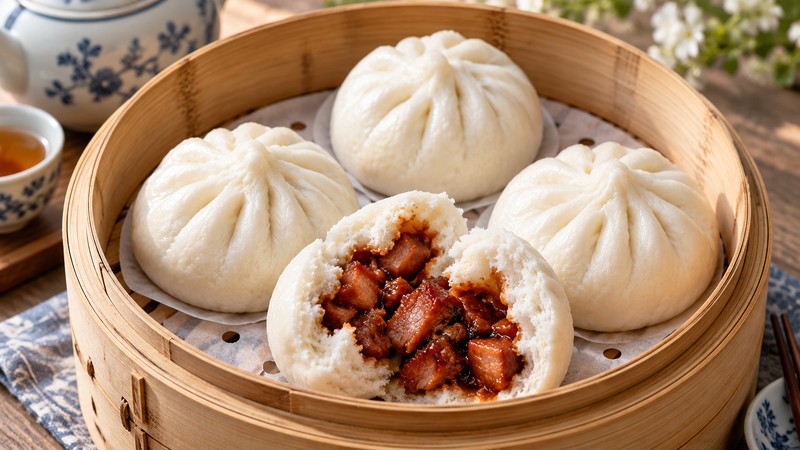
Home-Cooking Tips for Perfect Results
These small, practical tweaks will elevate your bbq pork buns from good to restaurant-worthy, even in a home kitchen:
- A flour blend can change softness, but adding a spoonful of starch is not a guaranteed substitute for a tested low-protein dough formula. Use the linked recipe for a different dough.
- Steamed bao remain pale. Adding oil does not make steamed buns turn golden as baked buns do.
- Char siu quality: If making your own char siu, use lean pork shoulder (not too fatty) for a balanced filling. If using store-bought, pick one that’s not overly sweet—you can adjust the sauce to add more depth without making it cloying.
- Bamboo and metal steamers can both work. Leave gaps around parchment liners so steam can circulate.
- Serve immediately: BBQ pork buns are best eaten hot, right after steaming. They lose their fluffiness as they cool, so plan to serve them alongside a cup of jasmine or pu-erh tea—traditional Cantonese pairings that cut through the filling’s richness for a balanced bite.
Recipe References
Published recipe and technique reference; FoodSafety.gov cooking temperatures.
Related recipes: Cook char siu for the filling; Bean curd rolls.
AI-generated illustrations, where added, show recipe concepts rather than photographs of a tested cooking session.