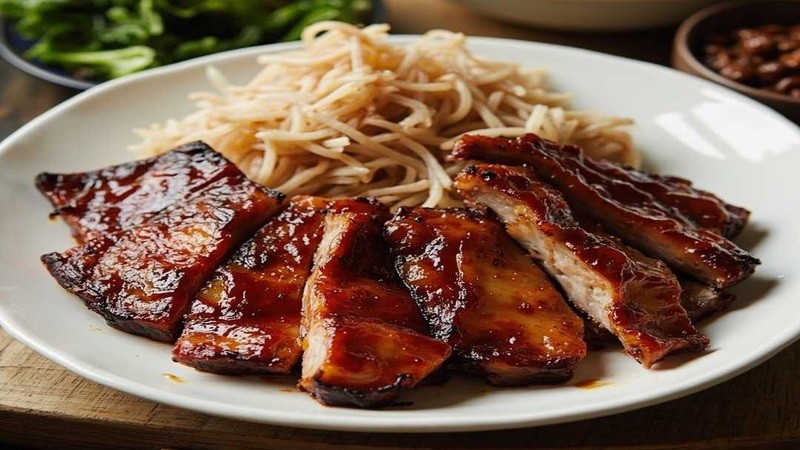
Chinese BBQ pork belly is a fatty char siu-style variation, with a sweet-savory glaze over layers of meat and fat. This recipe is for glazed skinless belly, not crispy-skinned roast pork.
But recreating that perfect, tender, sticky char siu at home can feel elusive—until you master the techniques that make it authentic, not just a quick grill job with store-bought sauce.
What Makes Authentic Cantonese BBQ Pork Belly Stand Out?
Cantonese BBQ pork belly is more than just grilled pork. It’s a balance of textures and flavors that’s been refined over centuries.
This version uses pork belly for its visible layers of lean and fat. Choose skinless belly for a glazed roast; char siu-style belly is not the same recipe as crispy-skinned siu yuk.
Traditional recipes use rock sugar for mellow sweetness, light soy for saltiness, and a hint of five-spice powder for that warm, aromatic depth that sets it apart from Western BBQ. What makes it truly special is the slow cooking: low heat keeps the meat juicy, while the final high-heat glaze step creates a sticky, caramelized crust that clings to every slice.
It’s a staple at Cantonese weddings, Lunar New Year feasts, and weekend yum cha spreads, so getting it right means bringing a piece of that tradition into your own kitchen.
Key Ingredients for Homemade BBQ Pork Belly
To make authentic Cantonese BBQ pork belly at home, you don’t need hard-to-find items—just quality ingredients that work together to create that iconic flavor. Here’s what you’ll need:
- Pork belly: 1.5 to 2 pounds (700 to 900 g), skinless, with a balance of lean and fat
- Marinade base: 2 tablespoons light soy sauce (for saltiness, not color), 1 tablespoon dark soy sauce (for darker color), 3 tablespoons hoisin sauce (adds umami and sweetness), 2 tablespoons Shaoxing rice wine (substitute with dry sherry if unavailable, but Shaoxing has a richer aroma), ¼ cup rock sugar (crushed, not white sugar—rock sugar melts slower for a smoother sweetness), 1 teaspoon five-spice powder (warm, aromatic, don’t overdo it), 1 clove garlic (minced), 1 teaspoon grated ginger, 1 teaspoon sesame oil (nuttiness), and a pinch of red food coloring (optional, for that bright shop-bought look—traditional recipes often skip it, relying on soy sauce and rock sugar for color).
- Extra for glazing: reserve 2 tablespoons of clean marinade before adding raw pork and refrigerate separately.
Rock sugar still adds sweetness; it does not prevent a glaze from being cloying. Adjust sweetness in a clean portion before raw pork is added. Either properly handled fresh pork or safely refrigerator-thawed frozen pork can be used.
Step-by-Step Cooking Technique for BBQ Pork Belly
The process is simple, but patience is key to getting that tender, juicy result. Follow these steps closely:
- Pat skinless pork belly dry and cut into evenly sized strips. Use clean utensils and do not rinse raw pork.
- Marinate: Mix all the marinade ingredients in a bowl until the rock sugar is mostly dissolved. Place the pork in a shallow dish or a zip-top bag, pour the marinade over it, and make sure every inch of the meat is coated.
- Refrigerate for at least 4 hours, or ideally overnight (turn the bag once halfway through to ensure even marination). Don’t marinate longer than 24 hours—too much soy sauce can make the meat overly salty.
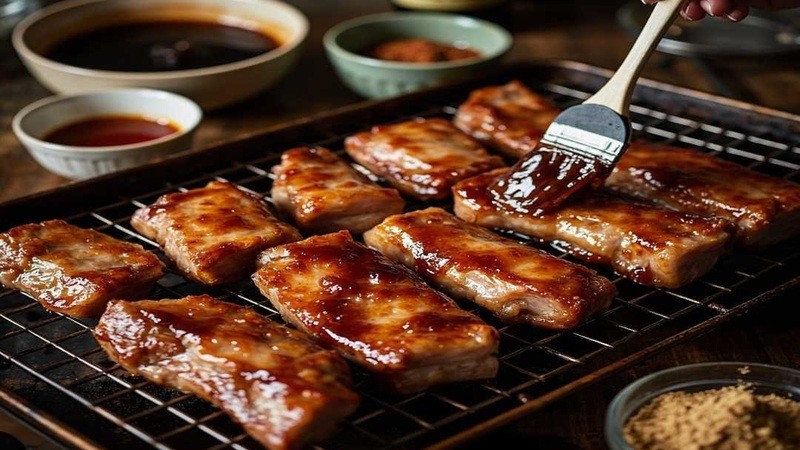
- Roast: Preheat your oven to 375°F (190°C). Place the pork on a wire rack set over a baking sheet (this allows air to circulate, so the meat cooks evenly and the bottom doesn’t get soggy).
- Turn the belly during roasting and glaze with the clean reserved portion. Verify at least 145 F (63 C), followed by a three-minute rest; fatty belly may need further cooking for the preferred texture.
- Caramelize the glaze: Turn your oven to broil (high heat). Brush the pork with a thin layer of extra glaze, then place it back under the broiler for 2 to 3 minutes.
- Watch it closely—this step can burn quickly! You want the glaze to be sticky and slightly caramelized, not charred.
- Rest and slice: Let the pork rest for 10 minutes before slicing. This allows the juices to redistribute, so each slice is juicy instead of dry.
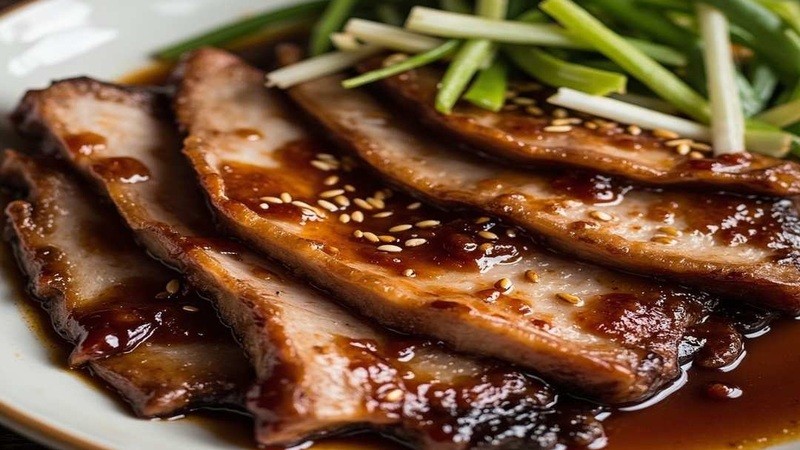
- Slice against the grain into ¼-inch thick pieces—this makes the meat tender and easy to chew.
Common Mistakes to Avoid When Making Char Siu
Even with the right ingredients, it’s easy to make small errors that throw off the flavor or texture. Here are the most common ones:
- Cut choice: use belly for this variation, but do not insist that every piece has exactly three equal layers. Shoulder is used in other char siu recipes.
- Over-marinating: More than 24 hours in the marinade can make the meat salty, as the soy sauce penetrates deeply. Stick to 4 to 12 hours for the best flavor.
- Skipping the wire rack: If you place the pork directly on a baking sheet, the bottom will steam instead of roast, leading to a soggy texture. A wire rack is essential for even cooking.
- Not basting enough: Basting every time you flip the pork adds flavor and keeps the meat moist. Don’t skip this step—it’s what makes the char siu sticky and delicious.
- Burning the glaze: The broil step is quick, so keep an eye on the pork. If the glaze starts to char, move it to a lower rack or turn off the broiler early.
Home-Cooking Tips for Perfect BBQ Pork Belly
Once you’ve mastered the basics, these tips will take your char siu to the next level:
- No oven? No problem: Use a stovetop grill pan or a charcoal grill. Cook the pork on medium heat, turning every 5 minutes, and basting with glaze each time. It will take a bit longer, but you’ll get that smoky flavor you love.
- Leftovers: refrigerate promptly, use cooked pork within three to four days, and reheat to 165 F (74 C). Freeze for longer storage and thaw in the fridge.
- Adjust sweetness to taste: If you prefer less sweet char siu, reduce the rock sugar by half. For extra umami, add a teaspoon of oyster sauce to the marinade.
- Leftover hacks: Sliced char siu keeps well in the fridge for up to 3 days, or frozen for a month. Use it in fried rice, wrap it in a lotus leaf bun, or eat it with congee for a quick, comforting meal.
- Pair it right: Cantonese BBQ pork belly is a versatile dish, but it’s most iconic when served with steamed rice and a side of pickled vegetables. If you’re looking to build a full yum cha spread, pairing it with other dim sum staples is a great way to enjoy it—for more on traditional yum cha etiquette, check out our guide to the art of yum cha dining tradition.
Recipe References
Published recipe and technique reference; USDA marinade handling; FoodSafety.gov cooking temperatures.
Related recipes: Shoulder-cut char siu; BBQ pork sauce.
AI-generated illustrations, where added, show recipe concepts rather than photographs of a tested cooking session.