Steamed barramundi uses ginger, scallion and a light soy finish. Start with a clearly identified, cleaned fish and a plate that fits your steamer; doneness depends on thickness rather than a fixed timer.
What Makes Steamed Barramundi a Cantonese Staple?
Cantonese cuisine’s core philosophy—qing dan (light and fresh)—is nowhere more evident than in steamed fish. Barramundi, with its mild, firm flesh and ability to hold up to gentle heat, is an ideal choice for this preparation, especially for overseas readers who may struggle to find traditional Cantonese fish like snakehead or black carp.
Buy barramundi from a fishmonger or a clearly labeled package. Other whole fish can be steamed similarly, but a photograph cannot establish the species.
Essential Ingredients & Tools
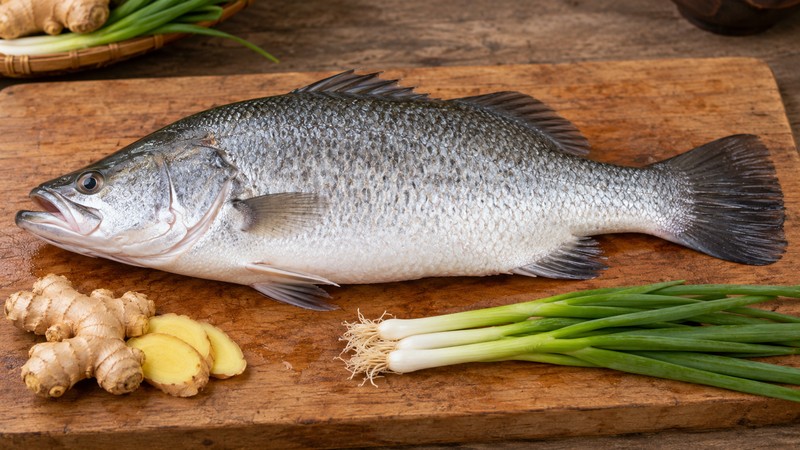
To make authentic barramundi steamed, you don’t need fancy ingredients—just fresh, quality components:
- For this 500-600 g fish, use 1 oz (about 28 g) fresh ginger and 5 scallions, following the linked ginger-scallion preparation as a home adaptation. Divide the ginger equally between steaming and fresh garnish; use white scallion parts for steaming and green parts for the finish
- 1 whole barramundi (500–600g, scaled, gutted, and cleaned; ask your fishmonger to do this if you’re unsure)
- 1 tbsp Shaoxing wine (a staple in Cantonese cooking; substitute dry sherry if unavailable)
- 2 tbsp light soy sauce (avoid dark soy, as it will overpower the fish and darken its appearance)
- 3 tbsp neutral oil (peanut or canola works best for high heat)
- A lidded steamer and a heatproof plate that fits inside; bamboo or metal is suitable
Step-by-Step Technique for Perfect Barramundi Steamed
The key to this dish is precision—oversteaming is the most common mistake, so timing is critical. Follow these steps:
- Ask the fishmonger to scale and gut the fish. Check the cavity, pat dry and clean any surfaces touched by raw fish.
- If the thick back needs scoring, make shallow cuts without cutting through the backbone. Ginger supplies aroma; it cannot make spoiled fish safe.
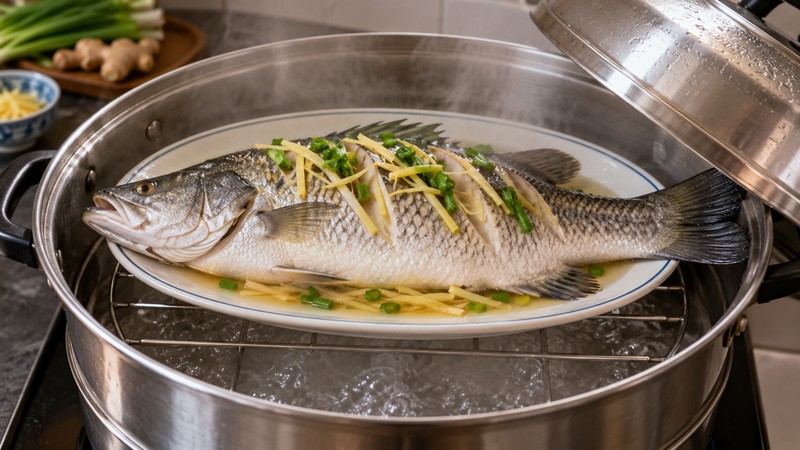
- Season before steaming: Place the fish on the heatproof plate. Drizzle Shaoxing wine over it, then scatter the white scallion parts and half the julienned ginger on top.
- Let it rest for 5 minutes—this infuses subtle flavor without over-salting.
- Bring the steamer water to a boil and keep the plate above it. Cover and maintain steady steam.
- Check the thickest flesh for at least 145 F (63 C). Size, thickness and equipment change cooking time; eight minutes is not guaranteed for every 500 g fish.
- Finish with hot oil: Carefully remove the plate from the steamer (use oven mitts to avoid burns). Discard the ginger and scallion bits from the top, then drain any excess liquid from the plate (this step is crucial to removing fishy impurities).
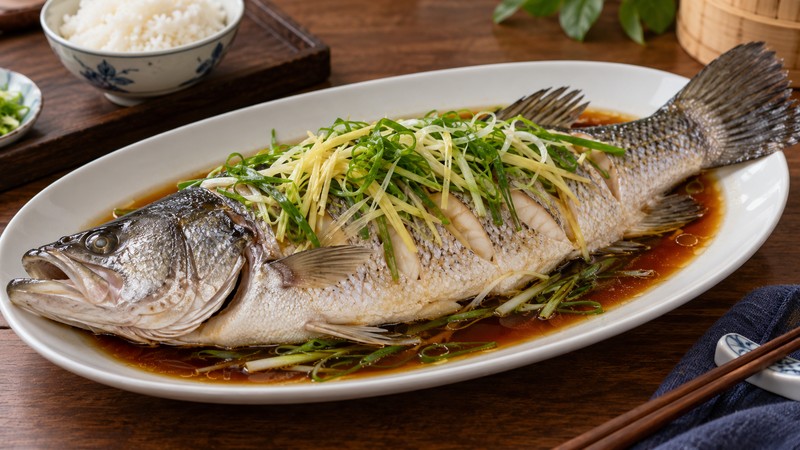
- Scatter fresh ginger and scallion over the cooked fish. Warm the oil until hot, not smoking, and spoon carefully over the garnish.
- Pour the hot oil evenly over the garnish, then drizzle light soy sauce across the entire fish.
Common Mistakes to Avoid
Even experienced home cooks can slip up with steamed barramundi. Here are the top errors and how to fix them:
- Over-steaming: check doneness and stop once the fish is safely cooked. Do not impose a ten-minute maximum on an undercooked fish.
- Preparation: pat away loose moisture for handling. Steamed fish is not meant to crisp, so crisp skin is not a doneness target.
- Soy choice: light soy keeps the finish lighter. Salt levels vary by brand; dark soy is not always saltier.
- Forgetting to drain the steaming liquid: The liquid released during cooking has impurities that can make the dish taste fishy. Draining it ensures a clean, fresh flavor.
- Oil temperature: hot oil can release aroma without being driven to smoke. Keep water out of the pan and avoid splashing.
Home-Cooking Tips for Authentic Cantonese Flavor
To elevate your barramundi steamed dish to restaurant quality, keep these tips in mind:
- Choose fresh fish: If possible, buy a whole barramundi with clear eyes, shiny skin, and a mild, fresh smell. Frozen barramundi works too—thaw it completely in the fridge until fully thawed.
- Add a touch of depth: For extra flavor, tuck a few slices of dried tangerine peel (chenpi) into the fish’s cavity before steaming. Chenpi is a classic Cantonese ingredient that cuts through fishiness and adds a subtle citrus note.
- Adjust seasonings to taste: If you prefer a hint of sweetness, add a tiny pinch of sugar to the light soy sauce. If you like more salt, drizzle an extra teaspoon of soy—Cantonese cooking is flexible, so don’t be afraid to customize.
- Serve immediately: Steamed barramundi is best eaten right after cooking, while the oil is sizzling and the fish is hot. It pairs perfectly with steamed jasmine rice, which soaks up the savory sauce.
Serving Suggestions
Steamed barramundi is a centerpiece dish that brings people together. Place it in the middle of the table, surrounded by bowls of steamed rice and a side of stir-fried greens like bok choy or gai lan.
For overseas readers who can’t find traditional Cantonese greens, spinach or broccoli works well. For a complete Cantonese meal, pair this barramundi steamed dish with a bowl of traditional Cantonese slow-cooked soup, which complements the light flavors without overwhelming the fish.
If you’re hosting, prep the fish (scoring, seasoning) ahead of time and steam it right before serving to keep it fresh and hot for guests.
Recipe References
Published recipe and technique reference; FoodSafety.gov cooking temperatures.
Related recipes: Banana leaf fish parcels; More Cantonese recipes.
AI-generated illustrations, where added, show recipe concepts rather than photographs of a tested cooking session.