For a first Cantonese cooking session, choose one main method: steamed fish, roast pork or stir-fried noodles. This page gives a whole-fish example and links to other recipe paths, without unsupported restaurant price comparisons.
For Cantonese communities worldwide, these recipes are more than meals—they’re a link to Guangdong’s coastal heritage, a way to honor ancestors, and a centerpiece of family gatherings and festivals like Lunar New Year.
What Is Authentic Cantonese Recipes?
Authentic Cantonese recipes refer to the traditional dishes originating from the Guangdong province of southern China, particularly the Pearl River Delta region, where a coastal landscape and mild subtropical climate shaped a cuisine centered on freshness, balance, and respect for ingredients. Unlike many other regional Chinese cuisines that rely on bold spices, heavy sauces, or long-simmered stews, Cantonese cooking prioritizes “qing” (lightness) and “xian” (natural umami), using techniques that preserve the original texture and flavor of each component.
Seafood, greens and light aromatic sauces feature prominently, but Cantonese recipes also include richer roasts, braises and pastries. Freshness is a preference, not a medical benefit claim.
At its core, authentic Cantonese cuisine is defined by four foundational cooking techniques: zheng (steaming), chao (stir-frying), shao (roasting), and lu (braising). Steaming, in particular, is revered for its ability to lock in moisture and nutrients, making it the go-to method for delicate items like fish, dumplings, and leafy greens.
Stir-frying, done over high heat in a wok, creates a subtle char and crispness without overcooking, while braising uses light broths to tenderize meats like pork or beef without overpowering them. Roasting, meanwhile, is used for items like siu yuk (crispy roast pork) and siu mei (roast goose), where the focus is on achieving a crunchy exterior and juicy interior with minimal seasoning.
These methods vary by dish and household; they are not an unchanged set of timing rules.
Choose steamed fish for gentle heat, char siu for oven roasting, or beef chow fun for wok practice. Follow the linked individual recipes rather than treating this fish example as the whole Cantonese repertoire.
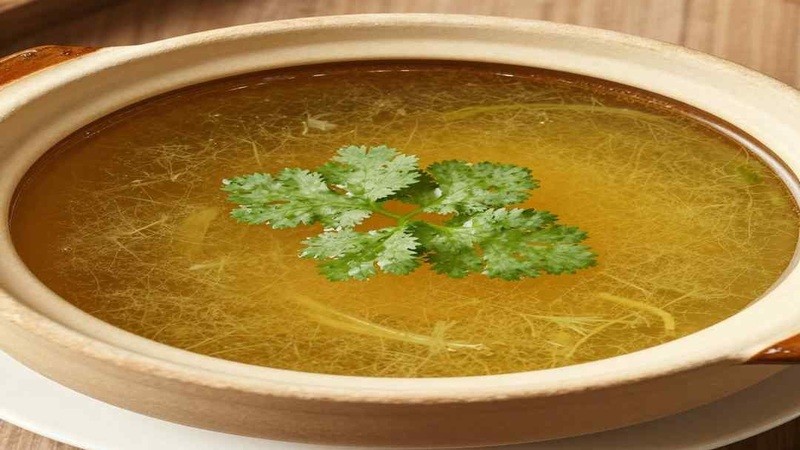
A beginner whole-fish example
Steamed whole fish is one useful starting recipe, not an objectively most iconic dish. The example below uses ginger, scallion and a light soy finish.
Ingredients (Serves 2)
1 whole sea bass (or red snapper, ~1.5 lbs, scaled, gutted, and fins trimmed)
3 thin ginger slices (1 for the fish cavity, 1 for steaming on top, 1 reserved fresh for the finish)
2 scallions (1 cut into 2-inch segments, 1 for julienned garnish)
1 small red chili (julienned, optional for color)
1 small carrot (julienned, optional for garnish)
1 tbsp light soy sauce (preferably low-sodium for balance)
1 tsp oyster sauce
1 tbsp Shaoxing rice wine
1 tsp toasted sesame oil
1 tbsp vegetable oil; salt to taste
Water for the steamer, enough to maintain steam without touching the plate
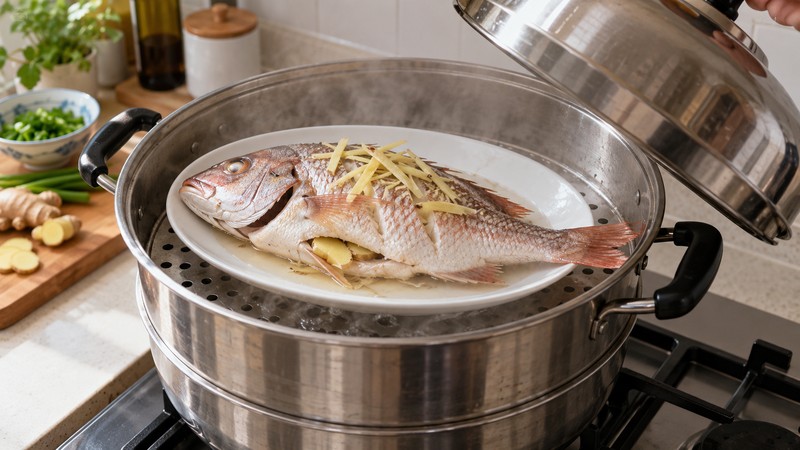
Step-by-Step Instructions
- Check the cleaned fish and make shallow scores in thick flesh if needed. One-inch-deep cuts are excessive for this example.
- Season the fish: Stuff the cavity of the fish with the 1 ginger slice and 1 scallion segment. Use salt to taste, or omit it if the soy finish supplies enough seasoning.
- Keep the prepared fish refrigerated if not steaming immediately. A room-temperature salt rest is not required.
- Bring the steamer water to a boil. Keep it below the heatproof plate and check the water level; one cup is not sufficient for every steamer.
- Arrange for steaming: Place the fish on a clean, heatproof plate. Put one ginger slice on top and reserve the last slice for the finish. Set the plate in the steamer and cover with the lid.
- Steam until the thickest flesh reaches at least 145 F (63 C). Fish weight alone cannot establish an exact eight-minute time or ten-minute maximum.
- Drain excess liquid: Carefully remove the plate from the steamer. Discard the top ginger slices and cavity scallion segment.
- Drain excess plate liquid if desired for the sauce finish. It is not universally metallic or proof of impurities.
- Add the fresh scallion garnish and ginger. Reserve some of the listed ginger for the finish; chili and carrot are optional.
- Heat the vegetable oil until hot without smoking, then spoon carefully over the garnish. Keep hands clear and avoid adding wet utensils to the oil.
- Warm the soy, oyster sauce and wine in a small pan; finish with sesame oil and spoon over the fish.
Authentic Cantonese Recipes Variations
Authentic Cantonese recipes have subtle regional variations that reflect the diversity of Guangdong’s culture and proximity to neighboring areas. The most notable split is between Hong Kong-style Cantonese cooking and mainland Guangzhou (Canton)-style cooking.
Home versions of steamed sea bass also differ from restaurant ones: home cooks often use cheaper, more accessible fish like tilapia or black cod, while high-end restaurants may use premium wild sea bass and add extra Shaoxing wine for complexity.
Beyond regional splits, common adaptations are made for different palates and dietary needs. Many Western home cooks substitute Shaoxing wine with dry sherry if authentic rice wine is unavailable, or replace sea bass with tilapia, a more affordable and widely found fish in grocery stores.
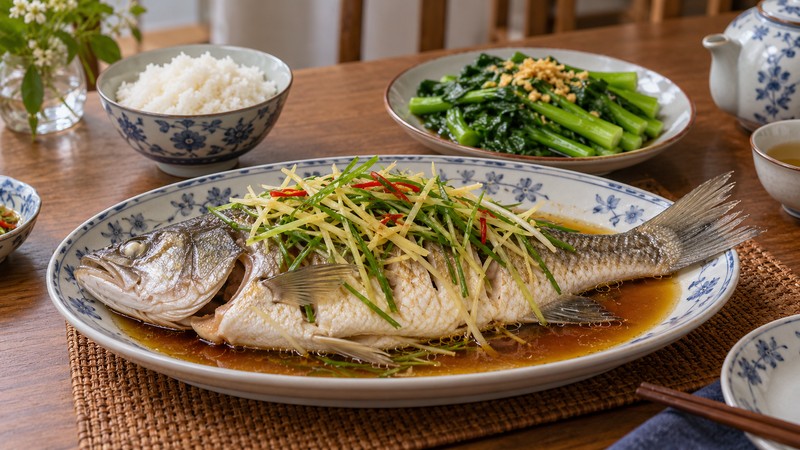
Serving Authentic Cantonese Recipes the Cantonese Way
Serve family-style with rice and greens. Head-and-tail presentation can be meaningful at celebrations, but serving order is not identical in every family.
Traditional pairings for steamed fish include plain jasmine rice, which soaks up the light, savory sauce, and stir-fried gai lan (Chinese broccoli) or bok choy, which balances the fish’s subtle richness. Common mistakes to avoid include over-steaming the fish, skipping the step of draining excess liquid, or using too much seasoning—authentic Cantonese steamed fish should taste like fresh, tender fish, not heavy sauce.
Lift the cooked flesh carefully from the bones and warn diners to check for small bones.
Recipe References
Published recipe and technique reference; FoodSafety.gov cooking temperatures.
Related recipes: Roast char siu recipe; Stir-fried beef chow fun.
AI-generated illustrations, where added, show recipe concepts rather than photographs of a tested cooking session.