What Makes a Cantonese Favorite?
Beer-steamed clams here means clams cooked in a covered pot over a small amount of beer with ginger and scallion. It is a home-style variation, not a documented ancient Cantonese recipe.
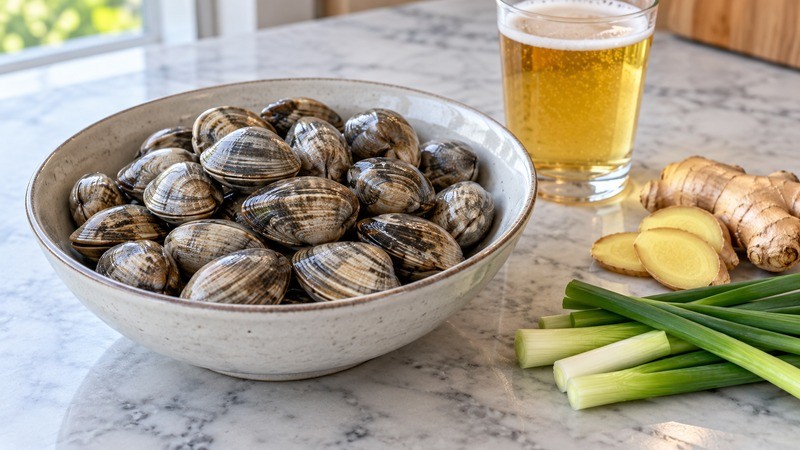
Choose well-labeled live clams, clean off grit and cook thoroughly. The beer-and-aromatic method below is a home variation rather than a claim about street-stall history.
For overseas readers, it’s also a dish that bridges familiar Western beer pairing with classic Cantonese seafood preparation.
Key Ingredients for Authentic Flavor
The success of beer steamed clams hinges on using high-quality, fresh ingredients—there’s no room for shortcuts here. Here’s what you’ll need, with notes tailored for overseas home cooks:
- Clams: For a suggested 1 kg shared batch, buy live Manila or littleneck clams from a licensed, reliable seller with source labeling. Discard cracked shells and live clams that do not close when tapped. Frozen products need their own package directions; the live-clam tap test does not apply to them.
- Light beer: Skip dark stouts or heavy ales—their roasted or hoppy flavors will clash with the clams. A pale lager (like Tsingtao, Budweiser, or a local light lager) is ideal; it adds a subtle sweetness without masking the seafood’s natural taste. You’ll only need about ½ cup, enough to cover the bottom of the pot.
- Ginger: Thinly sliced (not grated) fresh ginger—about 5-6 slices. It adds a warm, aromatic base that complements the beer and clams without being overpowering.
- Scallions: 2-3 scallions, separated into white parts (for cooking) and green parts (for garnish). The white parts add a mild oniony note, while the green parts provide a fresh, bright finish.
- Optional add-ins: 1 tsp Shaoxing wine (for a nutty, umami depth) or a pinch of red chili flakes (for a spicy variation). If you don’t have Shaoxing wine, dry sherry works as a substitute.
- Seasoning: A tiny pinch of salt (clams are naturally briny, so too much salt will make the dish salty) and 1-2 drops of sesame oil (for a rich, nutty finish at the end).
Step-by-Step Home Cooking Method
The process is straightforward, but timing is key to avoiding rubbery clams. Follow these steps for perfect results every time:
- Clean: Scrub shells under running water. Follow the seller’s instructions for purging live clams and keep them cold. A salt-and-cornmeal soak is not a reliable way to remove pathogens or marine toxins.
- Do not use a fixed room-temperature 45-minute soak as a food-safety treatment.
- Prep aromatics: Slice the ginger into thin matchsticks, chop the scallions, separating white and green parts.
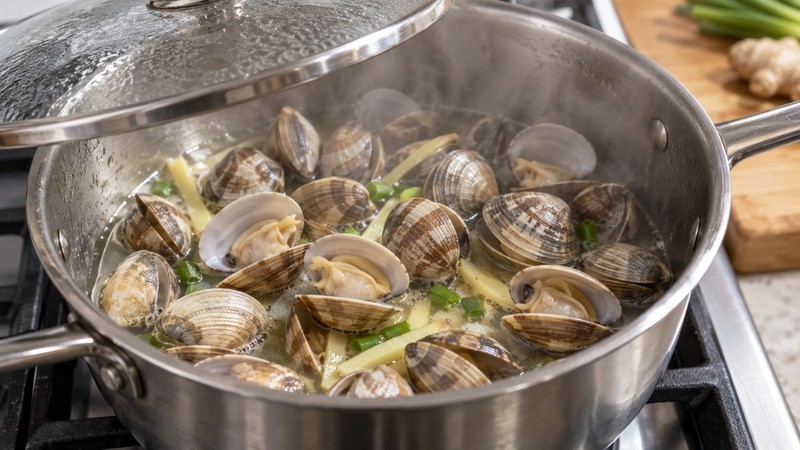
- Steam the clams: Heat a large pot with a tight lid over medium heat. Add the light beer, ginger slices, white scallion parts, and a tiny pinch of salt.
- Bring the small amount of cooking liquid to a boil before covering the pot with the clams. Keep sufficient liquid to prevent scorching.
- Cook: Cover so the clams cook in the hot liquid and steam. Check them as they open, but opening alone is not a complete safety test. The Hong Kong Centre for Food Safety advises a core temperature of 90 C for 90 seconds, or boiling until shells open and continuing for another 3-5 minutes.
- Apply the temperature-and-time check rather than a universal five-minute total ceiling. Discard any shells still unopened after thorough cooking.
- Avoid continuing far beyond safe doneness, since the meat can become tough.
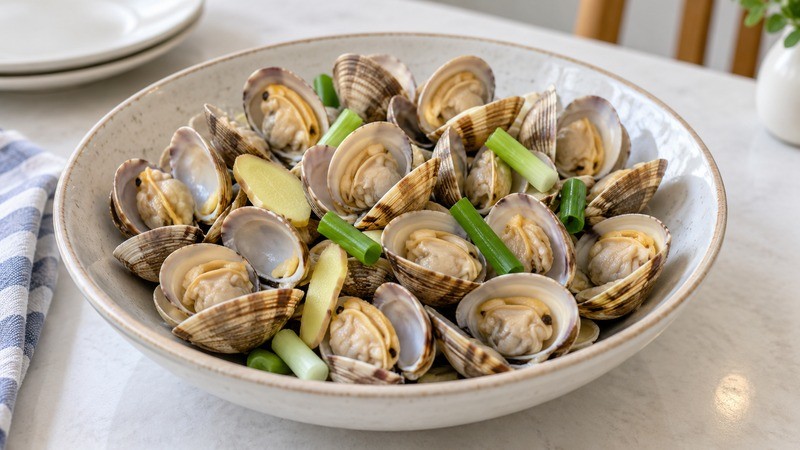
- Finish: Discard unopened shells and the cooking liquid, as advised by CFS. Add scallion greens to the cooked clams and serve promptly.
- Stir in the green scallions and a drop of sesame oil. Serve immediately—clams lose their juiciness once cooled, so don’t wait to plate.
Common Mistakes Home Cooks Make
Even with simple dishes, small missteps can ruin the flavor. Here are the most frequent errors to avoid:
- Using dead clams: Always check if clams are alive before cooking (closed, or close when tapped). Unopened clams after cooking are not safe to eat—discard them immediately.
- Timing by habit: Clam size and batch load change cooking. A three-minute timer cannot replace thorough heating.
- Confusing cleaning with safety: Removing sand improves texture but does not make contaminated clams safe. Buy approved-source shellfish and cook thoroughly.
- Using dark beer: Dark beer’s bold flavors will overpower the delicate clam taste. Stick to light lagers for the best balance.
- Adding too many ingredients: Cantonese cuisine values simplicity. Avoid adding garlic, soy sauce, or other strong spices unless you’re making a variation.
- The classic beer steamed clams rely on only a handful of ingredients to shine.
- Not serving immediately: Clams are best when hot and juicy. If you need to keep them warm for a few minutes, cover the pot loosely with a lid, but don’t let them sit for more than 5 minutes.
Serving and Pairing Tips
Serve the cooked clams with rice and vegetables, but do not pour the discarded shellfish cooking liquid onto the rice.
For pairing, match the dish with a light lager (the same one you used in cooking) or a crisp Sauvignon Blanc—both complement the brininess and malt notes. If you want a Cantonese touch, add a side of pickled radish to the plate; its tang cuts through the richness and balances the brininess of the clams.
A little chili can be added for personal taste; it is not evidence of a specific street-stall tradition.
For related equipment and seafood choices, see our steamed-shrimp and steamed-crab guides.
Frequently Asked Questions
Is beer-steamed clam history established here?
No. This guide describes a home-style cooking option, not a verified Guangdong origin or a standard restaurant recipe.
How much liquid is needed?
The existing 1/2 cup (120 ml) beer quantity is a suggested starting point for about 1 kg clams in a snug covered pot. Add enough liquid to avoid scorching; do not treat the quantity or timer as a tested safety formula.
Can I make it alcohol-free?
Use water or unsalted stock and omit rice wine. Short covered cooking does not guarantee all beer alcohol disappears. Check labels rather than assume non-alcoholic beer contains none.
Related Cooking Guides
For selection, consult FDA shellfish guidance; for thorough cooking and discarding liquid, follow CFS shellfish guidance. USDA alcohol-retention data explain why cooking is not an alcohol-free guarantee.
Images are illustrative and may be AI-generated; they are not photographs of a tested batch or proof of safe cooking.