Asian steamed sea bass costs between $18-$28 per serving in Cantonese restaurants, but you can make it at home for under $10 total, including a 1.5-pound whole sea bass that serves two. The entire process takes just 25 minutes—10 minutes of prep, 10 minutes of steaming, and 5 minutes to finish with aromatics and sauce—making it a quick yet impressive dish.
More than just a weeknight meal, this steamed fish is a cornerstone of Cantonese culinary tradition, prized for its ability to highlight fresh, high-quality ingredients while carrying deep cultural meaning tied to abundance and celebration.
What Is Asian Steamed Sea Bass?
Asian steamed sea bass is a Cantonese-style preparation of whole, fresh sea bass (most often barramundi, also called Asian sea bass) cooked via high-heat steaming, then finished with aromatic oils and a light savory sauce. At its core, it embodies the Cantonese culinary philosophy of xian (freshness) and wei (balanced flavor), prioritizing the fish’s natural, mild taste over heavy seasonings.
Steaming has been a staple Cantonese cooking method for over 2,000 years, dating to the Han Dynasty, when bamboo steamers were used to cook delicate ingredients without masking their essence. Sea bass is the ideal choice here because its firm, flaky flesh has no strong “fishy” odor, making it versatile enough to absorb subtle seasonings while retaining its tender texture.
Culturally, this dish is far more than food: it’s a symbol of prosperity and unity in Cantonese communities. The Cantonese word for fish, yu, sounds identical to the word for surplus, so serving a whole fish at Lunar New Year, weddings, family banquets, and holiday gatherings is believed to ensure the coming year brings abundance.
Unlike Western preparations that often use fillets, whole fish is served to honor guests—placing the head facing the most senior diner is a gesture of respect, a tradition that underscores the dish’s role in hospitality. Asian Steamed Sea Bass Mastering steamed sea bass is also a marker of culinary skill in Cantonese cuisine, as it requires precise timing to avoid overcooking, a common pitfall that turns the fish dry and bland.

Authentic Asian Steamed Sea Bass Recipe
Ingredients (Serves 2)
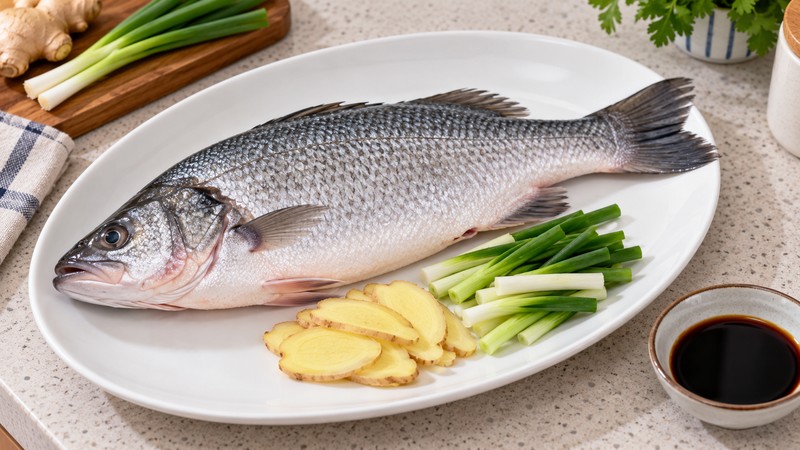
1.5-pound whole Asian sea bass (scaled, gutted, fins trimmed, head and tail intact)
3 slices fresh ginger (plus 1 tbsp julienned ginger for garnish)
3 scallions (2 whole, plus 1 tbsp finely chopped scallions for garnish)
2 tbsp Shaoxing wine (divided)
3 tbsp light soy sauce
1 tsp dark soy sauce (for subtle color, optional)
2 tbsp low-sodium chicken broth
4 tbsp vegetable oil
1 small red chili (julienned, for garnish, optional)
Pinch of sea salt
1 tsp sesame oil
1/4 tsp granulated sugar
Step-by-Step Instructions
- Prep the fish: Make 3 diagonal cuts on each side of the sea bass (about 1 inch deep) to help steam penetrate. Rub the entire fish (inside and out) with a pinch of salt.
- Asian Steamed Sea Bass Stuff the fish’s cavity with 1 slice of ginger and 1 whole scallion to infuse flavor.
- Set up the steamer: Fill a large pot with 2 inches of water, bring to a rolling boil over high heat. Asian Steamed Sea Bass Place a steamer basket inside, ensuring it sits above the water line.
- Steam the fish: Place the sea bass on a heatproof plate (shallow, so steam circulates freely) and drizzle 1 tbsp of Shaoxing wine over it. Asian Steamed Sea Bass Carefully set the plate in the steamer, cover tightly with a lid.
- Cook with precise timing: Steam on high heat for 8–10 minutes. Do not open the lid during cooking—peeking drops the steamer’s temperature and overcooks the fish.
- Asian Steamed Sea Bass Test doneness by inserting a fork into the thickest part of the fish near the backbone; flesh should pull away easily and be opaque but tender.
- Make the finishing sauce: While the fish steams, mix light soy sauce, dark soy sauce, remaining 1 tbsp Shaoxing wine, chicken broth, sugar, and sesame oil in a small bowl. Asian Steamed Sea Bass Warm the mixture in a microwave or small pan for 30 seconds to combine flavors.
- Drain excess moisture: Once steamed, carefully remove the plate from the steamer (use oven mitts to avoid burns). Discard the ginger and scallion from the fish’s cavity.
- Asian Steamed Sea Bass Pour out any excess water from the plate—this is critical to prevent the sauce from becoming watery.
- Add garnishes: Top the fish evenly with julienned ginger, julienned red chili, and chopped scallions.
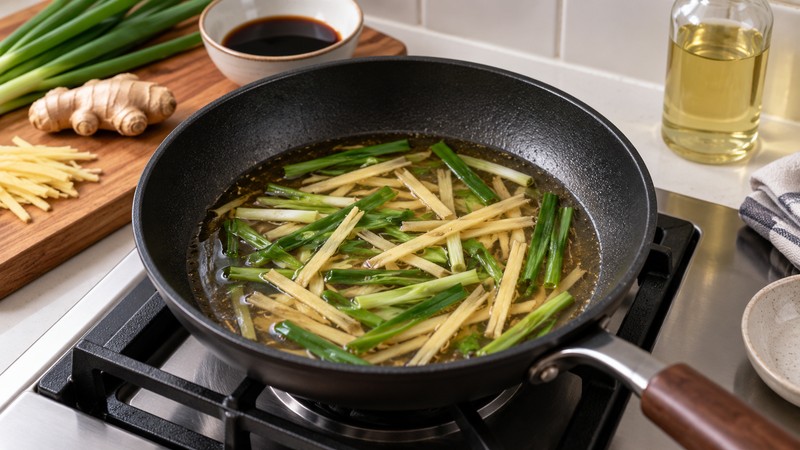
- Sizzle the aromatics: Heat vegetable oil in a small pan until it smokes slightly (this is the Cantonese “sizzling oil” step, which releases the garnishes’ aroma). Asian Steamed Sea Bass Pour the hot oil evenly over the garnishes—you’ll hear a satisfying sizzle that signals the flavors are activating.
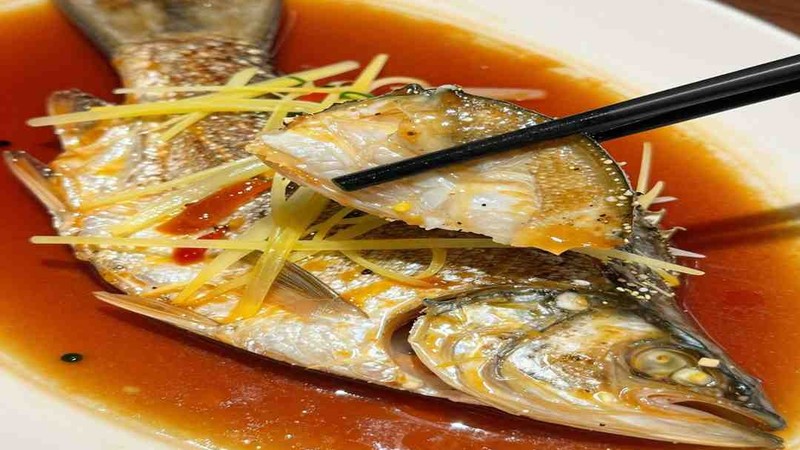
- Finish with sauce: Drizzle the pre-made soy sauce mixture over the entire fish. Asian Steamed Sea Bass Serve immediately while the oil is still fragrant.
Asian Steamed Sea Bass Variations
Regional variations of steamed sea bass reflect Cantonese cuisine’s adaptability to local ingredients. In Hong Kong-style preparations, chefs often add a dash of oyster sauce to the finishing sauce for extra umami, and may tuck a small piece of dried tangerine peel (chenpi) into the fish’s cavity.
Chenpi cuts through the fish’s richness and adds a subtle citrusy depth that’s beloved in Hong Kong’s bustling dim sum and seafood restaurants. Asian Steamed Sea Bass By contrast, mainland Guangzhou’s home-style version is intentionally simpler, relying solely on light soy, ginger, and scallions to highlight the fish’s natural flavor—no extra seasonings, just pure, fresh taste.
Differences also exist between restaurant and home versions. Restaurants use commercial convection steamers that maintain consistent high heat, resulting in evenly cooked fish every time.
Home cooks often use stovetop steamers, so adjusting steaming time by 1–2 minutes (depending on the pot’s size) is necessary. Some home cooks add shiitake mushrooms, bamboo shoots, or even sliced pork to the fish’s cavity for extra texture, a casual twist that’s less common in formal Cantonese restaurants.
Asian Steamed Sea Bass Beyond China, Singaporean Cantonese versions add a squeeze of fresh lime to the sauce for brightness, while Malaysian adaptations swap soy sauce for fish sauce to create a saltier, Southeast Asian-inspired umami profile.
Serving Asian Steamed Sea Bass the Cantonese Way
Traditional Cantonese serving etiquette for steamed sea bass is rooted in respect and symbolism. The whole fish is placed on a large, oval platter, with its head facing the most senior guest at the table—a gesture of honor.
The tail faces the host, a signal that the host will ensure the meal is complete and satisfying. The dish is served immediately after finishing, while the hot oil is still sizzling, as this is when the aromatics are most vibrant and the flavors are at their peak.
Asian Steamed Sea Bass It is always paired with steamed white rice, which soaks up the savory sauce, and often accompanied by a stir-fried green vegetable like gai lan (Chinese broccoli) to balance the fish’s richness.
Presentation tips and common mistakes to avoid: Use a white ceramic platter to make the fish’s pale flesh and bright garnishes stand out, a choice that aligns with Cantonese cuisine’s focus on visual balance. The biggest mistakes home cooks make are overcooking the fish (flesh becomes dry and rubbery), failing to drain excess water from the steaming plate (which dilutes the sauce), and not heating the oil enough (no sizzle means no aromatic release).
Asian Steamed Sea Bass Never flip the fish when serving—Cantonese tradition dictates that diners eat from the side closest to them, leaving the bones intact until the end of the meal, a practice that preserves the dish’s symbolic unity.

FAQs
- Is authentic Cantonese steamed sea bass hard to make at home?
Not at all! The only tricky part is mastering the steaming timing—use a rolling boil, don’t lift the lid, and test doneness with a fork.
Asian Steamed Sea Bass Most home cooks nail it on the first try, especially if they use a fresh, whole fish from a reputable market.
- Can I substitute sea bass with another fish?
Absolutely! The best substitutes are whole snapper, grouper, or barramundi (often labeled as Asian sea bass in Western grocery stores).
Avoid oily fish like salmon or mackerel, as their strong flavor will overpower the delicate, mild taste of the dish. Asian Steamed Sea Bass Small whole tilapia works too, but opt for the freshest option available.
- How do I store leftover steamed sea bass?
Let it cool to room temperature, then transfer to an airtight container and refrigerate for up to 2 days. Never leave it out at room temperature for more than 2 hours.
Asian Steamed Sea Bass Reheat using a steamer for 2–3 minutes—microwaving will make the flesh rubbery, a common mistake that ruins the dish’s texture.
- What’s the difference between authentic and simplified versions?
Authentic steamed sea bass relies on the fish’s freshness and the sizzling oil’s aroma, not heavy sauces. Simplified versions often skip the smoking oil step, use pre-made sauce mixes, or add too much soy, masking the fish’s natural flavor.
Asian Steamed Sea Bass The authentic version has a light, balanced sauce that complements, not overpowers, the fish.
- Can I make this without Shaoxing wine?
Yes! Shaoxing wine is traditional, but if you don’t have it, substitute dry sherry or a splash of rice vinegar.
Asian Steamed Sea Bass Note that Shaoxing adds a unique nutty umami depth, so the substitute will slightly alter the flavor, but the dish will still be delicious and true to its core.
- Why is whole fish used instead of fillets?
In Cantonese culture, whole fish symbolizes unity and abundance—yu (fish) is a homophone for surplus, so it’s believed to bring good fortune. Asian Steamed Sea Bass Additionally, steaming a whole fish retains more moisture and flavor than fillets, as the skin and bones lock in the fish’s natural juices, resulting in a tender, flaky texture.

How to Make Guangdong Cuisine: The Authentic Cantonese Recip How to Make Guangdong Food: The Authentic Cantonese Recipe How to Make Cantonese Food: The Authentic Cantonese Recipe Wikipedia
Frequently Asked Questions
What is the significance of asian steamed sea bass in Cantonese cuisine?
Asian steamed sea bass (清蒸石斑) is a cornerstone dish in Cantonese cuisine, representing the culinary philosophy of preserving natural flavors through gentle cooking. It is often served at important banquets, weddings, and Lunar New Year celebrations as a symbol of prosperity and abundance, since the whole fish represents completeness and good fortune.
How is asian steamed sea bass traditionally prepared?
Traditionally, the sea bass is thoroughly cleaned and scaled, then carefully slit along both sides to ensure even cooking. The fish is placed on a heatproof plate with sliced ginger and scallions underneath and on top. It is steamed over high heat for approximately 8-12 minutes depending on the size, until the flesh is opaque and flakes easily. The dish is then finished with a sauce of soy sauce, sesame oil, and sometimes sugar, topped with fresh cilantro and chili, and hot oil is poured over to create a fragrant sizzling sound.
What ingredients are essential for asian steamed sea bass?
The essential ingredients include a fresh sea bass (石斑), ginger (薑), scallions (蔥), soy sauce (醬油), sesame oil (麻油), and cooking oil. Optional but commonly used additions include cilantro (芫荽), Thai chili (辣椒), and a small amount of sugar to balance the flavors. Premium versions may also include preserved tangerine peel or mushrooms.
What are the health benefits of asian steamed sea bass?
Steamed sea bass is highly nutritious and considered a healthy dish in Cantonese cuisine. It is an excellent source of high-quality protein while being low in fat due to the steaming method of cooking. The fish is rich in omega-3 fatty acids, which support heart and brain health, and contains essential vitamins and minerals including vitamin D, vitamin B12, and selenium. The minimal use of oil and avoidance of deep-frying makes it a heart-healthy choice compared to other fish preparations.
What are common mistakes when making asian steamed sea bass?
Common mistakes include overcooking